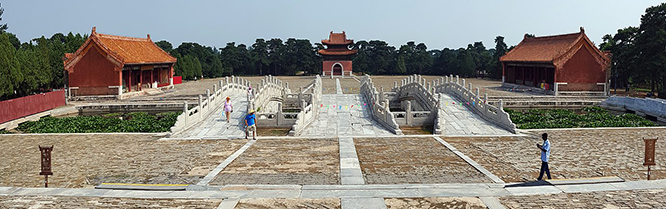
Qing Dynasty E-Tombs
The Eastern Tombs of the Qing Dynasty (1644-1911)
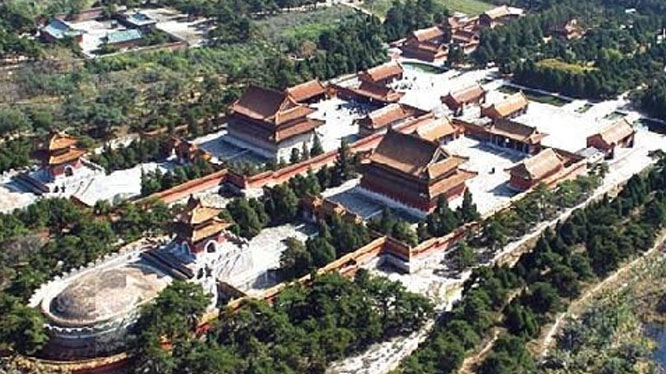
These tombs are the largest, most complete, and the best preserved mausoleum complex in China, 125 km from Beijing, finally completed in 2008. Five emperors, 15 empresses, 136 imperial consorts and concubines, 3 princes, and 2 princesses are buried here in 15 Mausoleums. The complex stretches over an area of 80 km².
This Complex was built after the imperial architectural rules and systems of Ming Dynasty ( 1368 – 1644 ). However, upon entering this complex, there is the superlarge stone archway devoted to the 1st Qing Emperor Shunzi:
.png) The largest stone archway in China
The largest stone archway in China
They are masterpieces of human creative genius by reason of their organic integration into nature, and a unique testimony to the cultural and architectural traditions of the past 6 centuries. They combine the architectural arts of the Han and Manchu civilizations. Their siting, planning and design reflect both the philosophical/fengshui idea of “harmony between man and nature” and the rules of the social hierarchy:
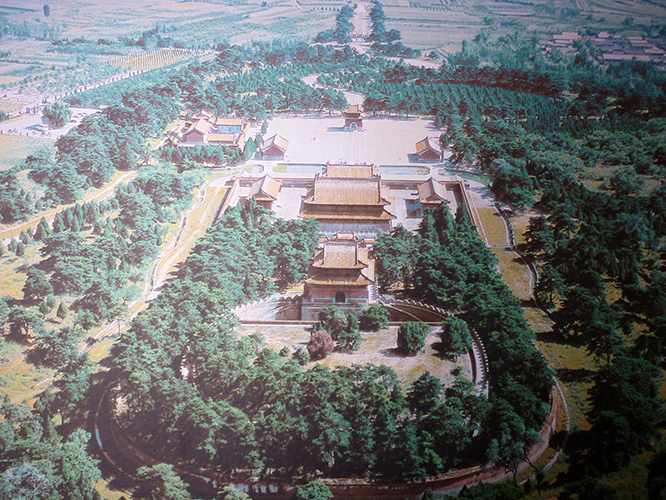 Yu-ling Mausoleum complex
It has Chang Rui Mountain in the north like a natural screen, Jin Xing Mountain in the south like an official who holding documents while standing in front of the mausoleum, the Ying Bi Hill lying between Chang Rui Mountain and Jin Xing Mntn just like a table. In the East, the steep and stiff Ying Fei Dao Yang Hill facing west, serves as the left supporting hill.
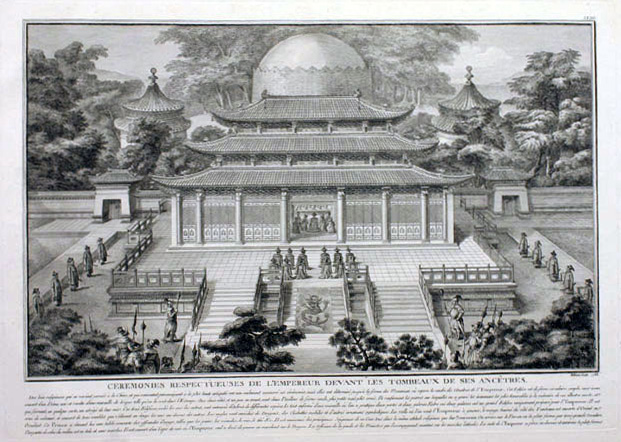
Emperor Qianlong paying respect
to his ancestors in 1788
In the west, Hyunghua cliff, facing east, serves as the right supporting hill. There are 2 rivers in the east & west chris-crossing in the mausoleum and then flow out of the natural exit of the mausoleum area.
A broad and flat land is surrounded by mountains and rivers. A precious place by the standard of geomancy. It was said that Qing Emperor Shunzhi himself selected this site when he went hunting here.
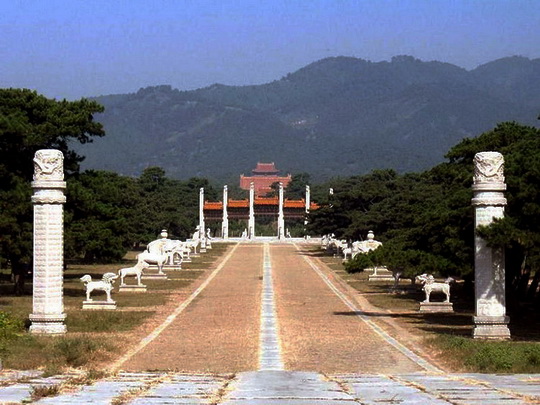
Yu-ling, the tomb of the Qianlong Emperor is one of the most splendid one of all royal tombs in Chinese history. His 1640 sqft tomb was built with over 90 tons of silver and marble! It covers 1/2 km². Yu-ling has the finest tomb chamber, a series of 9 vaults separated by 4 solid marble doors located at a depth of 54 m.
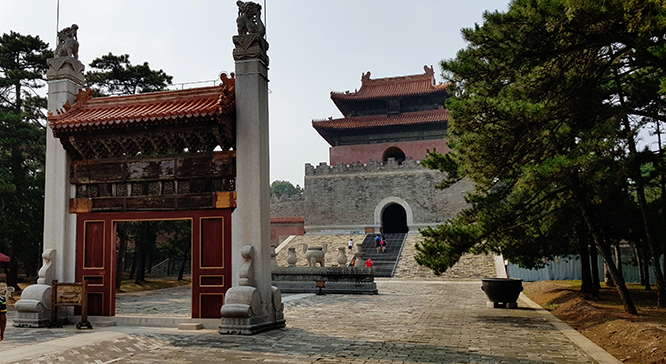
Beginning with the first marble gate, all walls, vaulted ceilings, and gates are covered with Buddhist imagery such as the 4 heavenly kings, the 8 bodhisattvas, the 24 buddhas, lions, the 8 Treasures, as well as ritual instruments and more than 30,000 words of Tibetan and Sanskrit scripture.
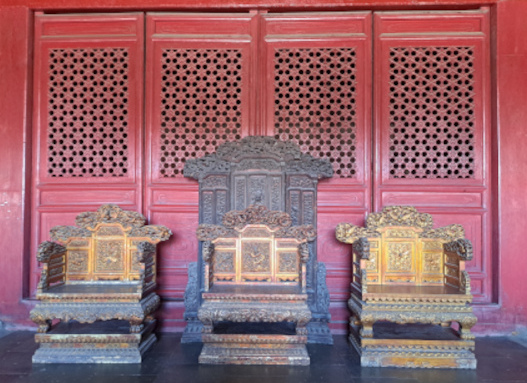
In the first marble gate, all walls, vaulted ceilings, and gates are covered with Buddhist imagery such as the 4 heavenly kings, the 8 bodhisattvas, the 24 buddhas, lions, the 8 Treasures, as well as ritual instruments and more than 30,000 words of Tibetan scripture and Sanskrit.
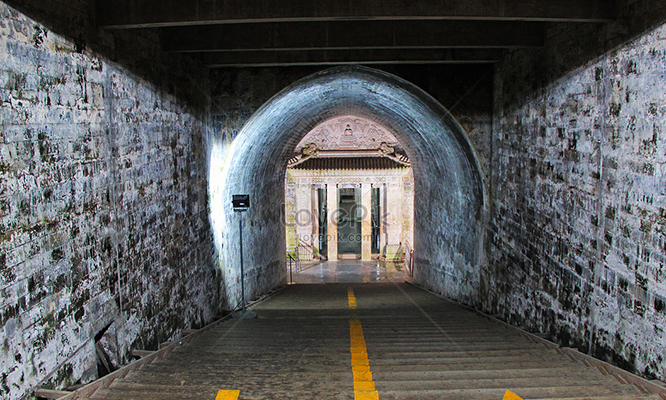
The Qianlong Emperor (died 1799) selected the site of his mausoleum in 1742 and construction began in the following year, and lasted 60 years, during which, the square city, memorial tower, the precious citadel, and the two side halls were built.
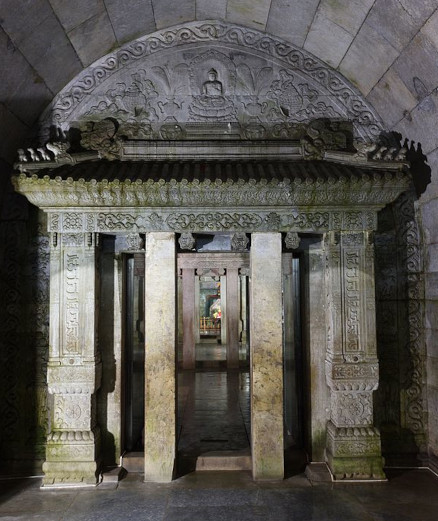
The 3-ton doors themselves have reliefs of bodhisattvas (beings on the road to enlightenment) and the four protective kings usually found at temple entrances.
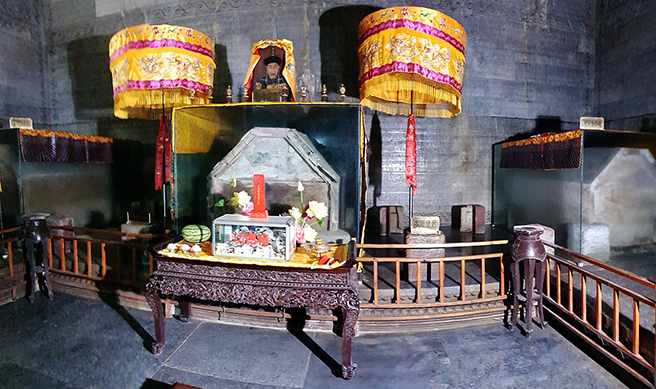
Room with 3 coffins
Qianlong was buried along with his wives Empress Xiaoxianchun and Empress Xiaoyichun, and 3 of his imperial concubines Huixian, Zhemin, and Shujia.
The underground palace of Yu Ling Tomb, with many exquisite and vivid carvings on Buddhism, has been known as “ a solumn underground Buddhist Hall”.
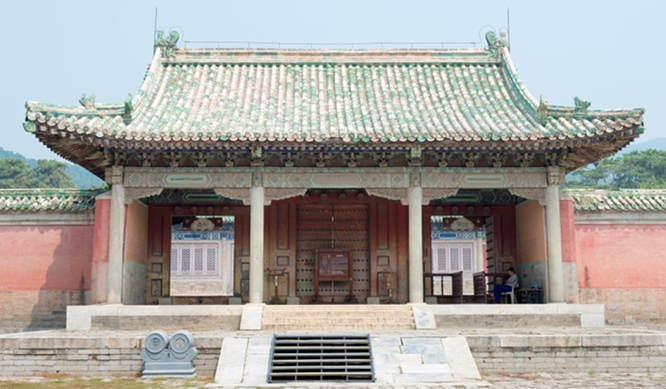
Mausoleum for
all the Consorts and Concubines
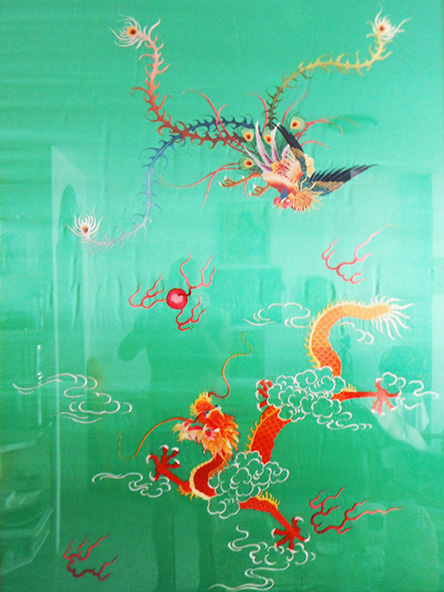
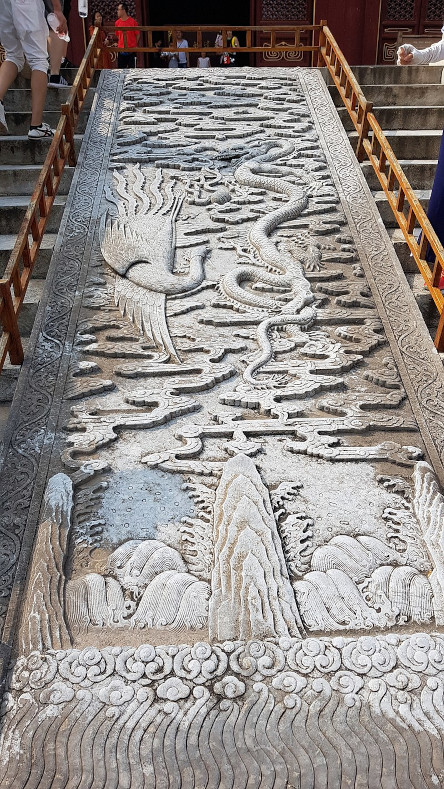
The Empress Dowager Cixi, ordered a shrine with a phoenix (symbol of the Empress) and a dragon (symbol of the Emperor), but showing the phoenix above the dragon: