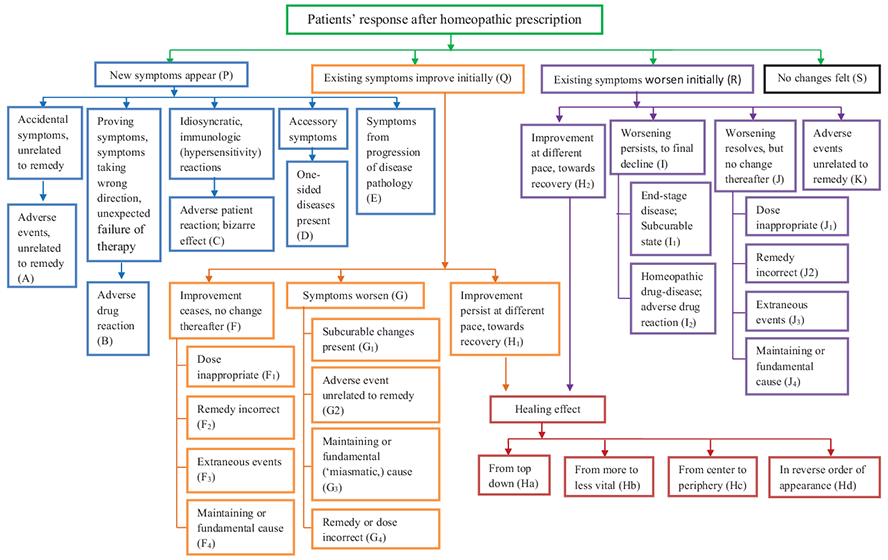
Hering Law of Cure
HERING’S LAW OF CURE vs SUPPRESSION
Hering’s Law, is named after the American homeopath Dr. Constantin Hering, who lived from 1800-1880.
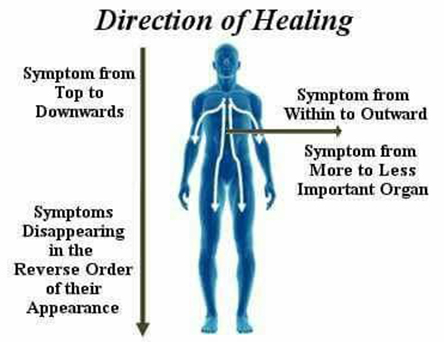
He proposed that, under homeopathic treatment, true cure works, if by revisiting old symptoms, by stimulating the healing power of the organism, plus:
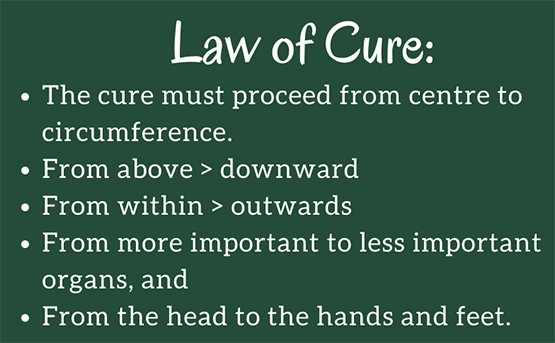
As a result, during the cure, eruptions on the skin or old discharges may recur. This is called ‘Hering’s Law’, and it operates in the opposite direction to suppression.
‘Cure takes place in an orderly manner and direction…normal vital processes, cellular, organic and systemic, begin at the center and proceed outwardly…life is a centrifugal force, radiating, externalizing,………
from above downward‘.
In the same sense disease is a centripetal force, opposing, obstructing, penetrating toward the center and tending to disorganization… the progression of all chronic diseases is from the surface toward the center; from less important to more important organs – ‘from below upward’.
Curative medicine reinforces the life force, reverses the morbid process and annihilates disease. When a patient with an obscure rheumatic endocarditis begins to have signs and symptoms of acute arthritis soon after taking the homeopathic remedy, and is relieved of his chest sufferings, we know that cure has commenced.’ [St.Close:p.132]
‘Cure… consists of the speedy, gentle and permanent restitution of health… in its entire extent …and in the shortest, most reliable, and safest manner, according to clearly intelligible reasons or principles.’ [St.C:p.74]
‘Suppression or palliation of disease, is the removal of the symptoms of disease by external, mechanical, chemical or topical treatment; or by means of powerful drugs, given internally in massive doses, which have a direct physiological or toxic effect but no true therapeutic or curative action.
The suppressed case always goes bad… the abscess and fistula act as if they were the vent or exhaust of the disease, affording temporary safety to vital organs. Close the exhaust and an explosion follows.’ [p.74]
‘The mere removal of the tangible products of disease by mechanical means as in the case of tumors, or of the external visible signs of disease by topical applications as in the case of eruptions and discharges, not only does not cure the disease, but does the patient a positive injury and renders the case inveterate or more difficult to cure…to the death of the patient from metastasis and the complications which result from such treatments. Disease is only cured by the internally administered similar medicine…’ [Stuart Close:p.73]
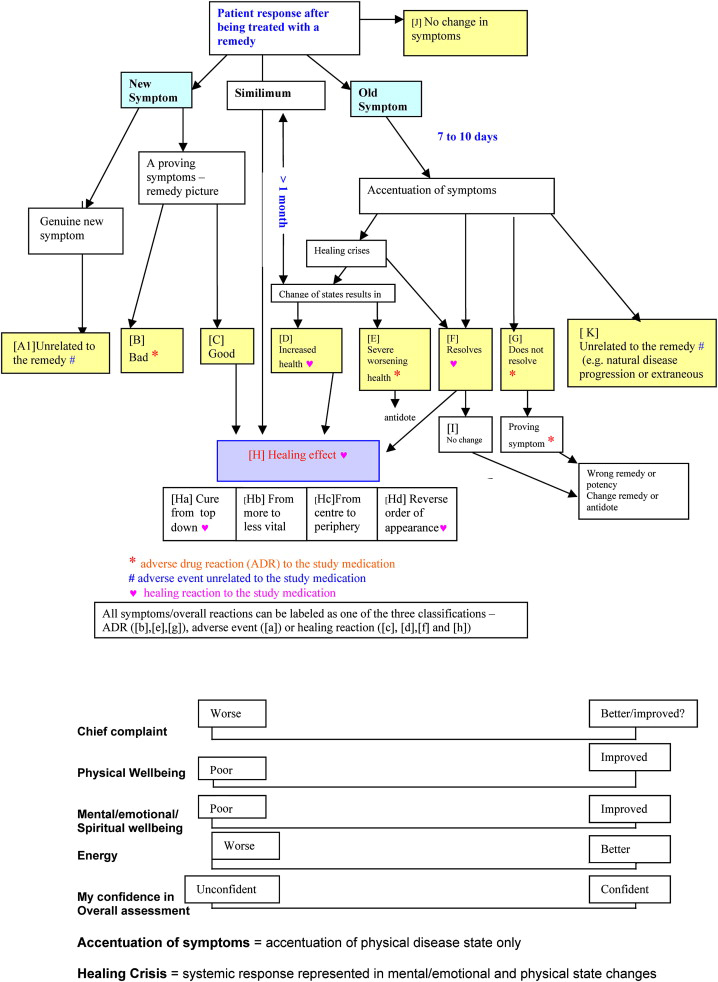
‘It should be a matter of routine in making the first examination, to ascertain what drugs have been used. In chronic cases this investigation should extend back through the whole lifetime of the patient. Diseases from which the patient has suffered, and the drugs used in their treatment should be ascertained if possible… the key to a difficult case may be the drug or drugs which have ‘cured’ some acute disease, perhaps early in the patient’s medical history.
Antidoting the drug clears up the case. Frequently, for example, will some chronic disease of the liver, kidneys, spleen or lungs be traced back to an initial attack of malarial fever checked by massive doses of quinine or arsenic. The patient has ‘never been well since’…’ [Stuart Close:p.120]
‘In a case variously diagnosed as chronic gout… I witnessed the reappearance of a discharge from the urethra fifteen years after the original gonorrheal discharge had disappeared under the influence of astringent injections. With the establishment of the discharge, the patient’s ‘rheumatic’ symptoms began to rapidly improve and a perfect cure resulted… metastasis of the original disease was caused by the injections… drug symptoms and complications often arise in the most unexpected and surprising ways, and baffle all but the most experienced examiners.
“Hair dyes, hair tonics, complexion beautifiers, dentrifices, medicated soaps, antiseptics; borax in baby’s mouth to prevent sprue; carbolic acid in mama’s douche to prevent babies; innumerable ointments and lotions; to say nothing about the equally numerous patent and proprietary nostrums, which fill the shelves of the corner drug stores and find their way ‘down the red lane’ into the human system, all play their part in creating morbid susceptibility, idiosyncrasy, and drug diseases and in making work for the doctor.”