Shangri-La Monastery

Ganden Sumtseling Monastery,
Shangri-La, Tibet

The Sumtseling monastery, of the Gelug order of Tibetan Buddhism, was established in 1679 by its 5th Dalai Lama, during the reign of the Qing dynasty Kangxi Emperor.

He patronized the monastery’s erection, and was involved in the protection & installation of the 7th Dalai Lama.

It is the largest Buddhist monastery in Yunnan, and is modeled after the Potola Palace in Lhasa.

With the monastery divided into houses, and each house supported by a group of villages, the institution truly resembles a microcosm of the community. Thus, ties between the surrounding communities and the monastery are strong:

Amazing Buddhist Art

Beautiful murals decorate the Monastery.
It preserves ancient treasures of historical significance including scriptures written on palm leaves, gold-covered sculptures of Buddha Shakyamuni, and colorful murals painted by renowned Lamas depicting the life of Buddha + other Buddhist deities:

Click image above
SHIVA & SHAKTI,
different sides of the same coin.

SHIVA symbolizes consciousness, the masculine principle. SHAKTI symbolizes the feminine principle: activating power/energy.

Whenever a power becomes active, and wherever energy exists, Shakti is working.

The Kundalini Shakti, present in every human, empowers one’s allure towards spiritual enlightenment. In the dormant state the Kundalini Shakti is a tightly coiled and lies at the base of the spine, in the Muladhara region.

When the power is unleashed, Kundalini Shakti rises up the spine, and clears the blockages in the chakras that lie along the Sushumna nadi. To be precise, there are two other nadis, Ida and Pingala, that run on either side of the Sushumna.

Once the power reaches the crown, it helps one to become a part of the highest consciousness. This action leads to
all kinds of spiritual experiences.


read more …

Similar Posts

  • PC Characteristics

    Pain-Catcher’s characteristics have to do with:   attitude posture memories relationships moral standards language phrasing sensual preferences opinions and beliefs habits and addictions imagined self-importance chronic pains and emotions facial and physical expression   The face of testicular pain: Doctors at Queen’s University thought they were going nuts when they saw what appeared to be…

  • mRNA Translation

    mRNA is called messenger RNA because it carries, like a mailman, information for protein synthesis from the DNA out of the nucleus to the cell organelles called ribosomes in the cytoplasm (the site of protein synthesis). From here: mRNA directs the assembly of amino acids through peptide bonds, that then fold into a 3D completed…

  • About Trace Minerals

    Most important Trace Minerals Zinc: Zinc is involved in the synthesis and stabilization of proteins, DNA and RNA, as well as in playing a structural role in membranes. Zinc also helps regulate gene transcription and is needed for sperm production and fetal growth. A mild deficiency could lead to diabetes, AIDS, inflammatory bowel disease, alcoholism,…

  • Bio-availability?

    Bioavailability refers to the amount a nutrient is actually absorbed and used by the body. Certain compounds in foods may diminish or enhance the bioavailability of different minerals in the gut. The phytates and oxalates of leafy vegetables hinder both iron and calcium absorption, while vitamin C and vitamin D enhance it. Dietary lipids are…

  • 3 Skull Brains

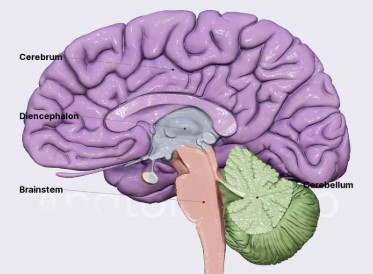
     Three Brains in One The lower- or reptilian brain includes the upper part of the spinal cord, brain stem, and 2 half balls of wrinkled tissue called cerebellum. The lower-brain controls almost all of the body’s vital functions such as respiration, blood pressure and circulation, heart rate, motor-, and sensory responses. The cerebellum contains more…

  • EMOTIONS AS BRAIN IMAGES?

    Emotions: brain images of bodily states? Neuroscience states that light reflected from objects activates our retinal receptors in patterns. These patterns are processed as 3D visual images of those objects. Patterns in the external world correspond with patterns of nerve cell activity in the brain. We experience these patterns as thoughts and images. Our senses…