
Omega-3-6-9 Fats
Omega-3 is found in oily fish such as salmon, trout, herring, and in plant foods like flax, walnuts, algae and hemp seeds.
Omega-6 is found in vegetable oils such as cottonseed, soybean, corn and safflower. In proper proportion to Omega-3, these fats are good for brain development, heart health, good cholesterol and good mood.
Omegas-3/-6 are the polyunsaturated healthy fats. Our body cannot produce these two fatty acids making it “essential” to obtain them from food.
Omega-9 is a monounsaturated fat (MUFA). If you have enough omega-3 and 6 in your diet, your body can produce omega-9, making it “non-essential”.

Olive trees and olive oil production
around Granada, Spain
The main Omega-9 is oleic acid commonly found in oils, fruits and nuts. Using oils like olive oil, canola, peanut, macadamia, sesame, safflower and sunflower instead of partially hydrogenated oils provide good sources of omega-9.
It is found in almonds, cashew, peanuts, pecans, pistachios, macadamias, and walnuts. Avocados and olives, which are actually fruits, are tasty source of this monounsaturated fat. Omega-9 is increasing metabolism and a skin moisturer.

Key Findings from a 2-year clinical trial conducted on older adults found that eating 6-7 whole walnuts/day led to:
Reduced chronic inflammation – Walnuts helped lower markers of “inflammaging,” the low-grade, silent inflammation that accelerates aging over decades.
Enhanced cellular cleanup (mitophagy) – Walnuts provide ellagitannins, which gut bacteria convert into urolithin A. This compound triggers the removal of damaged cell components, helping cells maintain energy production.
Slower telomere shortening – Telomeres are protective caps on DNA that shorten with age. The walnut group showed a noticeable slowdown in this shortening process compared to the control group.
Brain Health Benefits – Participants who ate walnuts showed improved cognitive scores, roughly equivalent to 1.3 fewer years of brain aging. Walnuts are exceptionally rich in ALA (alpha-linolenic acid) , a plant-based omega-3 that supports brain function. The brain-shaped appearance of walnuts is a coincidence, but the nutritional benefits are scientifically validated.
Blood Sugar and Bone Health – Walnuts have a low glycemic load and may help slow carbohydrate absorption, offering modest support for blood sugar control. However, the study found no effect on bone density, which actually strengthens the credibility of the positive findings.
Omega-3 fats have many functions in our body and are important for good health. There are three kinds:
- ALA (alpha-linolenic acid).
- DHA (docosahexaenoic acid).
- EPA (eicosapentaenoic acid).
ALA is an essential fat, so it must be part of the diet, like seeds, nuts, and avocados.
Our bodies can only make very limited amounts of EPA and DHA from ALA. Therefore, it is important to include foods rich in DHA and EPA in your diet.

How Much Omega-3 Should I Aim For?
The amount of omega-3 fat you need depends on your age and whether you are male or female.
The Omega-3 Index reflects the relative amount of EPA + DHA in red blood cells. It is expressed as the percentage of the total amount of fatty acids present.
ALA is in vegetable oils, walnuts, flaxseeds and soy products. EPA and DHA are found in various seafoods.
Today, the ratio between omega-6 and omega-3 fatty acids in the Western diet is between 10:1 and 20:1. Thus we consume up to 20 times as much omega-6 as omega-3 fatty acids. The recommended ratio is lower than 5:1.
A proper balance between the intake of omega-6 and omega-3 is one of the keys to improved health and will help to reduce the risk of developing chronic diseases. Foods processed can disturb the proportions.
Keeping the intake of all fats to 20-35% of your calories, with most coming from MUFA and polyunsaturated fats, will facilitate your weight control efforts.
To determine the amount of good monounsaturated and polyunsaturated fats on a nutrition label do the math:
Good Fats = Total Fat + Bad Fat (Trans Fat and Saturated Fats).
Enduring, chronic inflammation in the body leads to developing joint problems, cardiovascular diseases, type 2 diabetes, kidney disease and obesity.

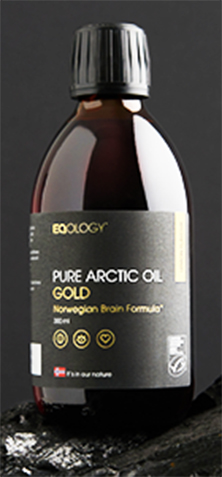
Arctic Fish Oil
(.15ml/kg bodyweight/day)
DHA and EPA can only be found in marine products such as fatty fish and fish oil. It is these long-chained fatty acids, like DHA and EPA, that give us the principal health benefits.
Herring has a high content of cetoleic acid, which stimulates cells to convert short omega-3 fatty acids into the healthy, longer marine omega-3 fatty acids.
Examples of fish that contains most amounts of omega-3 (EPA + DHA) are salmon, herring pickled, tuna Bluefin, mackerel, sardines (canned in oil) and oysters (steamed).

Benefits Sardines:
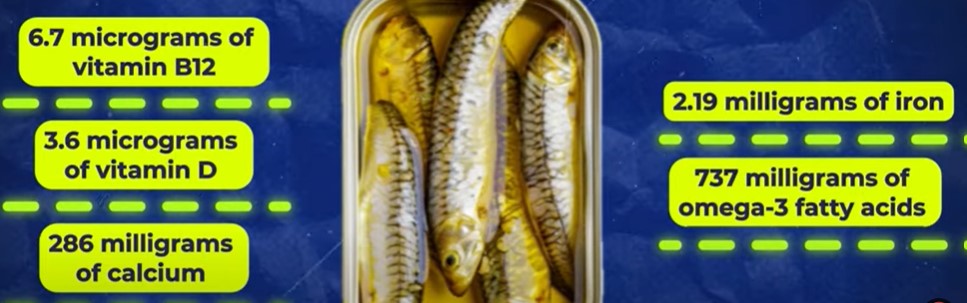
100 g. of sardines contains about 1.5 g. Omega-3. 100 g. herring contains about 1,5 g. Omega-9, and 4 g. Omega-3.
Men over 19 should aim for ALA intake of 1.6 g/day. Women 1.1 g/day. Two servings of fish/wk provides 300-450 mg of EPA and DHA per day. Healthy people should consume at least 500 mg/day of combined DHA and EPA.
Studies suggest that fish oil improves the function of the endothelium, the innermost layer of our arteries. Therefore, heart patients should take >1000 mg/day.

Green lipped mussels oil
(1-2 capsules/day)
Besides DHA and EPA, raw green-lipped mussel oils are a source of other rare omega-3 fatty acids, such as furan fatty acids that act as powerful antioxidants.
This unique combination inhibits the production of immune chemicals (leukotrienes) involved in triggering inflammation.
These fatty acids also block key enzymes (COX-1 and COX-2) in a similar way that aspirin and other drugs do. These actions help reduce the migration of inflammatory white blood cells into joints, so that pain and swelling are reduced. They also have anti-inflammatory effects against asthma, osteoarthritis, and rheumatoid arthritis.
People with hip or knee osteoarthritis, taking green lipped mussel oils, showed significantly less joint pain than those taking fish oil.
Synofit oils contain all of the green-lipped mussel’s Omega 3’s fatty acids, such as EPA, DHA, ETA, ETE and DTA, including the glycosamino glycans such as glucosamine and chondroitin sulphate, plus Curcumin, Blackcurrant leaf extract, Vitamins C + D, and Calcium.
Extracts contain the mussel’s fatty acids but lost the glucosamine and chondroitin or contain the glucosamine but lost the fatty acids, proteins and other ingredients, due to the heating processes involved.

Higher levels of EPA benefits people with joint, bone loss, and psoriasis problems: 100 g N-Atlantic herring contains 1300 mg of EPA, 1700 mg of DHA, 1200 mg of ALA. Chinook salmon contains 860 mg of EPA and 620 mg of DHA per serving. Eel and sturgeon also have higher EPA levels than DHA.
Ten ml of Arctic fish oil contains:
- 83 kcal of energy,
- 1410 mg of saturated fats,
- 3320 mg of mono-unsaturated omega-9,
- 1390 mg of poly-unsaturated omega-3,
- of which 490 mg is EPA. and 690 mg is DHA.
Per serving:
- Pacific sardines have 740 mg DHA and 450 mg EPA,
- Atlantic salmon has 950 mg DHA and 250 mg EPA,
- Sockeye salmon has 600 mg DHA and 450 mg EPA,
- Rainbow trout has 440 mg DHA and 400 mg EPA,
- Canned white tuna has 540 mg DHA and 200 mg EPA,
- Canned light tuna has 190 mg DHA and 40 mg EPA.
This table shows foods which are sources of omega-3 fats:

Omega-9 acids
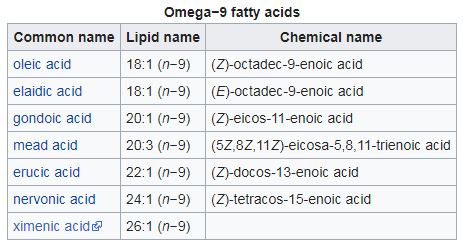
Some omega-9 fatty acids are in animal fat and vegetable oil. The 2 most important omega-9 fatty acids are:
- Oleic acid (18:1, n-9), which is a main component of olive oil, macadamia oil and other monounsaturated fats.
- Erucic acid (22:1, n-9), which is found in rapeseed, wallflower seed, and mustard seed.