Cannabis Farming
Humans and the Cannabis plant share an intimate history spanning millennia. Humans spread Cannabis from its Eurasian homelands throughout much of the world, and, in concert with local climatic and human cultural parameters, created traditional landrace varieties (cultivars resulting from a combination of natural and farmer selection) with few apparent signs of domestication.
Cannabis breeders combined populations from widely divergent geographical regions and gene pools to develop economically valuable fiber, seed, and drug cultivars, and several approaches were used with varying results.
The widespread use of 1 plant selections in cultivar breeding, inbreeding, and adoption of asexual reproduction for commercial drug production, reduced genetic diversity and made many present-day cultivars susceptible to pathogens and pests.
Most Cannabis cultivars are now completely domesticated, and thus are entirely dependent on humans for their survival. Future ramifications remain to be realized.

While lighting needs of the cannabis plant are identical whether you’re growing on one level or several vertical levels, but adding layers of lighting to the room, you also increase heat associated with the lighting.
LED lighting is the superior lighting at this point for vertical growing, because of power savings, and LEDs are typically more efficient at converting electrons into photons, and (assuming a good form factor/thermal management system), LED will dissipate the heat away from the crop compared to MH or HPS, which radiate heat down to the crop.
GrowX has come up with a prototype for an aeroponic growing system that uses less energy and water than the hydroponic one. Furthermore, this system also eliminates impurities that would normally be found in the soil.
However, even with the development of energy-efficient LED lighting, advanced sensors, artificial intelligence networks, and high-efficiency electronics, there is the possibility that indoor cannabis farming may become too energy-expensive.
Waterdog Herb Farm in California, grows its harvest outdoors, on a 160-acre homestead. While most consider that marijuana grown indoors is usually more potent, this company has noted the same quality of the crops. The farm is off the grid and draws its power only from renewable sources.

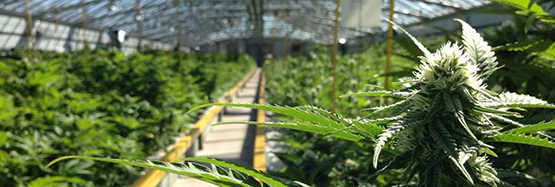
Someone bought a 70,000 sq. ft. building (and added 35,000 sq. ft.) to hold 1,650 tables (20 plants per table; 33,000 plants grown in unison) for indoor marijuana production and five harvests per year.
Compliance is a heavy factor in marijuana production. Seed to sale compliance systems put in place by the state law require testing for every 5 lb. of product: potency, mold, cannabinoids and medicinal value. He has built his team, facility, processes and a foundation to work closely with all sectors from public awareness to government policy to make this a smooth and professional transition for everyone involved. The main objective is a safe product going to the market for consumers, be it medicinal or recreational.
The marijuana industry is an evolution; it will scale and sustain. To each his own, but recreationally Americans drink a ton of beer and smoke a ton of weed. That’s prior to even addressing the huge medical piece of the pie.
Dynamite Ag, states that medical marijuana benefits remain untapped. There is so much more the plant offers medicinally that nobody is dealing with. Farmers will be the ones to peel back the layers of medical marijuana.
Certain growers’ cannabis vision ultimately rests on the medicinal value of marijuana: cash flow from the recreational side, followed by a full-bore push into medicinal benefits. Medical marijuana is their greatest driver: It can help reduce the number of grand mal seizures a small child has each day, or someone suffering from the pain of chemotherapy, or calming a veteran battling PSD, etc. etc.

A Financial Reality
Marijuana is typically sold at retail for $12 to $15 per gram. The average wholesale price per gram is approximately $2. Outdoor production costs range from 25¢ to 50¢ per gram, but only one harvest per year. On the indoor side, cost of production averages $1.25 per gram, but allows for up to five harvests per year.
However, some are aiming for a cost of indoor production 45¢ per gram, and requiring a workforce of 40. Roughly a 1/10 of the manpower needed for comparable operations.
According to some, marijuana farming will go far beyond indoor grows and greenhouses. Once it is being grown by farmers outdoors as a row crop, marijuana production will go to a whole other level.
Marijuana is expected to be the next frontier of commercial agriculture. It is NOT the devil’s lettuce.
A ‘marijuana market metamorphosis’ will happen as states with both legalized medical and recreational use begin to evaluate the practicality of merged regulatory regimes.
Recent research reports project $30.3 billion/yr in U.S. retail marijuana sales by 2021, with estimates $27 billion in federal tax revenue on retail sales over the next five years. Presently, California accounts for 39% of market share, followed by Colorado (20%), Washington (12%), Michigan (9%), and a mix of other states (20%). Research estimates 26.3 million potential medical marijuana users (spending an average of $3,200/yr) and 30 million active recreational marijuana users (spending an average of $1,500/yr).
In 2016, marijuana generated $7.6 billion in its second full year as an industry, but the true value is far greater: However, the U.S. illicit market is valued at $50B – $120B.
The exponential growth and phenomenal speed of the marijuana industry require the involvement of professional agriculture, because it is growing quicker than Silicon Valley. Professional farmers can knock out some people presently in the marijuana business. It is said that marijuana is 4-11 years away from becoming a standard U.S. crop. It will be one of the highest value ag commodities in the U.S. Whether outdoors, greenhouse or indoors, all it takes is the right knowledge and expertise. If you can grow other crops properly, then you can grow marijuana.
The future of marijuana demands professionalism and increased structure, thus proper research and examination: product, yields, state regulations and much more. Keep SG&A costs exactly where they need to be and work on them every day, just like with any other crop. Marijuana has to be treated with the right business model going in.

Marijuana under electron microscope