
SYNAPSES

The term synapse designates the point where the axon of one neuron connects to a dendrite of another. This word comes from the Greek syn (together) and haptein (join). Neurons can be connected in two very different ways:

  1. by an electrical synapse, in which the two cells touch and are connected by tiny holes, which lets the static electric impulse pass from neuron to neuron;
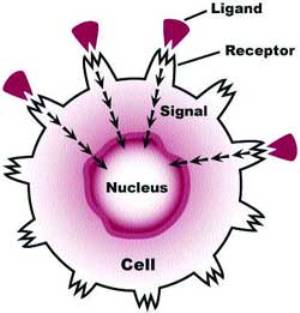
  2. by a chemical synapse, where the two cells do not touch e.o. and the nerve impulse needs particular molecules to bridge the gap between them.

The vast majority of the ≈150 trillion synapses are chemical. Although slower than electrical ones they are more flexible.

Variations in number of neurotransmitters released, receptors available, or affinity between them make the synapses undergo changes in size and enable us to learn.

Synaptic transmission, dozens of times per second at the ends of ≈100 billion neurons, is the omnipresent mechanism that is the source of the brain’s great plasticity.
read more …

Similar Posts

  • Subluxated Spine?

    Chiropractors remove any interference to the spinal nerves, by way of a spinal adjustment. This enables the body’s Innate Intelligence to bring the spine in a correct alignment. This enables the body to heal the associated diseases. All healing in the body is self-healing. Examples are the repair of broken bones or cuts on the…

  • Human Resources

    The diagram shows how the distribution of resources affects the emergence of certain social behaviors: primates and people form alliances and engage in behaviors to reduce the tension among them, or to reconcile after conflicts: read more …

  • Somatic Marker

    The USC neuroscientist Antonio Damásio achieved the long-awaited integration of emotions into cognitive neuroscience, allowing us to understand emotions in the same way as vision and hearing. His main interest is the biology of the mind as it relates to the neural systems, serving memory, language, and emotion. His research has shown that emotions play…

  • Most Hypertension Risk Factors

    Risk factors that increase hypertension include: • age • obesity • smoking • inactivity • stress, anxiety • family history of heart disease • excessive alcohol consumption • diet (high cholesterol, diabetes) • electron spin inversion in a body’s atoms Electrons orbit the nucleus of every atom, like the planets turn around the sun. Every…

  • Formal Sciences

    Formal sciences are conceptual systems that study formal systems, based on analysis, definitions, rules and laws, rather than actual facts. However, their methods hold in all possible conceivable worlds and are thus applied in empirical sciences and procedures, whose theories (general relativity, etc.) do not hold everywhere or even in our world: Logic (explicit analysis…

  • Sex Hormones and Health

    Chinese physicians pinpoint what they call the ‘kidney glands’ (Shen Hsien) as the key regulators of sexual potency. These glands, which straddle the tops of the kidneys like hats, are called the ‘suprarenal glands’ in Western parlance. The suprarenals, also known as the adrenal cortex, produce a variety of hormones of vital importance to various…