
Does yr Brain wave?
EEG’s show brain wave frequencies (1 – 50 Hz). They reflect the electrical rhythms of all the brain cells’ activities:
- δ = Delta waves [1/2 – 4 Hz] produced during sleep,
- ζ = Theta waves [4+ – 7 Hz] produced during day dreaming or falling asleep,
- α = Alpha waves [8 – 12 Hz] produced during relaxed, alert states,
- β = Beta waves [13 – 29 Hz] produced during the carrying out of tasks,
- Low range [13 – 15 Hz] relaxed but interested Attention,
- Mid range [16 – 21 Hz] focused external Attention >> Narrow Focus,
- High range [22 – 29 Hz] tense muscles, anger, anxiety, intense emotions.
- γ = Gamma waves [30 – 100 Hz] as multi-synchronized brain waves: compassionate and focused attention. Most common frequency is 40 Hz.
Frequent use of the β mid-range leads to a co-dependence, and then an addiction to producing waves of this frequency. Our visual system is hard wired to our emotions.
Both our Alpha & Gamma waves have a unique pattern/signature from anyone else.
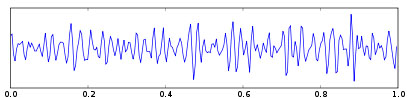 Gamma wave (digital EEG)
A binaural beat is an auditory illusion heard, when two different pure-tone sine waves, both with frequencies less than 1500Hz, and less than a 40Hz difference between them, are presented each through one ear.
This third sound or tone is called a binaural beat, with a perceived pitch in Hz of the difference between the two pure tones. This perception originates in the midbrain and brainstem. Binaural hearing is the means by which the location and direction of a sound is determined.
Binaural beats are often combined with other sounds, music and verbal guidance or statements in order to create a desired brain activity, subsequent subconscious activities, that lead to the desired manifestations.
Isochronic tones are regular on/off beats of a single tone that are used alongside monaural beats and binaural beats in the process called brainwave entrainment. They create sharp, distinctive pulses of sound.
Brainwave entrainment or neural entrainment denotes how the aggregate oscillation frequency, resulting from synchronous electrical activity among ensembles of cortical neurons, can adjust so as to synchronize with the periodic vibration of an external stimulus.
It is a sustained acoustic frequency heard as pitch, or a regularly repeating pattern of intermittent sounds perceived as rhythm, or a regularly intermittent flashing light.
The term ‘entrainment’ describes a shared tendency of many physical and biological systems to synchronize their periodicity and rhythm through interaction, such as in synchronous breathing, foot tapping, clapping, etc.
By stimulating the brain with flashing LED lights built into special eye glasses and pulsing auditory tones (isochronic tones) transmitted through headphones within a frequency range of about 0.5 to 25 Hertz, it is possible to shift the frequency of the dominant brain waves either higher or lower and thereby change brain function.
The use of isochronic tones as the audio component of audio-visual entrainment improved relaxation, meditation, stress relief, the management of anxiety, and improved cognition and focus in individuals diagnosed with ADHD, panic attacks, PTSD, bipolar disorder and schizophrenia.