Optogenetics

Until recently neuroscientists have been unable to see how the brain works in precise detail. Basic genetic researchers have brought in the solution in the form of micro-organisms that rely on light-responsive “opsin” proteins to survive.

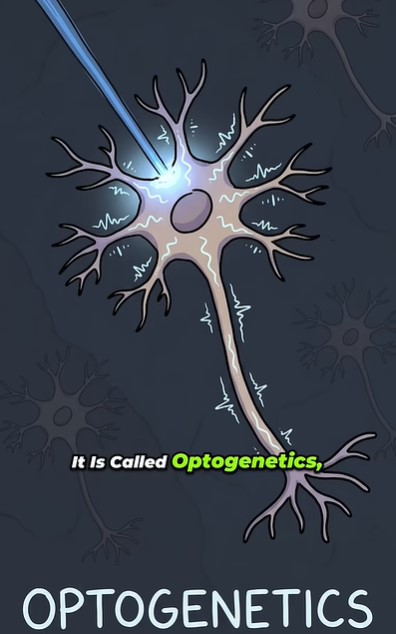
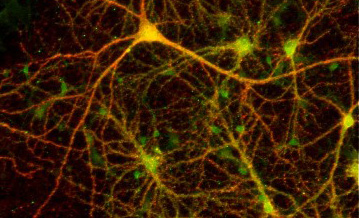
Instead of electrodes or liquids, researchers insert opsin proteins into specific braincells of freely moving animals through a virus. Once there, these proteins insert genetic material that will cause the neuron to manufacture the light-sensitive protein itself. Then researchers order specific neurons to fire by using flashes of light.
This method is called Optogenetics (Optics + genetics). It may one day join the freely available, brain-protecting metal, lithium as the method of choice for treating people with a mental imbalance.

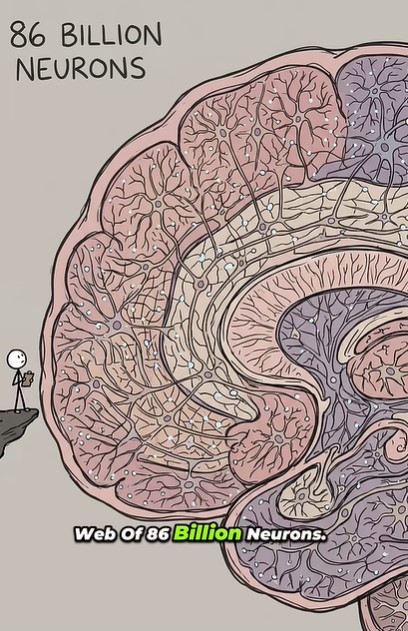
This brain modulation technology could very specifically interact with our billions of neurons that have an infinite number of distinct characteristics and wiring patterns.

These neurons exchange precisely tuned millisecond scale electric signals or one of their different biochemical messengers with each other.

Researchers at MIT’s Neural Circuit Genetics noticed that memories in dementia, such as Alzheimer’s disease, are NOT lost. They were retrieved in mice, using blue light that made nerve cells grow new synapses.
All aspects of our personas, capabilities, memories, and emotions arise from electrical and biochemical events within particular circuits of neurons in particular temporal settings.

Because the computational capabilities of our cortical circuits are infinitely complex, neuroscientists will always lack a complete grasp of the totality of the brain’s activities.

Should the altering of neural pathways then be done through technological means or by ourselves, if possible?

What if, we can weaken or strengthen those connections by focusing the energy of our attention on the physical sensation that is associated with each of them?

read more …


Similar Posts

  • The Holy Edicule

    The Holy Edicule in the Church of the Holy Sepulchre in Jerusalem is the “little” shrine that protects and covers the sepulchre or tomb of Jesus. Its restoration was planned for 1959, but it took the 3 groups responsible for the edifice, the Greek Orthodox Patriarchate of Jerusalem, the Franciscan order of the Catholic Church,…

  • New Delhi -SG

    British/Indian Government buildings & infrastructure done by Edwin Lutyens (GB) from 1911 onwards Parliament – Connaught Place – India Gate Triangle P is location of old and new Parliament: read more …

  • 7&7-twinflame-day

    THE 7&7 STAR CROSSED LOVERS Aquila is a constellation right on the celestial equator. It has 143 notable stars. It was described by Ptolemy, and is now one of the 88 constellations defined by the IAU. It was also known as Vultur volans (the flying vulture) to the Romans. Vultur cadens was their name for the…

  • Aspects of Long-Term Memory

    Clinical and physiological observations suggest that there are various sub-categories of long-term memory. R&D found that certain kinds of amnesia affect certain kinds of memories, but not others, and that certain kinds of memories are processed in specific brain structures. A fundamental distinction is between declarative and non-declarative memory, based on whether the memory’s content…

  • Explicit Memory

    Episodic Memory Episodic or autobiographical memory lets you remember events that you personally experienced at a specific time and place, such as the name of someone, and the date and place of some public event. Its most distinctive feature is that you see yourself as an actor in your own events. You thus memorize not…

  • Memory Recall

    Retrieval of information encoded in long-term memory is traditionally divided into two categories: • recall, • recognition Recall of memories, voluntary or not, involves active mechanisms that make use of encoding indexes. In this process, info is temporarily copied from long-term memory into working memory, so that it can be used there. The more a…