Places of Gathering
The cathedral was the hospitable refuge of all unfortunates. The sick stayed until they were cured. Doctors would give consultations around the holy-water stoup at the entrance. In Paris the Faculty of Medicine, gave lectures there.
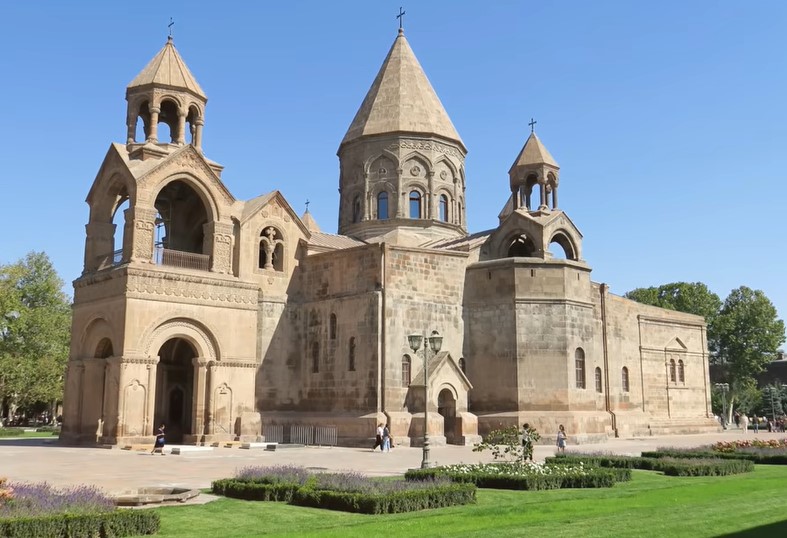
World’s oldest: Etchmiadzin Cathedral, Armenia
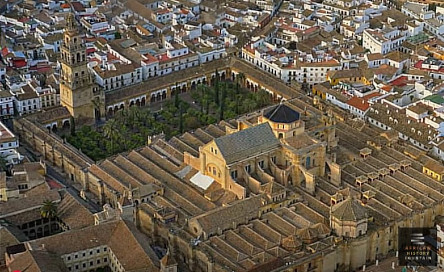 Mezquita y Catedral de Cordoba:
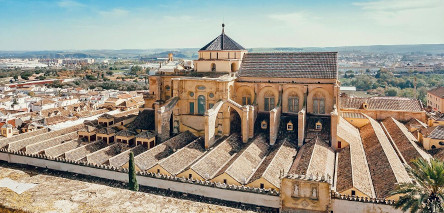
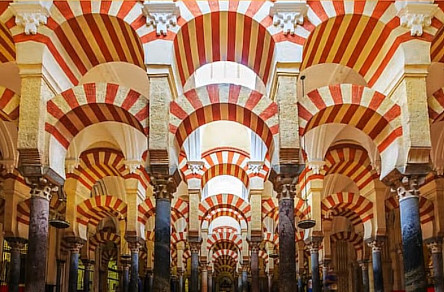
Catedral de Seville (former Mosque):
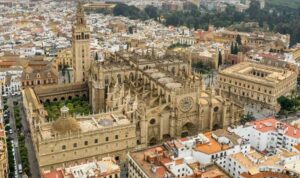 The grounds, gardens, and Minaret were part of the former Mosque.
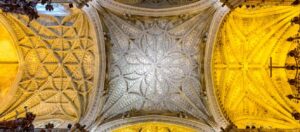
The cathedral is the inviolable sanctuary of the hunted and the burial place of the illustrious dead. It is a city within a city, the intellectual and moral center, the heart of public activity, the apotheosis of thought, knowledge and art that was transferred from the great monasteries:
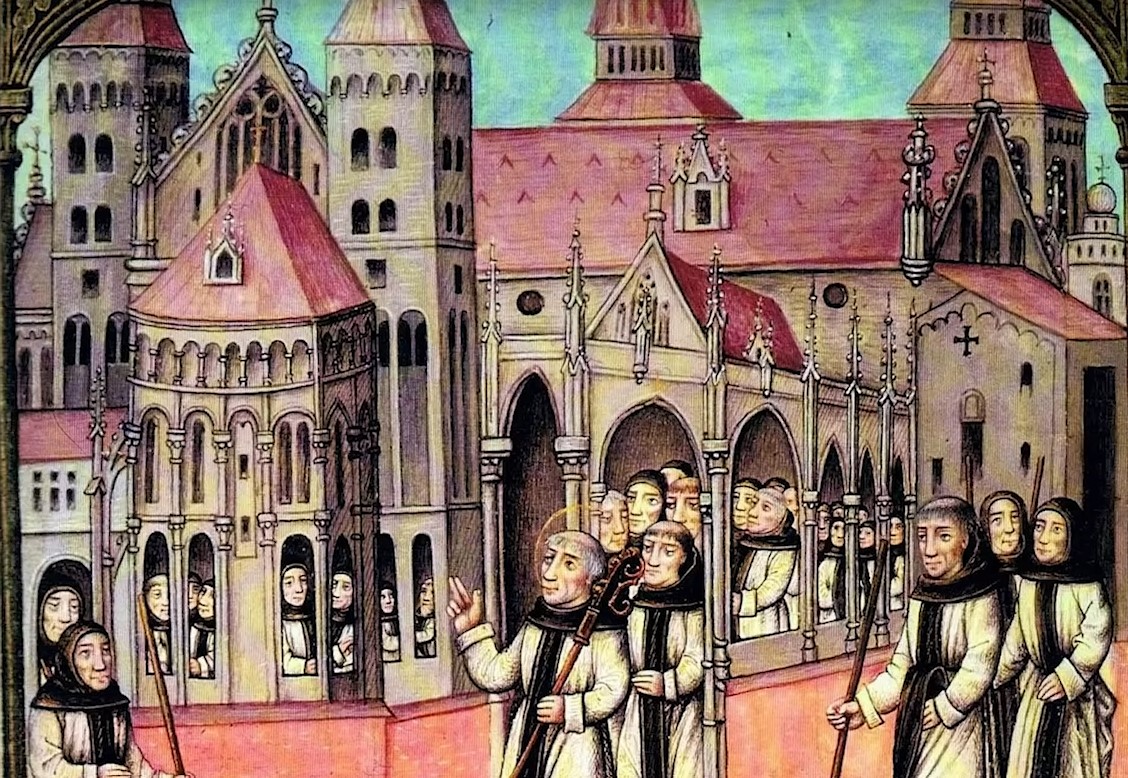
Citeaux Abbey
Like the mysteries dwelling inside the Egyptian pyramids, there is occult knowledge inside the architecture and engineering of Medieval Gothic cathedrals.
These buildings were not only dedicated to religious activities, but also to books that contained the philosophical, religious, and social thoughts of our ancestors.
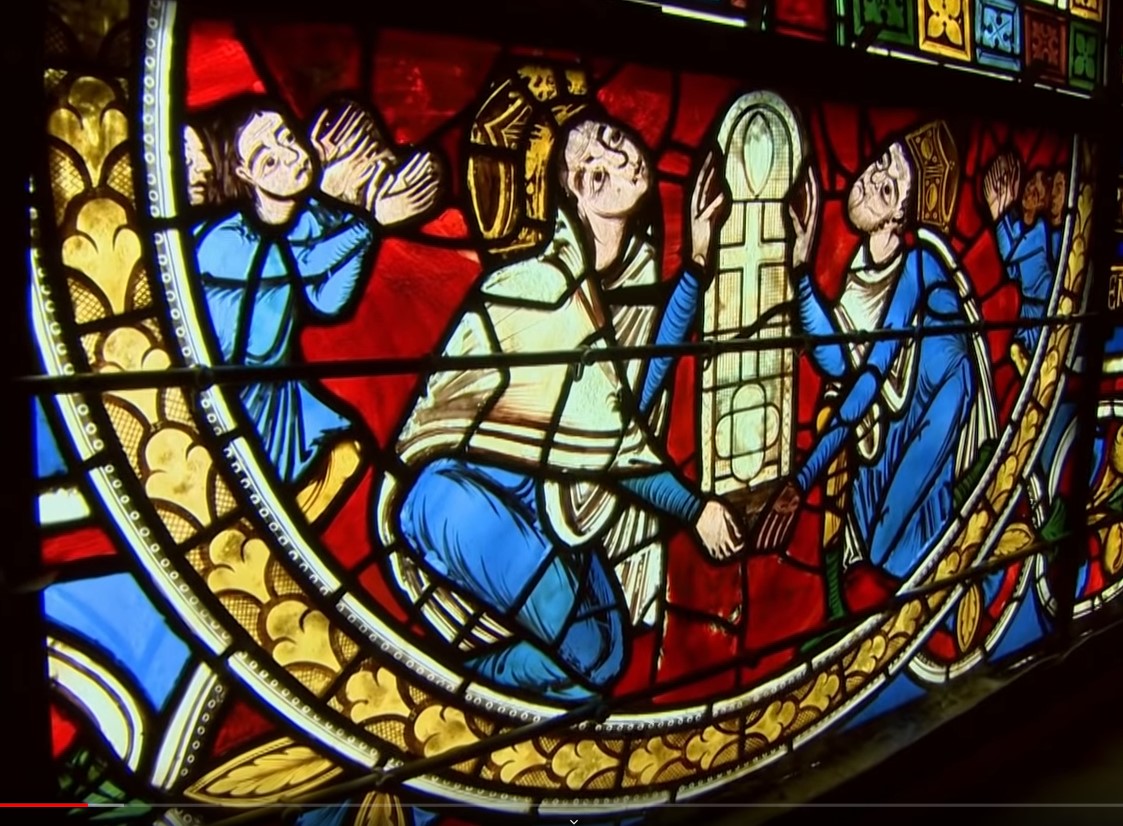
King Henry II + family
in Cathedral of Poitiers
Besides church services, funerals, festivals, royal weddings, and political meetings, trade was discussed there. Others hurry there to seek comfort, advice, beg for pardon, or guilds passing-out ceremony of its new journeyman, and meet there once a year under the protection of their patron saint.
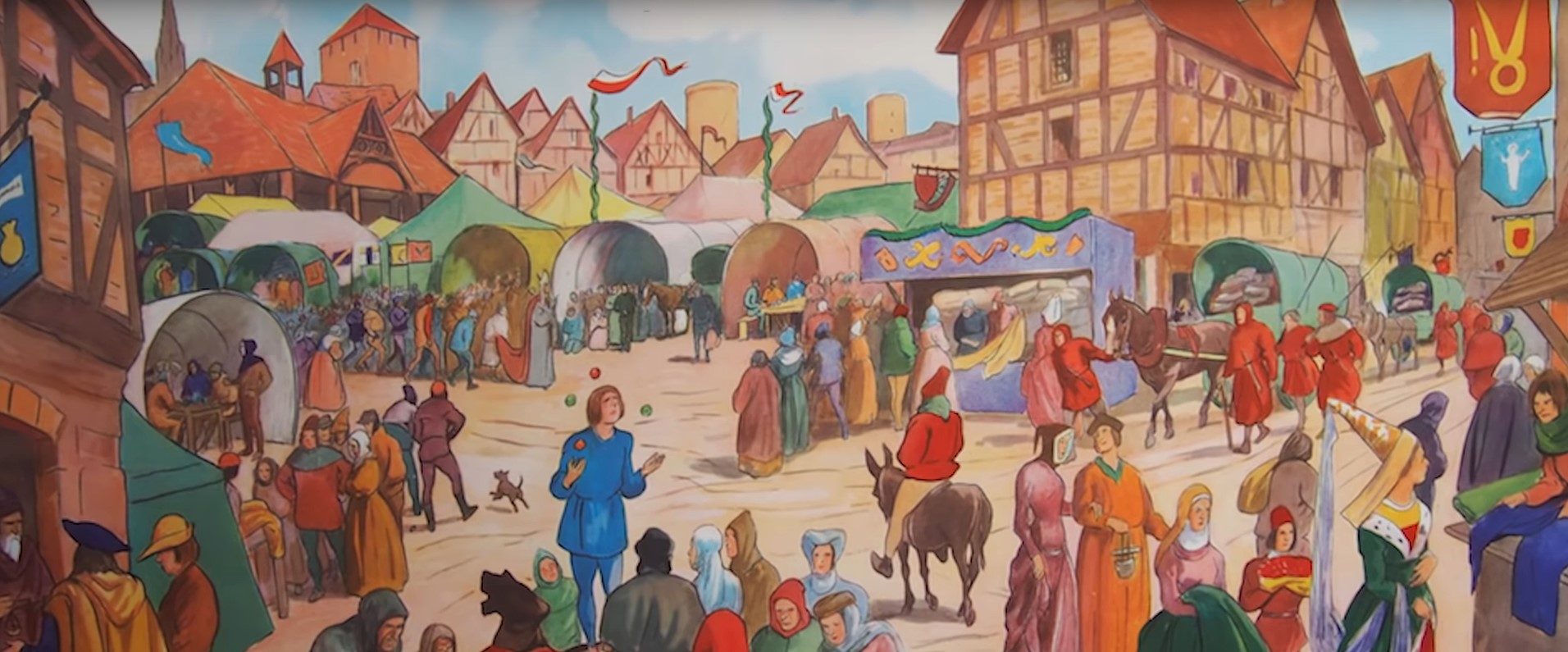
During the great medieval period there was the Feast of Fools- the Wise- plus a processional hermetic fair, set out from the church with its pope, its dignitaries, its enthusiasts and its crowds. The common people of the Middle Ages, noisy, jocular, frolicsome, bursting with vitality, enthusiasm and spirit, spread throughout the town.
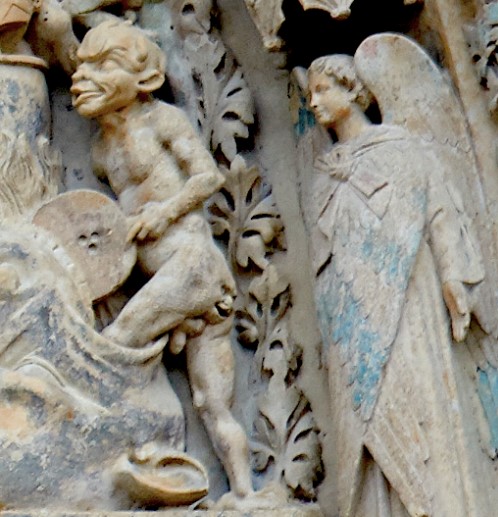
What a comedy it was: Ignorant clergy subjected to the authority of a disguised Science, and crushed under the weight of undeniable superiority. Ah!
The Feast of Fools, with its triumphal chariot of Bacchus, drawn by a male and a female centaur, naked as the god himself, and accompanied by the god Pan; an obscene carnaval taking possession of a sacred building.
Nymphs emerging from the bath, the gods of Olympus without clouds and clothes, converging on a cathedral to hear Mass, composed by the initiate Pierre de Corbeil, Archbishop of Sens, and modelled on a pagan rite. A congregation of the year 1220 uttering bacchanal cries of joy!!
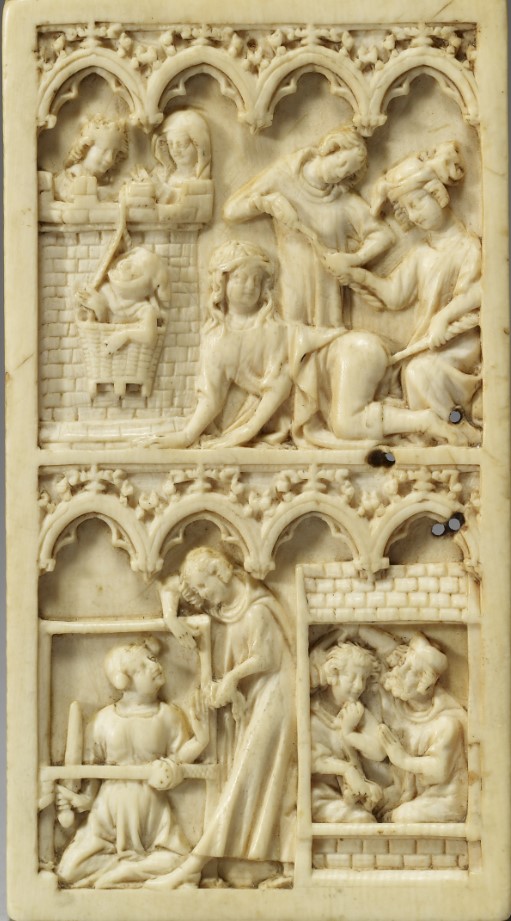
The bas-relief on one of the pillar’s capitals in the nave of the ND of Strasbourg represents a satirical procession, in which a pig is seen carrying a holy stoup, followed by donkeys dressed in priestly clothes and monkeys bearing various religious attributes, and a fox enclosed in a shrine. It is the “Procession of the Fox or the Feast of the Donkey”.
The priests, unable to understand this grotesque parody of the entry of Christ into Jerusalem, had to bend their heads under the ridicule poured out by these Mystifiers.
There were also bizarre annual events in which a precise hermetic meaning was discernible. With the Gothic church as their theater, there was the Flagellation of the Alleluia, in which choirboys energetically whipped their humming-tops down the aisles; there was the Procession of the Shrovetide Carnival and the Devilry of Chaumont.
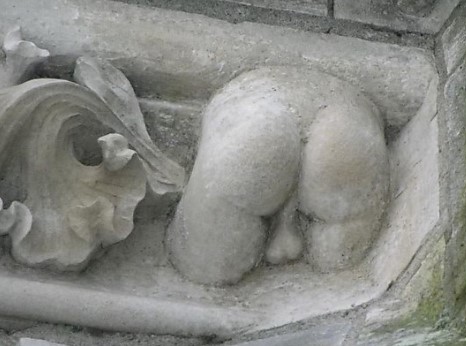 Water spouts
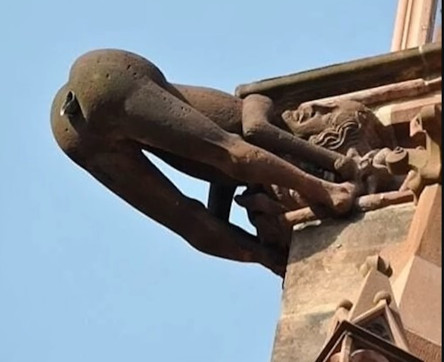
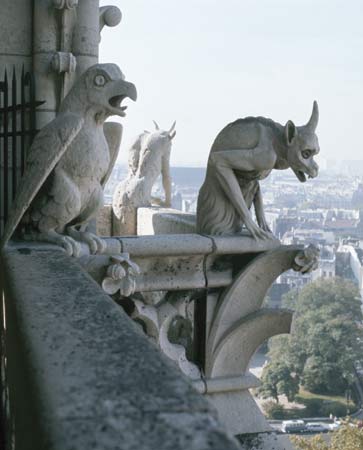
There were the bristling monsters, of grotesques comic figures, masks, menacing dragons, gargoyles, vampires and tarasques, together forming the secular guardians of an ancient patrimony.
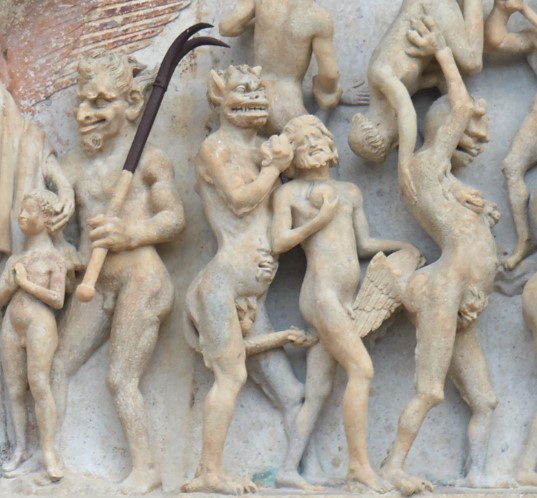
 In the late Middle Ages, the city of Bourges was connected with sodomy, and calling someone “from Bourges” meant that this person had homosexual preferences. Considered a sin, we find hints on this subject in the cathedral’s tympanum, depicting the Last Judgement (13th c.).
Among the damned we can spot a man with a money-bag (being avaricious?), who is pulled by his hair by the devil. The damned has a rather sorry expression, perhaps due to the fact that the devil’s tail, which has its own head (!), is biting the man’s thigh. His tail has a phallic shape, and it is obviously reaching towards the man’s intimate areas:
Cathedrals had their apses pointing at the SE, the facade to the NE, and the transept from NE to SE, so both devotees and pagans could enter the temple through the West and look at the East, where the sun rises, heading to Palestine, the cradle of Christianity. Thus, everyone entering these temples would leave darkness behind and reach for the light.
Gothic art is the art of light and of the spirit, which opposes Romanesque art, fraught with darkness. There are 3 main colors that stand out in the temple: black, for evil or darkness; white, for everything immaculate or the light that is sought by the initiated; and red, representing the last stage of the path begun, the prevalence of the spirit over the body.
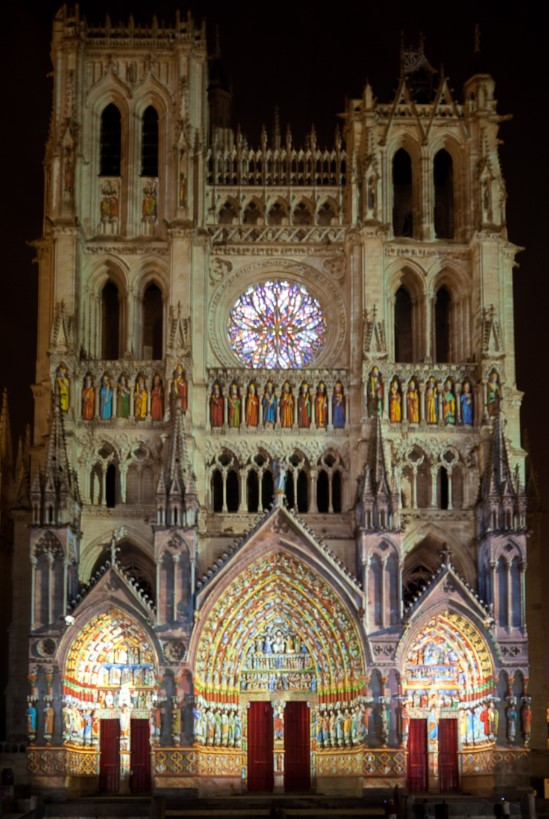
Cathedral in Amiens illuminated
Everything was gilded and painted in vivid colors. The porch of ND of Paris was as resplendent as the gates of Paradise: purple, rose, azure, silver and gold. It is the Philosophers’ church, the most satisfying summary of the hermetic science.
One can feel rapture when faced with those beautifully colored picture books erected and raising to heaven their pages of sculptured stone, clearer than their younger manuscripts and printed books, because they are translatable only in absolute sense. It is simple in expression, and picturesque in interpretation.
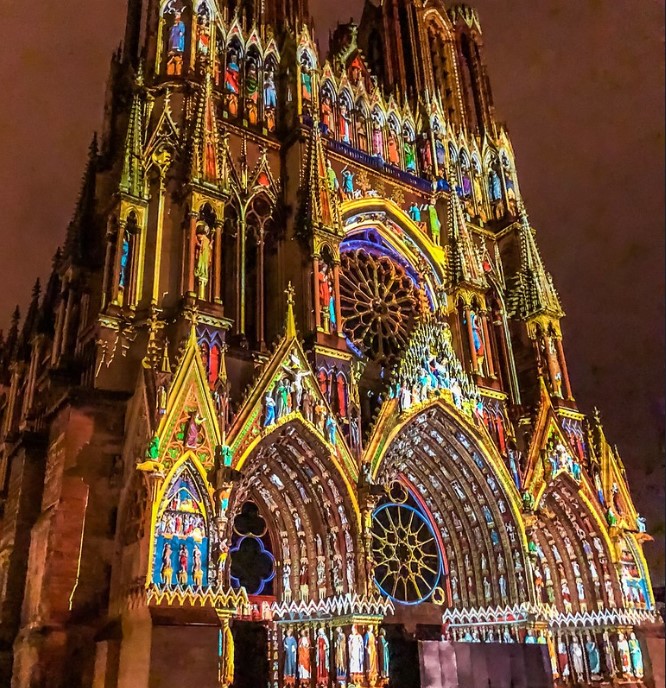 Cathedral in Reims illuminated
The language of stones, is both clear and sublime, speaking alike to both the humblest and to the most cultured heart. A moving language, this gothic of the stones! Only the Gregorian chant, can add something to the emotions, which the cathedral itself has already aroused.
The gothic cathedral, is not just a work dedicated to the glory of the Cosmic Christ, but also a vast concretion of ideas and popular beliefs, an original work of incomparable harmony.
If the tranquility of the multi-colored light from the tall stained-glass windows invites the visitor to meditation; the structure and the ornamentation, in their extraordinary power, release and reflect a more secular and an almost pagan spirit.
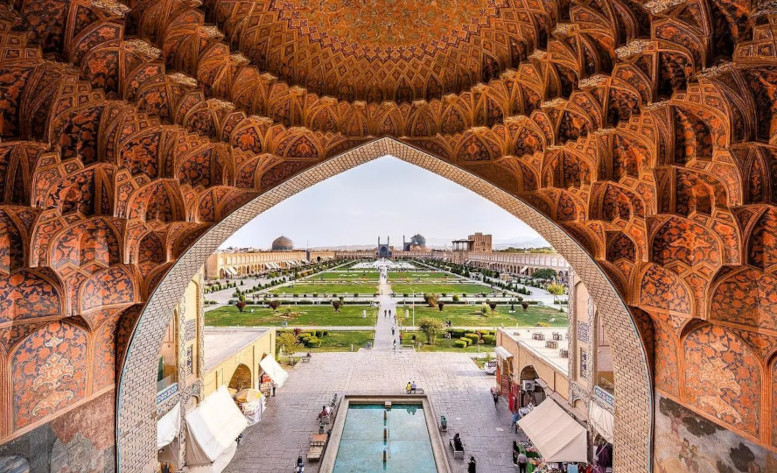 Naqsh-e-Jahan square:
huge “gothic” gathering place in Isfahan