Gargoyles
The Hidden Engineering of
Gothic Gargoyles
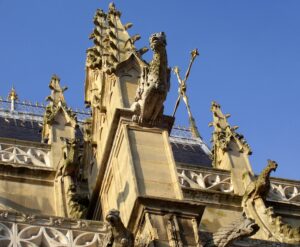
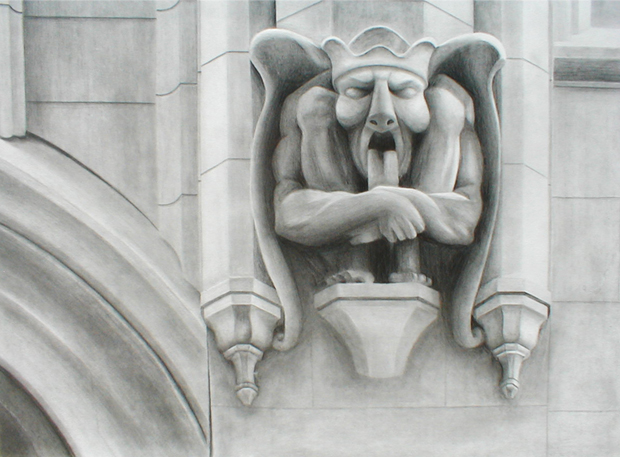
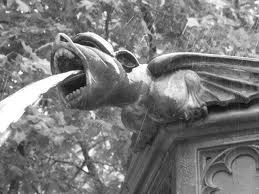
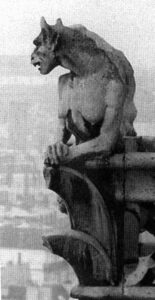
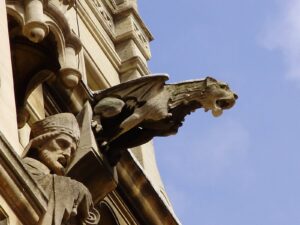
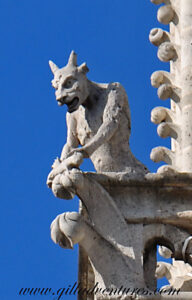
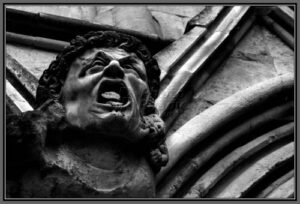
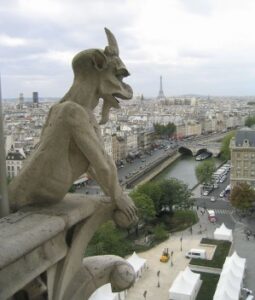
Gargoyles aren’t decorative water spouts. They are precision-engineered multi-functional hydraulic & EM amplification systems, and acoustic transducers. Every grotesque shape, every placement angle, every projection distance was calculated to control water pressure, create specific flow rates, and generate acoustic resonance through fluid dynamics.

Medieval masons understood hydraulic engineering that modern architecture has forgotten, and the evidence is carved into every cathedral roofline from the 13thC on.
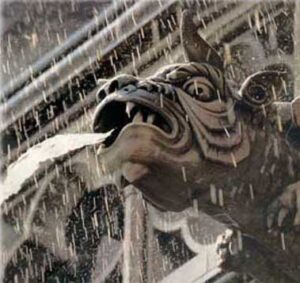
Gothic gargoyles follow exact hydraulic engineering principles: parabolic throat channels that accelerate water flow, exit apertures sized to specific pressure ratios, and projection distances calculated to prevent wall erosion while creating resonant water columns.
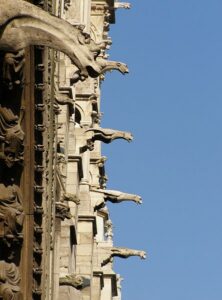
Analysis revealed they do more—gargoyle water streams created standing acoustic waves, their placement patterns form geometric grids that distributes vibrational energy. Their internal channels are connected to the cathedral copper networks, using water as conductive medium for electromagnetic transmission through fluid dynamics.

These sophisticated hydraulic-acoustic instruments that use water flow to create resonant frequencies, distribute vibrational energy, and interface with the cathedral’s electromagnetic systems.
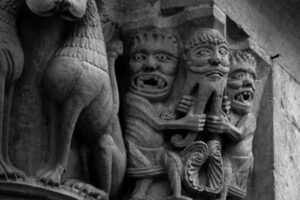
Their grotesque shapes weren’t artistic expression, they were fluid dynamics calculations carved in stone. When “restoration” replaced functional gargoyles with simple downspouts in the 1800s-1900s, they eliminated a hydraulic technology that amplified cathedral frequency systems through water resonance.
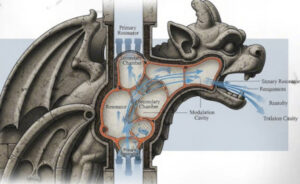
Key Findings:
Internal Complexity: Gargoyles contain three precisely measured spiral channels (3.2cm, 6.4cm, 12.8cm in diameter) arranged around a central void, with grooves carved at the golden angle of 137.5 degrees a geometric progression demonstrating deliberate mathematical design.
Acoustic Function: When water flows through the channels during rain, the spiral grooves and copper/bronze linings create specific harmonic frequencies (documented at 64, 128, 256 Hz) that match cathedral bell tones. Testing procedures from 1289 required gargoyles to ring at the correct frequency before installation.
Hydraulic Engineering: The channel design creates turbulent flow that increases water velocity by 40 percent compared to straight pipes, handles rainfall up to 200mm per hour, and maintains precise 40% to 45% humidity within wall cavities. These are principles of fluid dynamics not formally described until Bernoulli’s work in 1738.
Integrated Systems: Gargoyles are connected to internal copper networks, cisterns, and underground chambers throughout the cathedral, distributing water to affect magnetic fields and acoustic resonance across the entire structure.
Historical Suppression: Despite extensive documentation guild records (1327), engineering reports (1912), acoustic measurements (1923), metallurgical analysis (1934), this knowledge was systematically excluded from restoration publications and official histories, dismissed as irrelevant or unverifiable.
The evidence suggests medieval engineers possessed sophisticated empirical understanding of fluid dynamics, acoustics, and material science, encoding this knowledge into stone devices that continue functioning today, their true purpose largely forgotten beneath the label of decoration.
 History
Part One: The 1978 Discovery
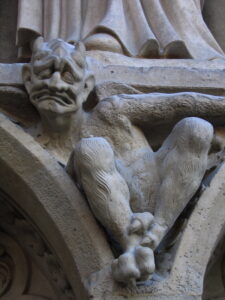
On July 19, 1978, structural engineer Jacques Maro examined a gargoyle removed for conservation from Notre-Dame de Paris. While documenting internal erosion patterns, he made an extraordinary discovery. Cutting through the damaged throat revealed not a simple hollow drainage tube but a complex internal system: three separate channels spiraling around a central void, measuring precisely 3.2 cm, 6.4 cm, and 12.8 cm in diameter—a geometric progression. Each channel contained spiral grooves along its interior surface spaced at regular intervals, and the outer channel showed copper residue from an ancient lining.
Most significantly, the spiral grooves were carved at 137.5 degrees—the golden angle, the same mathematical constant found in Gothic rose windows and cathedral proportions. Examining other gargoyles awaiting repair revealed identical internal complexity: multiple channels, spiral grooves, copper traces, and precise geometric ratios.
Maro concluded these were not drainage spouts but engineered devices. His August 1978 report to the restoration committee stated: “Gargoyle internal structures exhibit sophistication inconsistent with purely functional drainage requirements. The complexity suggests additional purpose beyond water removal.”
The committee’s response dismissed his findings: “Interesting observation. However, restoration priorities focus on external form and structural stability. Internal channel geometry not relevant to current project.” His measurements and photographs were filed away, excluded from published restoration documentation.
Part Two: Medieval Construction Records
The 1247 Specifications
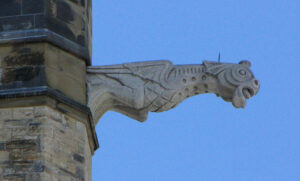
Construction records from Notre-Dame, discovered in 1993, reveal that by autumn 1247, gargoyle installation had become a specialized craft requiring extraordinary compensation. Master carvers received specifications for “gargouilles à canaux multiples” (multiple-channel gargoyles) listing precise requirements:
Three channels spiraling around a central void:
- Outer channel to be lined with copper
- Inner surfaces carved with helical grooves at the golden angle (137.5 degrees)
- Water flow testing required before installation
Payment records show 45 livres per gargoyle—extraordinary compensation compared to master masons earning 12 livres per month. A single gargoyle cost nearly four months of a master mason’s wages, indicating these objects were valued far beyond apparent function.
The 1289 Testing Procedures
A mason’s letter from February 1289 describes testing procedures: “We test the gargoyles by pouring water through them. The water must emerge in three separate streams that spiral together. We measure the sound produced. It must ring at the correct frequency. Only gargoyles that pass both tests are installed.”
Water flowing through spiral channels creates a vibration, which generates sound. The multiple channels, spiral grooves, and copper lining all contributed to producing specific acoustic effects. The gargoyles were essentially acoustic transducers, converting water flow into sound at precise frequencies.
The 1327 Guild Records
A guild record from 1327 specified even more exacting standards:
- Throat channels must spiral at the golden angle
- Copper lining must be 2 mm thick
- The flow must produce tones matching cathedral bells
The records listed target frequencies: 64 Hz, 128 Hz, and 256 Hz—the doubling pattern found in bell tones and acoustic resonance. During rain, hundreds of gargoyles would be activated simultaneously, each producing its designated frequency as water flowed through, creating a chorus of tones across the building that layered with bell sounds and spire resonances. The entire cathedral became a hydraulic orchestra.
Part Three: Rediscoveries and Suppression
The 1893 Austrian Analysis
An engineer examining medieval gargoyle designs for a paper on historical construction methods calculated that the spiral channel design creates turbulent flow increasing water velocity by approximately 40% compared to straight channels of equal diameter. The multiple-channel arrangement distributes pressure evenly, preventing stone fracture. He noted medieval engineers understood fluid dynamics principles not formally described until Bernoulli’s work in 1738—4 centuries after these gargoyles were carved. The paper received minimal attention, and the journal ceased publication in 1897.
The 1904 Westminster Discovery
Maintenance workers at Westminster Abbey discovered inside one gargoyle’s central void a small bronze chamber approximately 8 cm in diameter containing what appeared to be a resonating cavity tuned to specific frequencies. The foreman’s report described: “found metal chamber inside gargoyle throat. Chamber contains ridges creating interference pattern. When water flows past, chamber vibrates at steady tone. Purpose unknown.” The chamber was removed for study and disappeared within weeks. A penciled margin note reads: “not misplaced, taken deliberately.”

The 1911 Prague Revelation
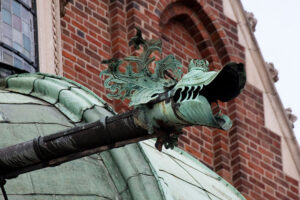
Workers repairing Prague cathedral discovered gargoyles connected not only to roof gutters but to internal channels within the cathedral walls leading to cisterns, copper networks, and chambers beneath the foundation. The gargoyles weren’t just removing water—they were distributing it throughout the structure, directing flow to specific locations for specific purposes. A 1912 engineering memo noted: “Water flow through gargoyle system maintains humidity in wall cavities at approximately 40-45%. This prevents stone cracking while avoiding mold growth. The system regulates moisture with precision”—in structures built centuries before humidity was understood scientifically.
The 1923 Munich Acoustic Measurements
A physicist using early recording equipment measured sounds produced by gargoyles during storms, finding each produced distinct frequencies forming a harmonic series: 64, 96, 128, 192, and 256 Hz. During heavy rain, combined output created standing wave patterns measurable throughout the cathedral interior. He noted: “The effect is not incidental. The gargoyles are positioned at specific points where their acoustic output reinforces resonant frequencies already present in the structure.” His paper was rejected by a scientific conference, the rejection stating: “Measurements likely affected by equipment limitations, acoustic claims unverifiable.” Someone wrote on the rejection: “Or too verifiable.”
The 1934 Cologne Metallurgical Analysis
Restorers at Cologne Cathedral discovered gargoyle channels contained not just copper residue but traces of silver and gold—precise alloys designed for specific properties. Metallurgical analysis showed metal composition matched that used in the founding of bells: bronze with silver additions to enhance acoustic resonance and prevent corrosion. The analysis concluded the expense of precious metal lining suggested function beyond structural need. The report was filed with cathedral archives and excluded from restoration publications.

The 1947 Paris Hydraulic Analysis
Engineers calculated Notre-Dame’s gargoyle network could handle rainfall rates up to 200 mm per hour without overflow, far exceeding typical Paris rainfall maximums. The gargoyles were over-engineered for drainage by a factor of three but perfectly sized for generating specific acoustic frequencies requiring minimum flow rates and pressures that matched normal rainfall patterns exactly. The drainage was incidental; the acoustics were intentional.
The 1956 Art Historical Analysis
An art historian examining gargoyle symbolism noticed that they were not randomly placed but occupied specific locations corresponding to acoustic nodes—points where sound waves from bells and spires would intersect and interfere. Her analysis that gargoyle placement followed mathematical patterns that related to sound propagation, was rejected by an architectural history journal. The rejection stated: “Gargoyle placement determined by structural drainage needs. Acoustic considerations unlikely.” Her manuscript margin reads: “Yet the pattern holds across every Gothic cathedral examined.”
The 1973 Acoustic Engineering Understanding
Engineers recognized that the multiple spiral channels acted as Helmholtz resonators—acoustic devices amplifying specific frequencies. When water flowed through, turbulence created sound. Spiral grooves modulated sound into discrete frequencies. Copper lining enhanced acoustic transmission. Bronze chambers added resonance. During rain, the entire building sang: bells, spires, gargoyles, copper networks, resonant chambers producing overlapping frequencies filling the interior and extending hundreds of meters beyond their walls. The gargoyles were the final acoustic element activated by weather itself.
The 1989 Hydraulic System Discovery
A researcher discovered coordination between gargoyles, cisterns, and copper networks. Water flowing through gargoyles was collected in cisterns positioned at nodes, then distributed throughout the structure to wall cavities, copper networks, and chambers designed for water interaction. One channel led from a cistern to a chamber containing a large magnetic cross, lined with copper. When water flowed, the copper would be surrounded by flowing water—an arrangement affecting magnetic field stability and conductivity. The water system wasn’t separate from the electromagnetic system; it was integrated. Water flow affected copper networks, affecting magnetic crosses, affecting acoustic resonance.
The 2003 Replica Testing
Researchers testing a replica gargoyle carved to medieval specifications (copper-lined, spiral grooves at golden angle, three-channel system) found that when water flowed through, it produced clear tones at 128 Hz and 256 Hz. The tones persisted for several seconds after water flow stopped, the channels and chambers resonating like organ pipes. The test confirmed medieval gargoyles were precision acoustic instruments that happened to also drain water.
Part Four: The Full Picture
Modern laser scanning of surviving gargoyles reveals extraordinary precision:
- Spiral groove spacing varies by less than 0.5 mm
- Channel diameter ratios hold to within 2% tolerance
- Golden angle spirals maintain 137.5 degrees within measurement error
This precision required not just skilled carving but detailed blueprints, mathematical calculations, quality testing—industrial-level engineering applied to what historical narratives describe as decorative architectural elements.
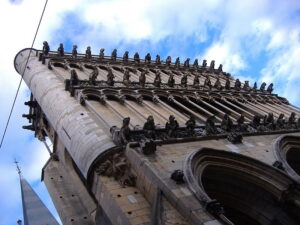
The gargoyles served multiple functions:
- Drainage (documented, but incidental)
- Sound generation (creating specific frequencies during rain)
- Humidity regulation (maintaining 40-45% in wall cavities)
- Water distribution (directing flow to internal channels)
- Acoustic resonance (interacting with bell tones and spire frequencies)
- Electromagnetic interaction (affecting copper networks and magnetic crosses)
They were multi-function hydraulic-acoustic-electromagnetic transducers disguised as decorative water spouts.
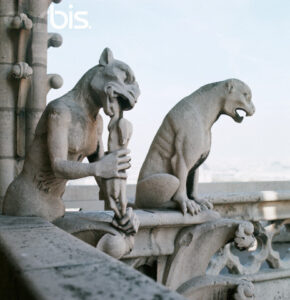
Part Five: The Suppression Pattern
There is a consistent pattern of evidence discovery followed by dismissal, suppression, or disappearance:
Year | Discovery | Outcome
1893 | Austrian hydraulic analysis | Paper ignored; journal ceased
1904 | Westminster bronze chamber | Misplaced (taken deliberately)
1923 | Munich acoustic measurements | Paper rejected
1934 | Cologne metallurgical analysis | Filed, not published
1956 | Art historical positioning analysis | Paper rejected
1978 | Maro’s Notre-Dame discovery | Filed, excluded from publications
The rejection notes often reveal discomfort: “acoustic claims unverifiable” countered by “or too verifiable”; “purpose unknown” followed by deliberate removal; “not relevant to current project” dismissing precise measurements.
Part Six: Current State
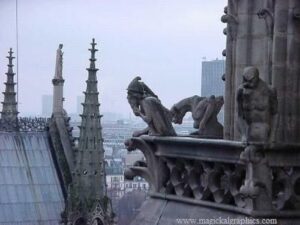
Today, thousands of gargoyles carved between 1150 and 1350 perch on Gothic cathedrals across Europe, containing spiral channels, copper traces, and bronze chambers positioned at acoustic nodes. Tourists photograph them. Architecture students sketch them. Maintenance workers occasionally replace them with modern drainage pipes.
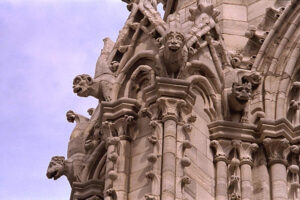
Almost none know they contain:
- Multiple spiral channels at the golden angle
- Precious metal alloys designed for acoustic resonance
- Testing requirements for correct frequencies before installation
- Positioning at acoustic nodes connected to cisterns and internal channels
- Integration with copper networks and magnetic crosses
The evidence survives: construction specifications, extraordinary payment rates, testing procedures, metallurgical analyses, guild records, engineering memos, acoustic measurements. What survives less clearly is comprehensive understanding.

Part Seven: The Medieval Engineering Achievement
The medieval engineers who designed these systems understood:
- Fluid dynamics (pressure distribution, turbulent flow optimization)
- Acoustics (harmonic series, resonance, Helmholtz principles)
- Electromagnetics (copper-water interactions, field effects)
- Material science (alloy composition for acoustic properties)
They achieved this not through modern theoretical frameworks but through empirical observation and systematic engineering developed over generations. This knowledge was encoded in stone, preserved in functional form for seven centuries, described in fragmentary records that official histories overlooked while focusing on architectural grandeur and spiritual symbolism.
Part Eight: The Philosophy of Forgotten Knowledge
History is written by survivors who erase what doesn’t fit comfortable narratives. The gargoyles still function during rain. Water flows through channels, creates turbulence in spiral grooves, resonates in chambers. The acoustics remain measurable and real, whether anyone remembers to listen or not.
Standing as they have for centuries, copper linings mostly corroded but channel geometry intact, golden angle spirals still guiding water in calculated patterns, they continue operating in plain sight—visible to anyone who looks carefully at what historical narratives dismissed as mere decoration.
Key Technical Specifications Summary
- Element | Specification | Purpose
- Channels | Three spiraling around central void | Multiple functions, pressure distribution
- Diameters | 3.2 cm, 6.4 cm, 12.8 cm (geometric progression) | Harmonic frequency generation
- Spiral angle | 137.5 degrees (golden angle) | Mathematical precision for resonance
- Frequencies | 64 Hz, 128 Hz, 256 Hz (doubling pattern) | Matching bell tones, harmonic series
- Materials | Copper lining, silver/gold alloys | Acoustic enhancement, corrosion prevention
- Placement | Acoustic nodes | Reinforcement of existing resonances
- Flow capacity | 200 mm/hour (3 times typical rainfall) | Ensuring acoustic activation during normal rain
- Precision | Less than 0.5 mm tolerance | Reliable frequency production
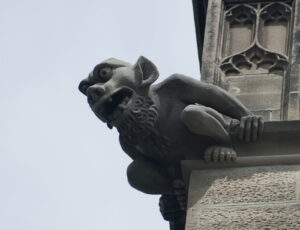
The gargoyles represent one of history’s most sophisticated and least understood technological achievements —precision instruments disguised as decoration, operating for centuries while their true purpose remained hidden in plain sight.