Garima Gospels

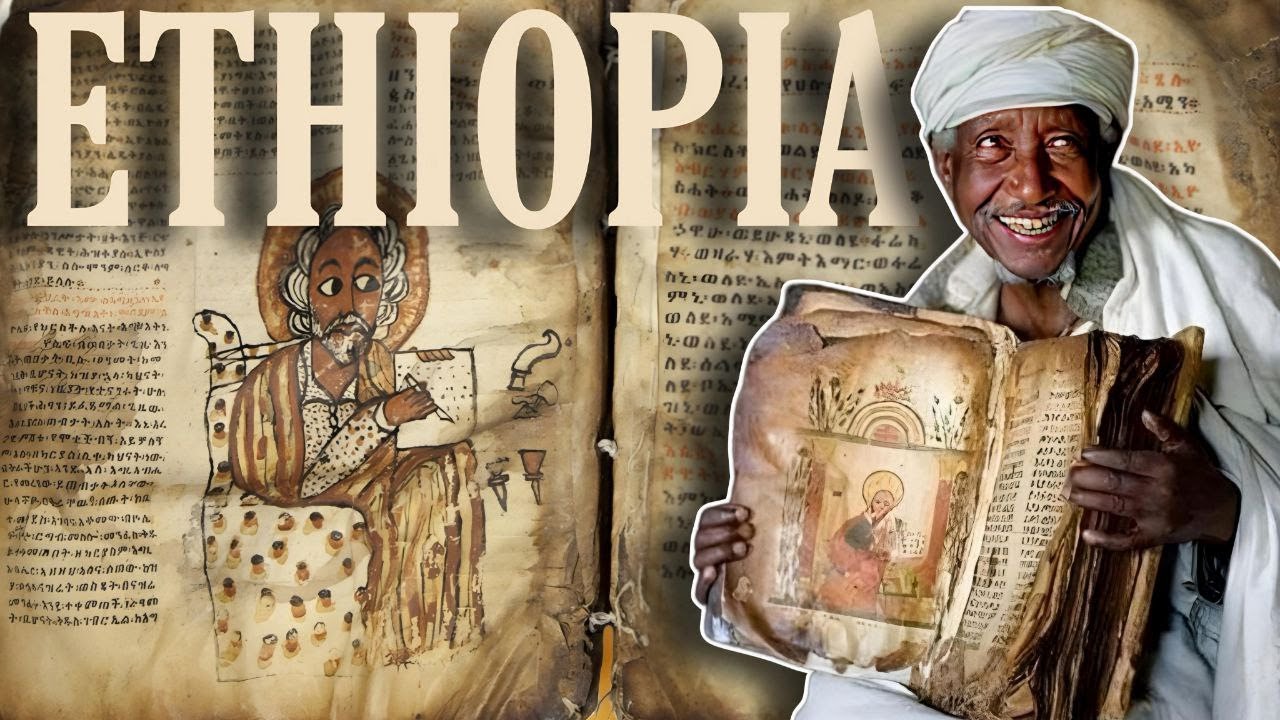
The three Garima Gospels are the earliest surviving Ethiopian gospel books, containing all 4 canonical gospel books, and supplementary material like lists of Gospel chapters. They provide glimpses of lost late antique luxury gospel books and art of the 5th to 7th centuries, in the Aksumite kingdom of Ethiopia (350-650 AD) as well as in the Christian East.
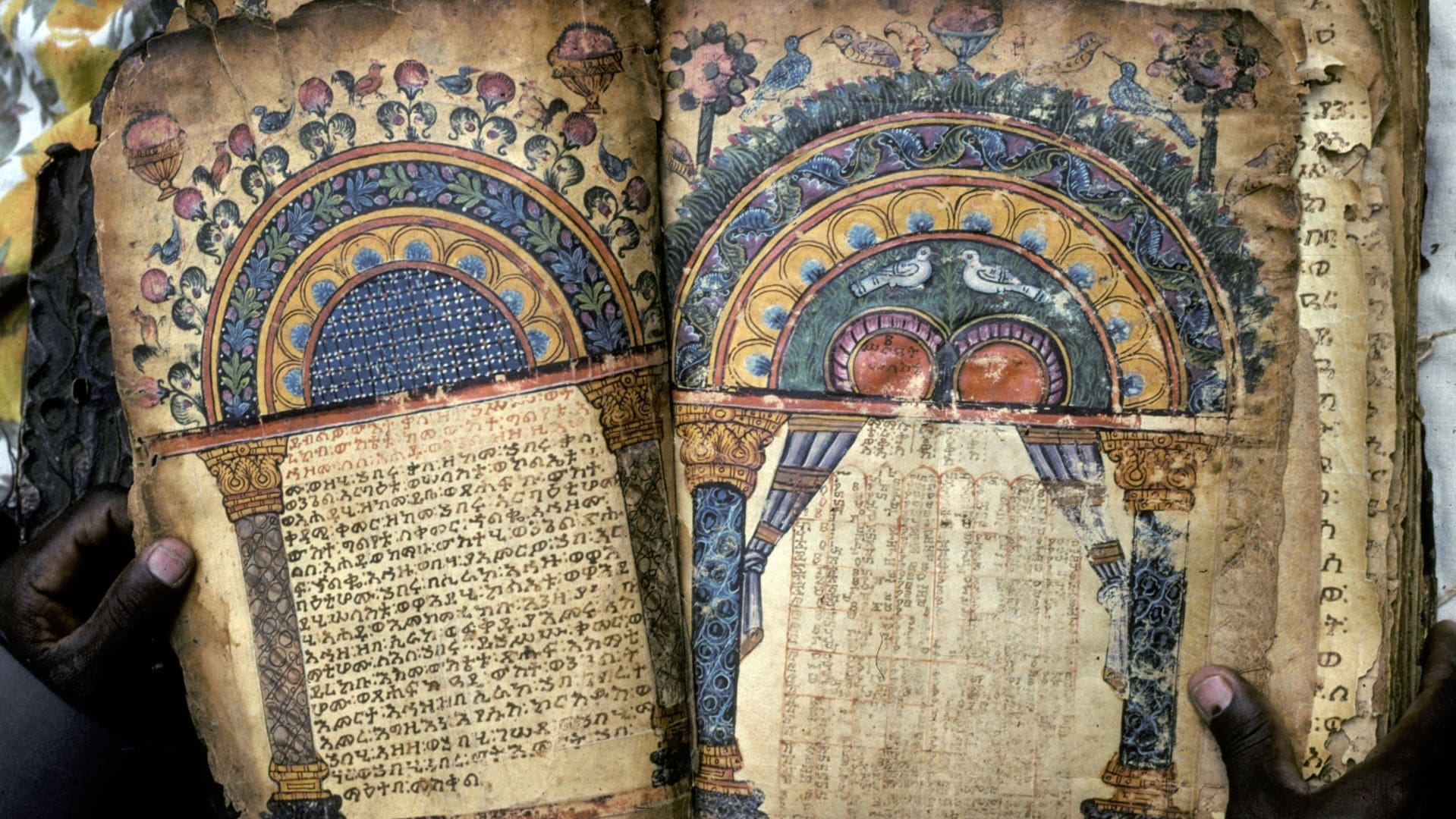
These unique works of Biblical art are written in Ethiopic, the ancient Semitic language of Abyssinia, and are composed of two distinct 10-inch-thick books, Garima 2 (the elder text) and Garima 1 (the younger text), written on goat skin and embellished with colorful drawings:
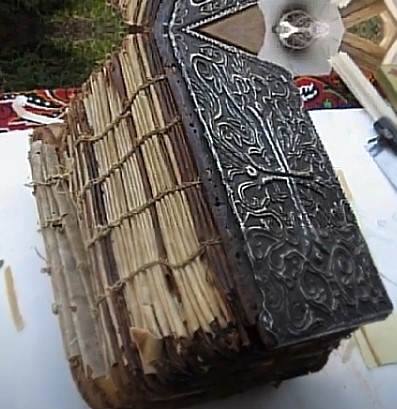
The Gospels are housed in Ethiopia’s Abba Garima Monastery. They are not known ever to have left the monastery. According to tradition, the Saint Abba Garima wrote and illustrated the complete Gospels in a single day: God stopped the sun from setting until the Saint completed his work:

The Garima Gospels are the oldest translation of the Bible in Ge’ez and the oldest illustrated Christian manuscript. Monastic tradition and recent radiocarbon analysis holds that they were composed around 500 AD:
Their artwork is closely related to Syriac, Armenian, Greek, and Georgian gospel books and to the art of late antique (Coptic) Egypt, Nubia, and Himyar (Yemen).
Like most gospel manuscripts, the Garima Gospels contain ornately decorated canon tables which function as concordances of the different versions of the same material in the gospels.
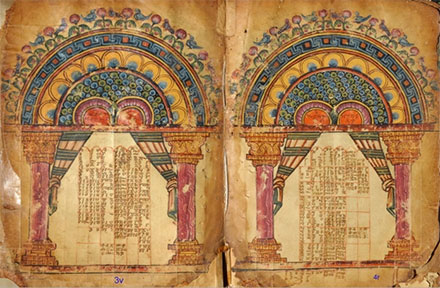
Analysis of these tables of numbered parallel passages, devised by Eusebius of Caesarea, contributes significantly to our understanding of the early development of the canonical four gospel collection.
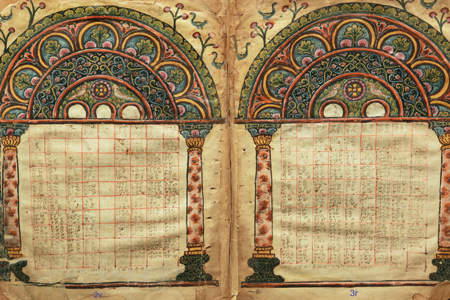
The origins and meanings of the decorated frames, the portraits of the evangelists, the Alexandrian circular pavilion, and the unique image of the Jerusalem Temple are widely elucidated here:
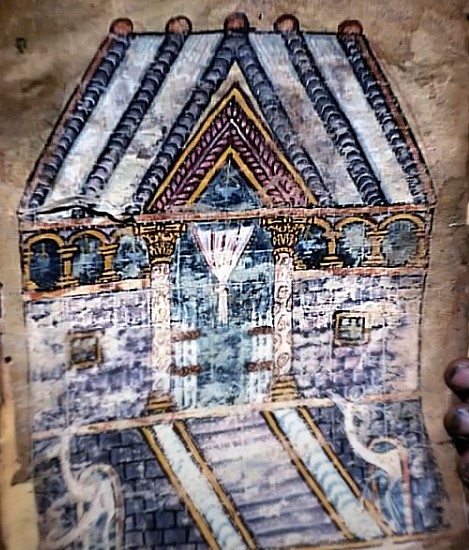
The Garima texts/decorations demonstrate how a distinctive Christian culture existed in Aksumite Ethiopia, while being also part of the antique Mediterranean world.
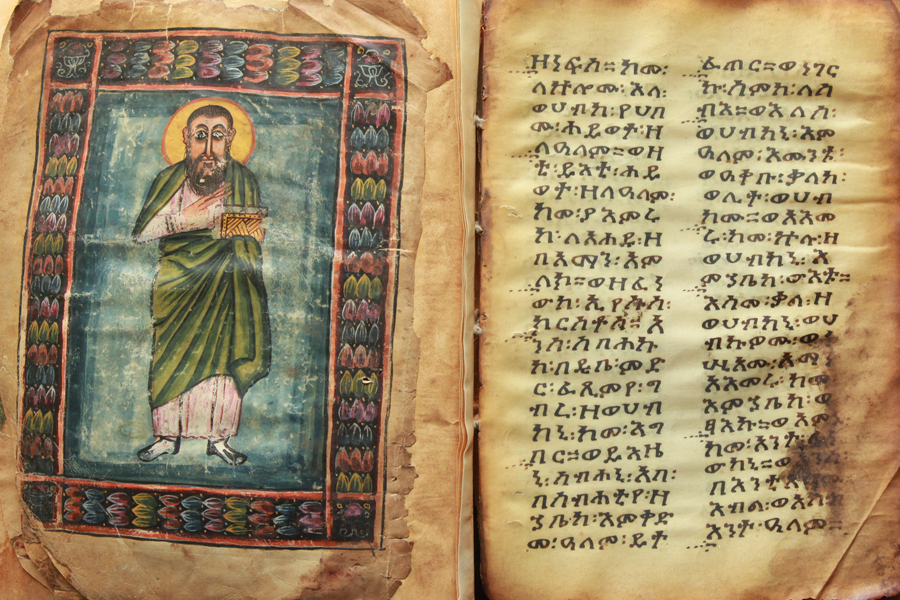
Lavishly illustrated in color, this volume presents for the first time all of the Garima illuminated pages as comparative material.
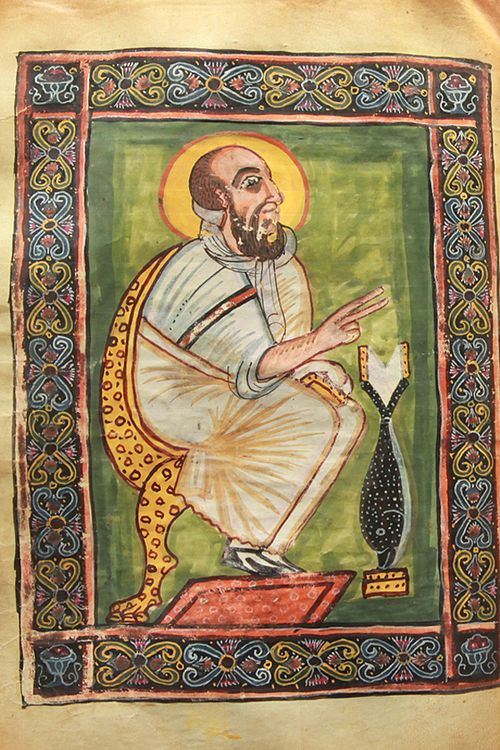
St Mark on Throne of Alexandria
It will be an essential resource for those studying illuminated books, late antique art & history, Ethiopia, eastern Christianity, and New Testament textual criticism.
The Ethiopian Tewahedo Bible translated