Rock-hewn Churches
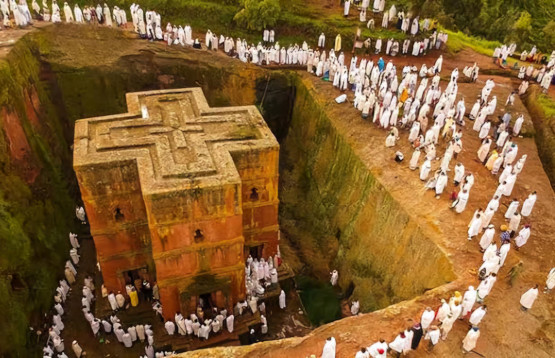
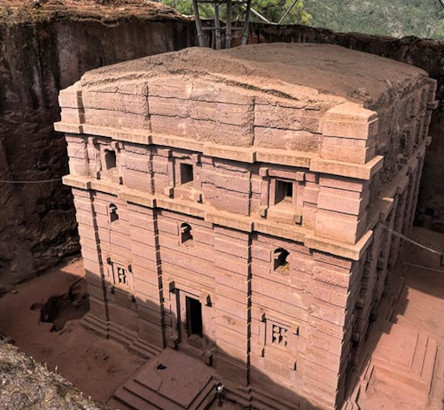
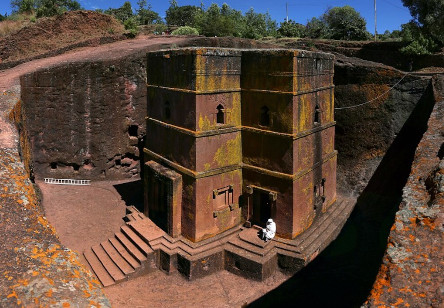
The 11 monolithic still-active churches of Lalibela are not built from stone, but carved out of soft volcanic rocks. Some stand as isolated blocks in deep pits, while others have been cut into the face of a cliff.
Doors, windows, lintels and all decoration are also chiseled artfully from the rock in the earth. So are the churches’ associated trenches, passages and tunnels.
This amazing feat of architecture was partially built in the 7th-8thC, and then elaborated upon by the Christian King Lalibela in the 12thC. He wanted to build a „New Jerusalem“, a substitute, after the Muslim conquests prevented Christian pilgrimages to the holy Land.
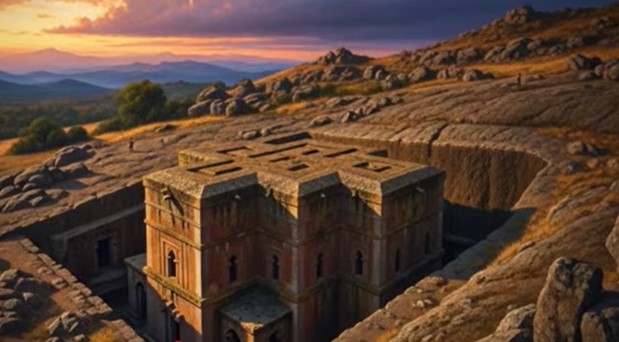
The 500-year gap coincides with the decline of Aksum Empire and the rise of Medieval Ethiopia. The lower outer windows, carved according to the Aksumite pattern, are all false, because they do not penetrate into the church’s interior.
The churches are divided into clusters:
Northern Cluster:
- Bete Medhane Alem
- Bete Maryam
- Bete Maskal
- Bete Denagel
- Bete Golgotha Mikael. It has replicas of the tombs of Christ & Adam, as part of the “New Jerusalem”.
Southern Cluster:
- Bete Gabriel-Rafael
- Bete Merkorios
- Bete Emanuel (see above image)
- Bete Abba Libanos:
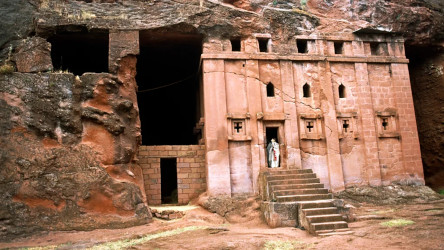
Knights Templar crosses in wall
Isolated Church:
The site of Axum is one of the world’s great archaeological sites. At its zenith (3rd – 5thC AD), it was described by Mani, the famous Zoroastrian prophet of the 3rdC AD, as one of the 4 great civilizations of the world. Axum is best known for its field of huge, beautifully carved obelisks, that mark the subterranean burial places of the kings.
One of them, 24m high, was stolen by Italian occupiers of Ethiopia and re-erected in Rome. It was returned to Axum in 2009:
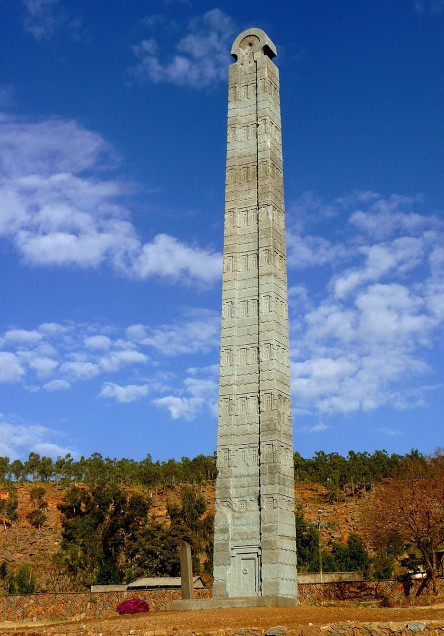
Aksum falls into two phases:
- A pre-Christian period from the 1st-early 4thC, when the prevailing religion was similar to the one practiced in S-Arabia at that time. During this time the huge obelisks were erected and the accompanying underground tombs created.
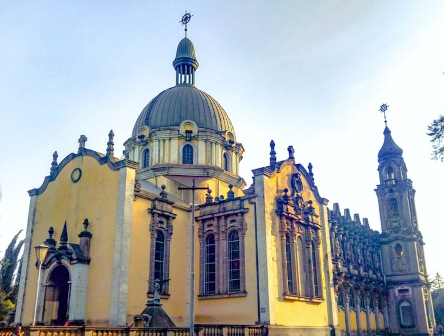
- During this phase Ethiopians adopted Christianity, being the 2nd country after Armenia. Christian Axum flourished for over 300 years, but in the 7thC it declined rapidly, as it was increasingly isolated from fellow Christians by the rapid spread of Islam around it.
A great church was erected and later rebuilt various times. Its current form is 17thC, and is now the core of Ethiopian Christianity:
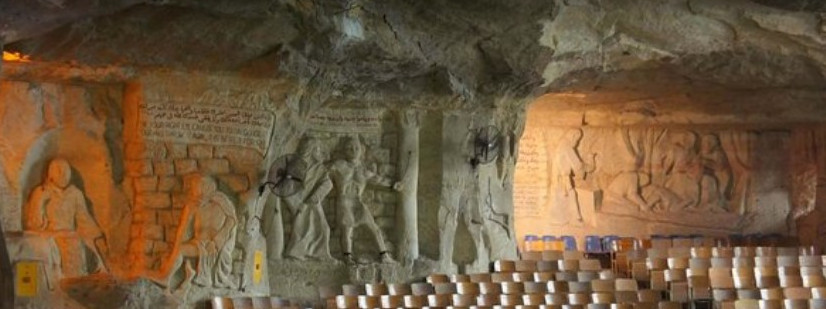
7 Coptic cave churches are hidden among the caves of Mokattam Mountain, near Cairo. The Monastery of St. Simon the Tanner, also known as the Limestone Cave Cathedral, is the largest. It has an amphitheater with over 20,000 seats:
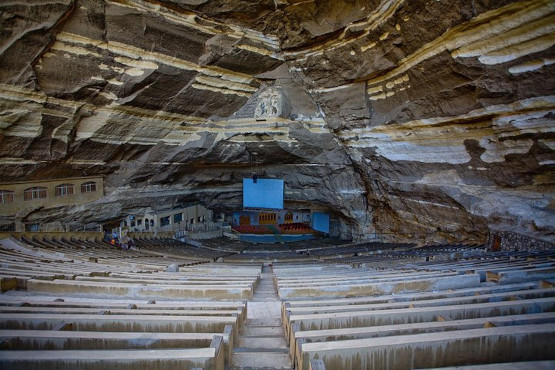
It is the largest church in the M-East. It is named after the Coptic saint, Simon the Tanner, who lived at the end of the 10thC, when Egypt was ruled by Muslims. It is located at the top of Mokattam mountain.
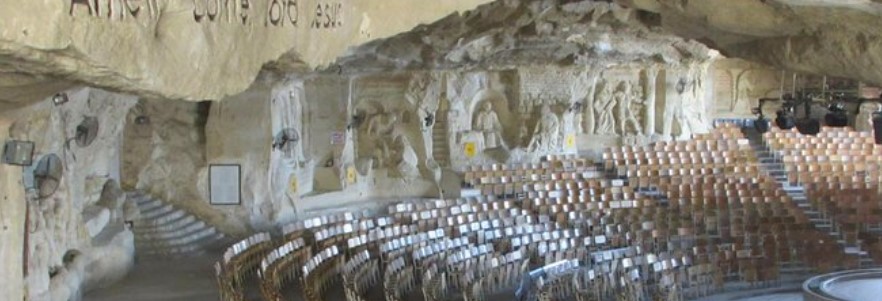
See also the carvings in the banner above. The Holy Family below:
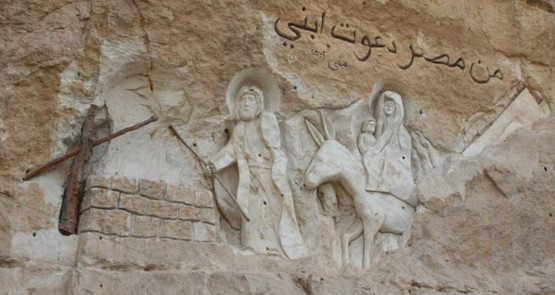
He is the Coptic saint who is associated with the legend of the moving of the Mokattam Mountain. Adjacent churches to St. Simon the Tanner include St. Paul’s and St. Mark’s Church.
At the foot of the mountain plateau is Zabbaleen city, the place where over 30.000 of Cairo’s garbage people, mostly Coptic Christians, were moved to after WWII.
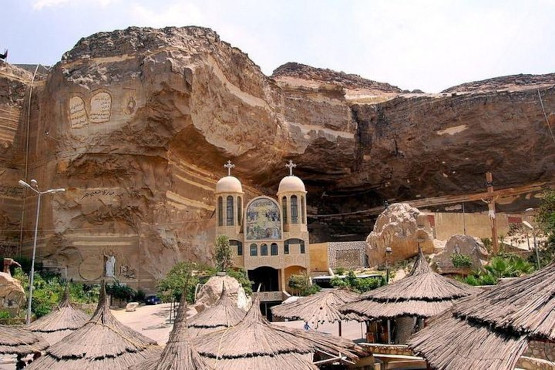
St Samaan Church, Mokattam Mountain
The Cave Church of Martyrs Sergius and Bacchus, or Abu Serga Church, is one of the oldest Coptic Christian churches in Egypt, built in the 11thC with 4thC pillars. It honors the Roman soldiers Sergius and Bacchus, who were martyred in Syria for their Christian faith in 296 AD:
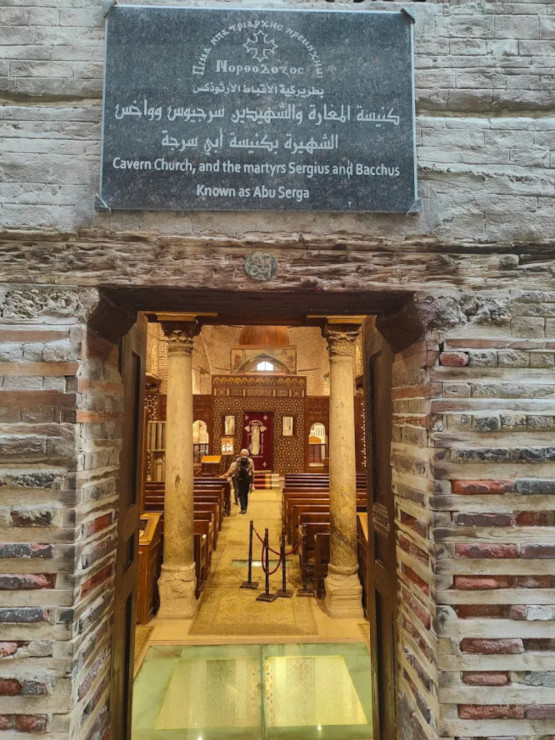
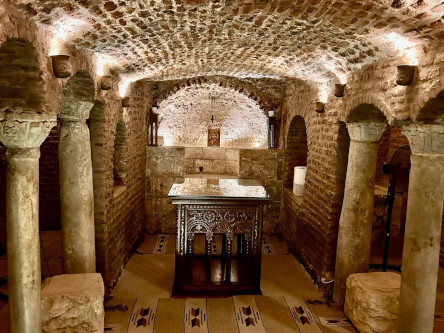
Tradition holds that this Church was built over a cave where Joseph, Mary and little Jesus took shelter after fleeing to Egypt to escape persecution from King Herod of Judea, who had embarked upon a ‘massacre of the first born’:
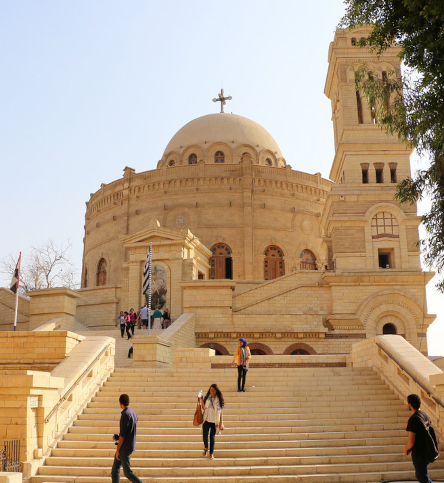
St. George church the only round church in Egypt.
The church was built as Coptic
in 684 AD until the 15thC.
The present Greek-Orthodox structure
was built in 1904.
It is connected to
the monastery of St George.
He was imprisoned and martyred here!?
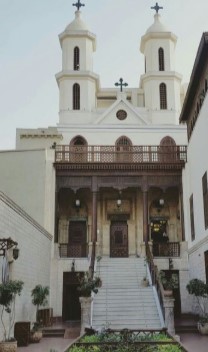
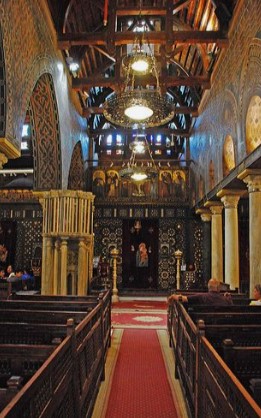
The above Hanging Church dates back to the 3rd C. It gained its name through how it was built on the ruins of a Roman fortress. Its roof is shaped like Noah’s Ark. It is also known as Saint Virgin Mary’s Coptic Orthodox Church.
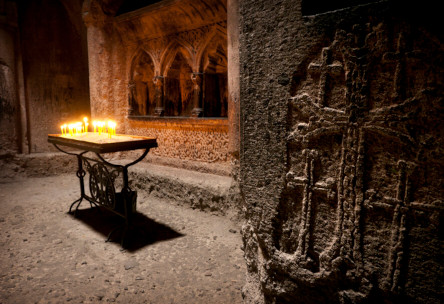
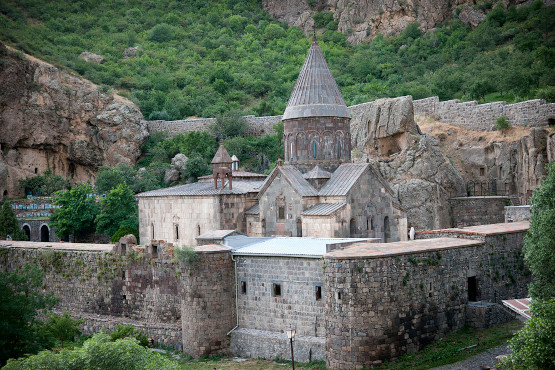
The monastery of Geghard and the Upper Azat Valley contains a number of churches and tombs, cut into the living rock, illustrating Armenian medieval architecture at its peak:
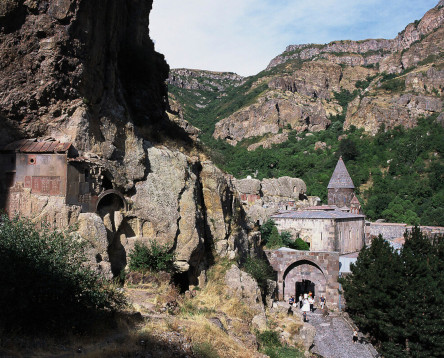
The complex of medieval buildings is set into a landscape of great natural beauty, at the entrance to the Azat Valley. High cliffs from the N-side surround the complex while a defensive wall encircles the rest.
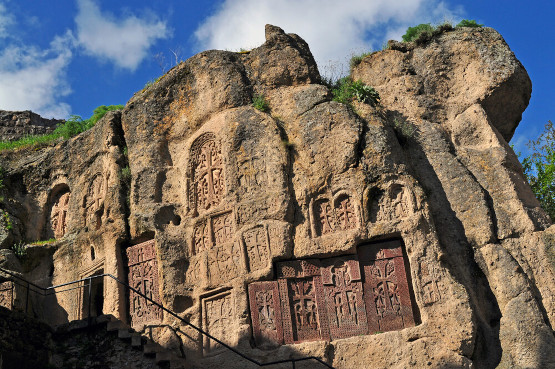
The monuments included in the property are dated from the 4th to the 13thC. In the early period, the Monastery was called the Monastery in the Cave, because of its rock-cut construction. The monastery was founded, according to tradition by St. Gregory the Illuminator, and was built following the adoption of Christianity as a state religion in Armenia in the early 4thC.
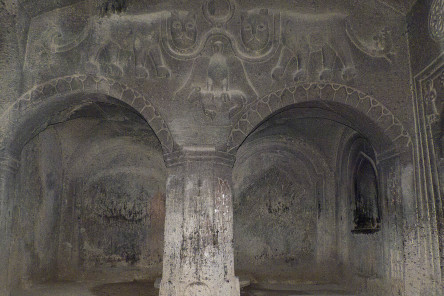
The entire architectural complex was completed in the 13thC. It consists of the cathedral, the adjacent narthex, eastern and western rock-cut churches, plus various cells and numerous rock-cut cross-stones:
The Kathoghikè (main church) is in the classic Armenian form. It is an equal-armed cross inscribed in a square and covered with a dome on a square base, linked with the base by vaulting. The east arm of the cross terminates in an apse, the remainder being square. In the corners are small barrel-vaulted two-story chapels:
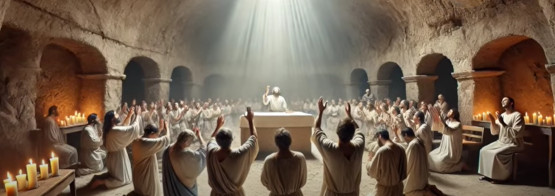
St. Peter and the Catacomb of Callixtus, one of the Catacombs of Rome