Properties of Water
H2O
The main properties of water that are important to know of are:
- Ice floats. Usually when a liquid freezes, the solid is more dense than the liquid. In water, normally the solid phase is less dense than the liquid phase. If ice sank, ponds and lakes would freeze solid to the bottom making things very difficult for fish and other creatures to obtain food and oxygen in the winter.
- Great solvent, because the charged ends of water molecules are attracted to the charges on other molecules. A solution is a molecule of something (salt) surrounded by water molecules.
- The positive/negative forces among molecules leave space for gas molecules to dissolve in water.
- The two gasses most often dissolved in water are carbon dioxide and oxygen.
- Water can hold and store more heat by volume than most other substances. It helps moderate the climate by releasing its heat slowly.
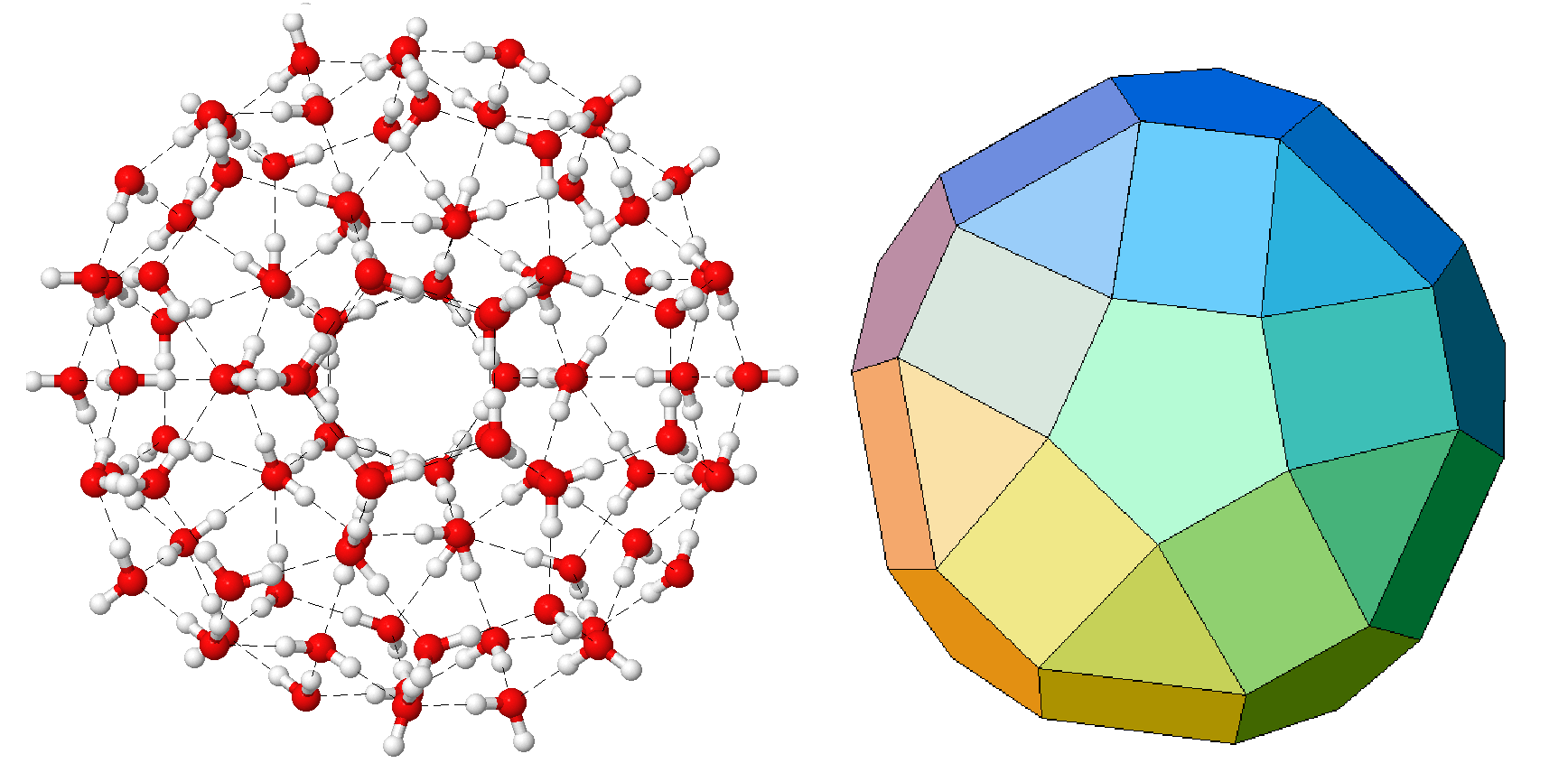
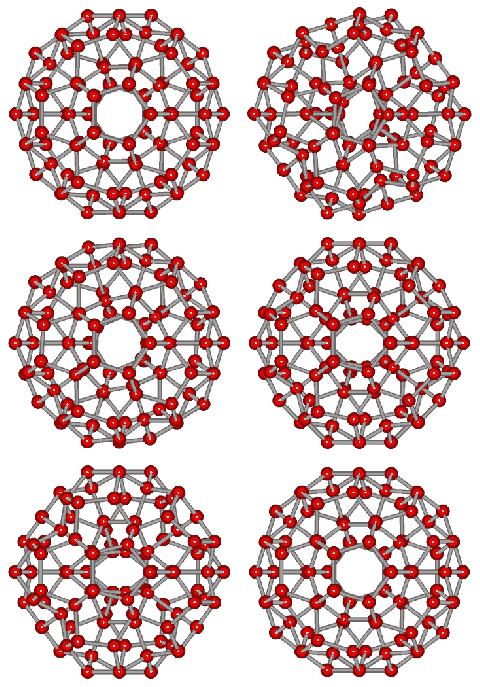
Harmonic Rhomb-icosi-dodecahedron Water-cluster
- Breaking the hydrogen bonds in water takes a lot of heat. If broken, the heat energy is released as vapor.
- When drinking water, the human body converts 30% of it immediately into energy. That’s why shaking arms, legs, and body feels so energizing!
- When water is shaken or cascaded, its H2O clusters become smaller and take up less total volume. This allows for an easier crossing of the cell membranes.
- Water molecules tend to slightly stick to each other. Its surface tension allows many insects to walk on it.

Fresh Snowflake in hair
- Water splits into hydrogen (H+) and hydroxyl (OH–) ions in small quantities. This is important for living organisms, because the number of ions in its bodily fluids affects the shape and function of many of its molecules. The pH scale is used to measure the concentration of hydrogen ions in those fluids.
- The physical and DNA healing properties of clustered water molecules and their various hexagonal shapes.
- Water has memory. See the video:
H2O is mysterious because it does not exist as a single molecule, but as clusters of molecules grouped by H-bonds.
The arrangement of these clusters is affected by the type and concentration of various minerals and dissolved gases present among them.
Cluster arrangement is also affected by sound, light, magnetic, and EM waves.
Reconfiguration and size reduction of its molecule clusters will lead to a more harmonized and energized type of H2O: