Twin Nucleic Acids

Proteins play many roles within the cell:

  • Structural proteins constitute the cell’s framework,
  • Defensive proteins (antibodies) neutralize microbes that try to invade it,
  • Transport proteins carry oxygen to it,
  • Enzyme proteins promote certain chemical reactions within the cell.

The complex protein molecules are manufactured from smaller molecules, called amino acids. The sequences of amino acids in proteins are determined by the building (code) plans, or blueprints, contained in the DNA’s Twin, RNA.

A Purine/Pyrimidine attached to a sugar is called a nucleoside. A nucleoside attached to a phosphate group is called a nucleotide.

The twin nucleic acids, DNA (Deoxy-ribo-Nucleic Acid) and RNA (Ribo-Nucleic Acid) are long chains composed of only 2 different nitrogen base molecules.

Each nucleotide consists of a base plus a pentagon shaped (4 carbon + 1 oxygen atoms) sugar that is connected to 1 or 2 phosphate groups. These phosphates act as bridges between adjacent sugars. Below:
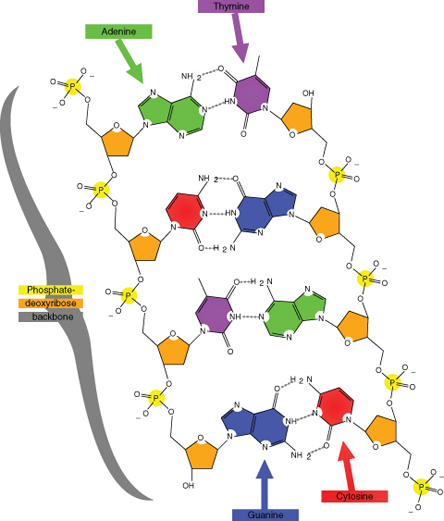
Nucleotides are important for every organism on Earth. These special molecules are also involved in enzyme reactions in the body, production of chemical energy, and cell 2 cell signaling.

Linked together, they form a nucleic acid, called a polymer. An organism’s genetic code can have billions of base pairs.
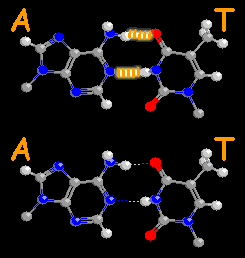
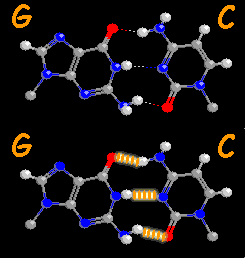
  

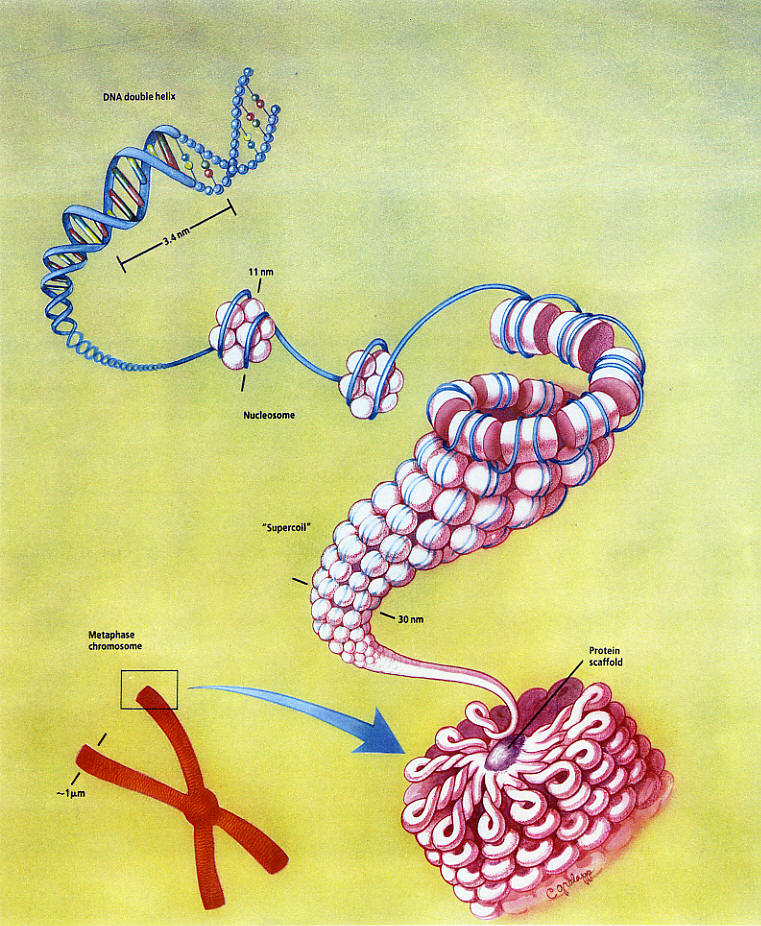
DNA consists of coils of code with a unique and consistent current flowing through it. The current sets up small magnetic fields, which allows for the transfer of information through magnetism. It twists in reaction to the attraction and repulsion of the basepairs’ magnetic polarization.
read more …

Similar Posts

  • Honor and Defend Land and Water

    In a bold step toward ecological restoration and national pride, President Ibrahim Traoré has launched Burkina Faso’s 2025 reforestation campaign by planting a medicinal tamarind tree in Guiba. This historic initiative marks the beginning of a nationwide mission to plant, with a focus on traditional healing plants that reflect Africa’s deep-rooted knowledge. The movement isn’t…

  • Hommie in Medicine?

    somato-sensory cortex The cortical homunculus is used to describe “the body within the brain”, a distorted human drawn or sculpted to reflect the relative space certain body parts occupy on the somato-sensory cortex (sensory homunculus) and the motor cortex (motor homunculus). The left hemisphere receives input from the body’s right side. The right one from…

  • Key # 4

    Keys to a Go-Ahead 4. Emotional Re-assurance: Provide emotional support to make clients feel comfortable: a. Spend a few minutes to make clients feel special. b. Empathy is a powerful bonding tool; “This is a difficult decision. How can I help?” c. “Would you feel better, if…………” d. “Are you comfortable with……….” e. Safety in…

  • Energetic Level

    The energetic level of the body consists of the aura, chakras, and meridians. They are invisible to the eyes, but were scientifically documented with Kirlian photography. The aura is an energy field that surrounds the body. There are many chakras permeating our body. Chakras are vortices that animate the body with energy, especially the endocrine…

  • The Heart

    The Fire energy yin organ In Chinese, the word for ‘heart’ (shin) is also used to denote ‘mind’. An ordinary heart can be strong and steady, but also weak and wavering. In that case, the pain-parts in us can rebel and prey upon the mind of the Upper Heart chakra, which then loses its command…

  • Appreciative Attention

    (3DAA)’s Main objective: To acquire the Art of improving the mental & emotional state of everybody, via a particular way of observing. Gratitude = Happiness + Goodness Appreciation is more than just gratitude. It is an act of proactively valuing some-thing or some-one. It transforms gratitude from an after-the-fact expression of feeling, to a before-the-fact…