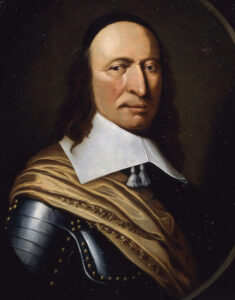
Peter Stuyvesant
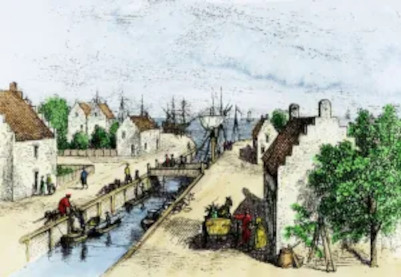
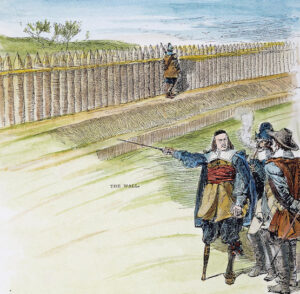 Wall Street, Manhattan
Working for the Dutch West India Company in 1644, Stuyvesant was leading an assault on a Spanish fort on St Maarten in the Caribbean, when a cannonball hit his lower right leg. After a gruesome amputation, he was given his famous wooden leg.
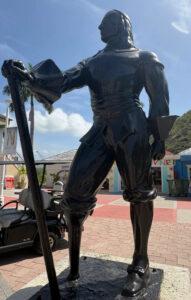
Statue of Peter “Peg Leg”
inside St. Maarten’s Cruise Port
Arriving in New Amsterdam in 1647, Peter Stuyvesant assumed the role of Director-General of New Netherland, embarking on a mission to reshape the fledgling settlement into a flourishing urban center. His tenure was marked by decisive actions aimed at enhancing administrative efficiency and fostering infrastructure development, like erecting a wall around the settlement.
Peter Stuyvesant served in that role till 1664, when the colony was provisionally ceded to the Kingdom of England. He was a major figure in the history of New York City and his name has been given to various landmarks and points of interest throughout the city (e.g. “Stuyvesant High School”, Stuyvesant Town, Bedford–Stuyvesant neighborhood).
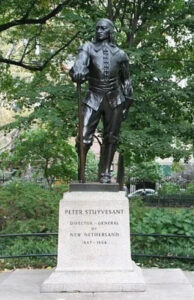
By prioritizing the strengthening of legal frameworks and the construction of vital public works, Stuyvesant played an instrumental role in organizing and expanding the settlement. His vision was clear: to transform New Amsterdam into a model of urban organization and efficiency.
Under his leadership, the establishment of order were among his first steps toward realizing this vision.
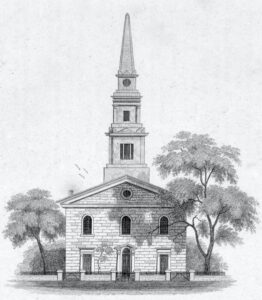
St. Marks Church, Stuyvesant Street, NYC
His efforts in bolstering the infrastructure not only fortified the settlement against external threats but also stimulated its internal development, laying a solid foundation for future growth.
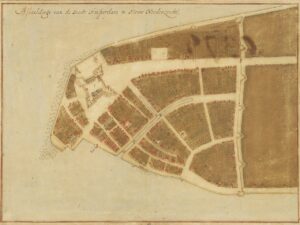
His governance began an era of significant improvement in the lives of its residents. The strategic expansion of infrastructure under his watch was critical in shaping the settlement’s trajectory, ultimately influencing the identity and character of what would later become New York City.
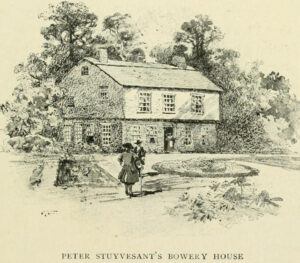
He retired and purchased land from
the Dutch West India Company to develop a farm for growing
most of the food he needed.
Through a series of strategic reforms and developmental projects, he not only improved the settlement’s administrative and infrastructural landscape but also laid the groundwork for the emergence of one of the world’s most iconic cities.
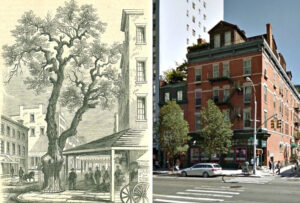
The famous Stuyvesant tree
and remaining stump in a Farmacy.
Stuyvesant’s legacy is a testament to the transformative power of visionary leadership in shaping the course of history.