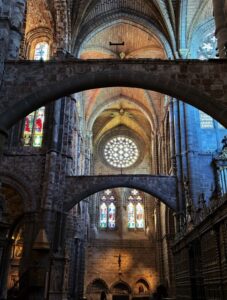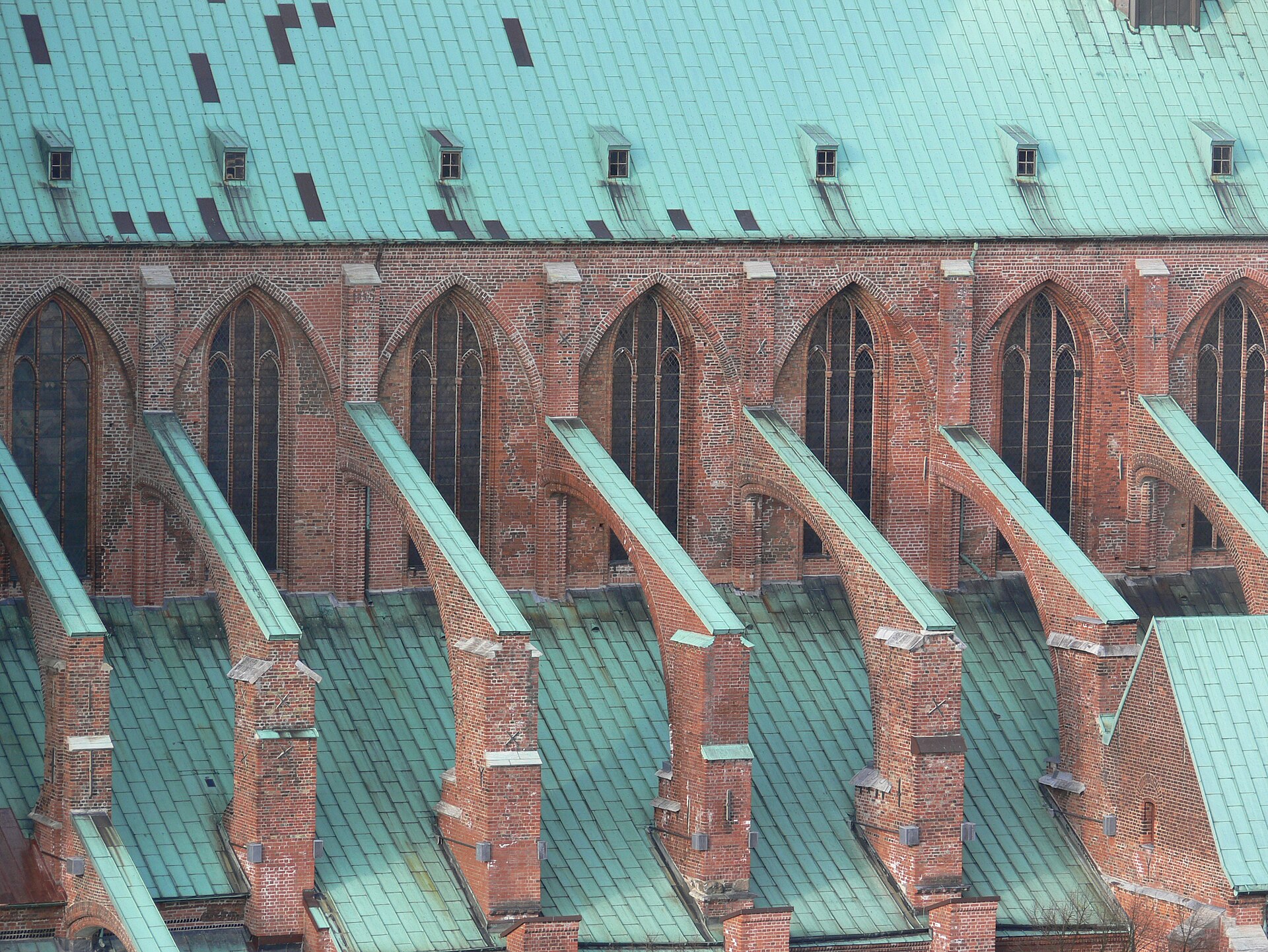
Hollow Buttresses as Acoustic Instruments
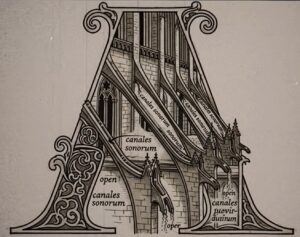
The flying buttresses of Gothic cathedrals across Europe were designed both for structural support and as sophisticated acoustic instruments.
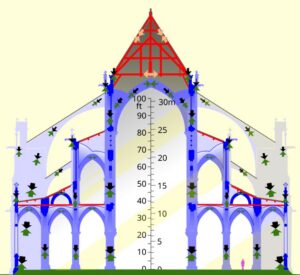
Key Chronological Findings:
1174: A Canterbury manuscript describes buttresses as hollow “bridges of air.”
1634: A secret Vatican report attributes “miraculous” acoustics in cathedrals to wind resonance.
18thC study shows consistent internal geometries in buttresses matching musical instrument ratios.
1903: In Amiens, France, structural engineer Antoine Bumont discovers a 1247 letter describing flying buttresses as “canales sonorum” (channels for sound) with measurements following a precise doubling sequence (e.g., 12.8m, 6.4m, 32cm).
1911: Similar documents surface in Cologne (plans with acoustic frequency annotations: 64, 128, 256 Hz) and Barcelona (an unpublished 1889 treatise on Gaudí’s resonating designs).
1928: Repairing the ND de Paris, workers find tuned bronze tubes (ringing at 128, 256, 512 Hz) embedded within a buttress. An official report labels them “reinforcement elements, purpose unclear.”
1936: A rejected doctoral thesis by Eva Novotná finds a correlation between buttress resonant frequencies and Gregorian chant tones.
1944: The bombing of Cologne required inspection of damaged buttresses, revealing intricate, deliberately carved chambers.
1947: The whole of the Sainte-Chapelle, which has no buttresses but iron chains locked inside the columns with lead, to hold the structure together, acts as an “acoustic lens system.”

Early 21st-century surveys using ground-penetrating radar and thermal imaging confirm hollow chambers and persistent, unexplained warmth in buttresses at specific points. Modern acoustic analyses describe the structures as “waveguides” and “amplification systems.”
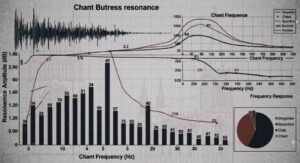
Recurring Evidence and Patterns:
- Mathematical and Acoustic Precision: Many documens of measurements of frequencies based on sequences that double (e.g., 64, 128, 256, 512 Hz) and ratios fundamental to musical harmony.
- Internal Architecture: Multiple sources, from medieval manuscripts to modern radar, indicate flying buttresses were built with hollow chambers, passages, and sealed tubes, not as solid stone.
- Intentional Design: Terms like “sound bridges,” sketches of internal voids, and annotations by builders and restorers suggest a conscious acoustic purpose beyond structural support.
- Physical Phenomena: Reports of audible humming during specific wind conditions, unusual snow-melt and thermal patterns on buttresses, and the channeling of sound to specific liturgical areas: choir stalls and altars.
- Suppression of Findings: A pattern emerges of unpublished treatises, rejected theses, declassified reports with missing pages, dismissed researchers, and official records that omit or provide alternative explanations for acoustic discoveries.
The flying buttress becomes a massive stone flute played not by breath but by wind, not for melody but for specific controlled frequencies. Frequencies that if directed into the cathedral interior would create zones of acoustic reinforcement. Zones where the human voice would carry farther, ring clearer, penetrate deeper into zones where prayer would resonate.
The Gothic architects possessed and applied advanced knowledge of acoustics, embedding it within cathedral structures. This purported “true purpose” was subsequently forgotten, ignored, or systematically omitted from mainstream architectural history.
The persistent, low-frequency hum (64 Hz) heard in buildings like Bourges Cathedral, which conventional science attributes to environmental factors, but which the presented evidence frames as a remnant of this lost architectural principle.