Digital Detox Events
Digital Dependence Detox
for ‘Adicciones digitales’
To bridge the digital divide and poverty gap, many nations still need to build a stronger digital infrastructure, being the best catalyst for lasting economic growth. It comprises of broadband, data centers, cloud services, big data, and IoT, the Internet of Things, a network of physical devices, vehicles, buildings, etc., embedded with electronics, software, sensors, actuators, and network connectivity that enable these objects to collect and exchange data.
Cloud computing utilizes big data analytics to achieve a scale of innovation that transcends physical barriers and the limitations of the human mind. Artificial Intelligence (AI) embedded into IoT systems can empower machine-assisted innovation like virtual assistants, advanced robotics, driverless cars, plus many other extremely immersive virtual realities.
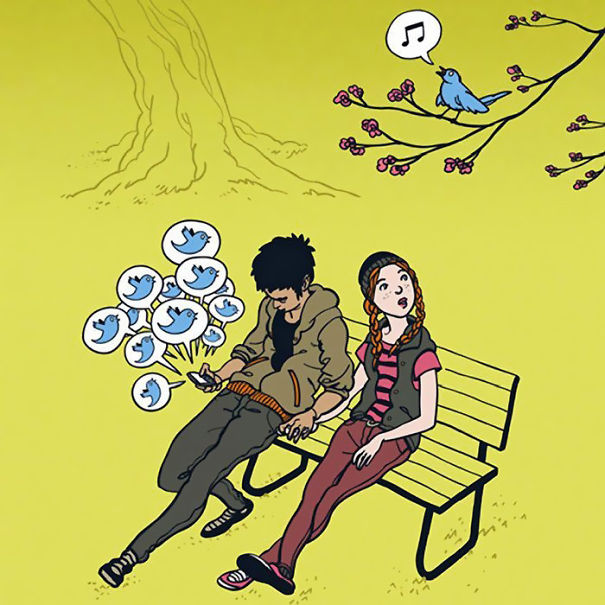
However, a downside is digital dependence. The global number of Internet addicts is estimated to be at several billions of people. ‘Phubbing’ is focusing on the phone and ignoring the person you’re with.
We concluded that the urge to look for reactions or messages of others is a deep feeling of ‘never enough’ attention energy from the people you communicate with.
If someone pays positive attention to your remark or message they send you a bit of their attention energy, which gives you a feeling of pleasure and happiness.
A dependent is someone who feels unhappy when they are not connected, not carrying their mobile phone.
An addict is someone who, because of their dependence, has problems at work, with their family, etc. About 4% of the population are addicts, and 30% – 60% are dependent. It’s not so much what you do, as what you stop doing because you are connected.
Solution?
At our retreat, you have a chance to take in the world through your senses rather than phones and wifi. Both are exchanged for a menu with a wide variety of course options, such as detox-diets, simple sugar-free cookery, volleyball, snorkeling, kayaking, quantum-yoga, quantum conditioning, and/or mountain walks, without pushing a single button all day. It is a type of ‘digital siesta’, doing only ana-logical things.
The days are spent in a group, surrounded by nature and far from virtual noise, where adult dependents try to “disconnect in order to reconnect.”
The day starts at 8.00 for everybody. Physical exercise is obligatory and lasts at least 2 hours/day. Afterwards, there are group and individual therapies. The goal is “to rediscover your In-dependent Self.”

After just a few days into the digital detox,
many people noticed:
Healthier Posture, Weight, and Friendships
By mostly looking forward rather than downward, the front of people’s bodies and their shoulders open up, and & the back of their head with the spine. This also further opens up people’s general energy flow and weight loss/distribution.
They become more approachable when they enter a room. More eye contact encourages them to connect with one another more deeply, relax into conversations, and be more empathetic.
Less Conversation Killers
When a trivia question comes up, people usually “google” for an answer, and end face to face questioning. However, without Google, people look at others for an answer, which often results in creative storytelling or hilarious guessing games. These types of conversations are more engaging and memorable, and can form real bonds, as we gain insight into each other’s mindset.
Improved Memory
Neuroscientists ‘know” that when people are more present in a conversation, their brains are able to process and store new information more easily. When using technology, our brains are trained not to register seemingly insignificant details. These minor facts are actually very important in the process of bonding and learning about other people.
More-Efficient Sleep
Without using technology, people noticed they needed less sleep, but felt even more rested and rejuvenated. Research studies showed that the blue light emanating from electronic screens suppresses the production of melatonin in the body, making us more awake when we try to fall asleep, and thus reduces the chances of getting a high-quality rest.
New Perspectives
One of the most powerful research findings was that people tend to make significant changes to their lives when they are offline for a while. Some decided to make big changes in their career or relationships, while others decided to recommit to health and fitness.
The lack of constant distraction appeared to free people’s minds to contemplate more important issues in their lives, and it also made them believe they had the willpower to sustain a transformation.
Are you ready to introduce some of the benefits of the digital dependence detox program into your everyday life by disconnecting from technology during the night, the weekend, and take regular work-brakes to improve your personal health and office atmosphere? If yes, contact us.
After you committed yourself to one of our programs, then
How To Disappear
A 9-point digital detox checklist for disappearing from your place of work and friends for awhile:
- Schedule a Vacation: Figure out when to take a real break. If you want a true digital detox, two weeks is far better than one.
- Alert your key colleagues: A month before you leave, make sure that your key coworkers know that you’ll be truly unavailable. That gives you time to work out any real problems your absence may create.
- Warn everyone: A week before D-Day, send an email to a list of those who communicate with you regularly, by alerting them to your departure. Make it clear to them that this is serious, because only a few will believe that you’re really capable of ditching the digital life.
- Warn everyone—again: The morning of D-Day, send an email to that list again. Make it emphatic like: “I Have Left the Internet.” If they don’t understand that you’re for real now, they can’t be helped. They have, after all, been warned.
- Turn off automatic sync on your phone.
- Set your away message for email. Your note should be courteous but firm: You will return no emails.
- Manage social networks. As you can’t really turn off Facebook, Google+, Instagram, etc. use your home page to establish your absence. Send a smoke signal by using an all-black rectangle with a simple message in all caps: OFFLINE THROUGH [date of return]. EXPECT NO REPLIES.. Use that as your profile photo.
- Establish your emergency exceptions: Set up a clear system with someone you trust, who can have access to your email and social media.
- Take a deep breath: Vacate. Completely. It’ll be scary for a day or two. Then it will be great.
Some general tips proposed by experts for maintaining a healthier lifestyle while working remotely, include:
- Setting up an ergonomic workspace: Ensure that your home office setup promotes good posture and supports your body properly. Use an adjustable chair, a desk at an appropriate height, and position your computer screen at eye level.
- Take regular breaks: Avoid sitting for extended periods. Stand up, stretch, and move around every hour or so. Incorporate short exercise or stretching routines into your breaks to alleviate any muscle tension.
- Practice good eye care: Follow the 20-20-20 rule. Every 20 minutes, look away from the screen and focus on something about 20 feet away for 20 seconds. This can help reduce eye strain and fatigue.
- Maintain a balanced diet: Pay attention to your nutrition and ensure you are consuming a well-balanced diet. Include fruits, vegetables, whole grains, and lean proteins in your meals. Stay hydrated by drinking an adequate amount of water throughout the day.
- Engage in regular physical activity: Incorporate exercise into your daily routine. Whether it’s a walk, jog, yoga, or home workout, regular physical activity is essential for overall health and well-being.
- Prioritize mental health: Take breaks to relax and unwind. Engage in activities you enjoy, practice mindfulness or meditation, and connect with friends and family. If needed, reach out to mental health professionals for support.