The dance of blood

With the word blood, we reach at the beginning of creative actions. Proteins dance as they shake their bodies and wave their limbs, with the goal of optimizing their interaction with other molecules, including other proteins.

These tiny motions, called vibrations, enable the molecules to change shape quickly to bind to one another, which in turn facilitates tasks like absorbing oxygen and repairing cells. Studies show that, in biological courtship, dance moves matter.
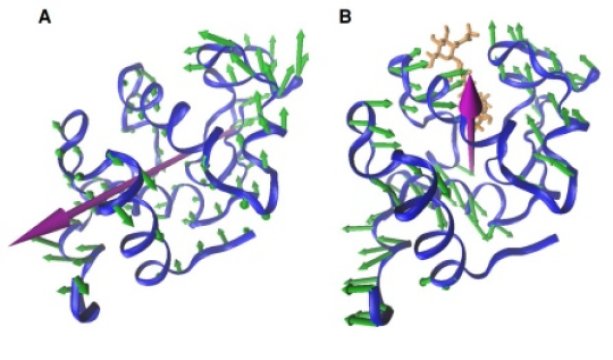

A is clamping motion
B is twisting motion

They found that the direction in which different parts of the protein move determines more how well a protein performs its biological function, than the energy of those vibrations.

We are born into the world in blood and tears, and all too often we leave the world in blood and tears. There is also an esoteric content that needs some clarification.

The blood transmits not merely that ancient figment, heredity, and that modern figment, the genes, but also that non-figment, karma – the accumulated debt of past sins which shape our lives.

The secret schools teach that, for our karma to unfold and for the debt to be wiped away, we must enter into the stream of humanity, and dip for a while into a blood-line.

This means that we must submit to the changing body which is subject to the multiple mutations offered by the Earth.

The esoteric Gnostic texts suggest that the body and the blood are linked with redemption, by speculating that the name Adam meant both ‘red’ and ‘earth’. And that from the earth, through the Mysteries, the human ‘light’ might birth.

It is this etymology which explains why one sacred text could interpret the name Adam as meaning ‘virgin earth’, ‘earth the color of blood’, ‘earth red as fire’, and so on.

Our blood and tears are, like the sweat of our brow, the liquids we spill to redeem our karma whilst dwelling in the body. In the alchemical literature, blood is red, and tears are white.

Tears contain salt, which is one of the high Mysteries of alchemy. In the arcane texts, salt is the residue of fire, just as salt tears are a residue of an inner emotional burning.

read more …

Similar Posts

  • Ben Franking

    Benjamin Franklin helped unify and liberate the 13 States of America, and saved its Postal System On February 13, 1766, Franklin testified against the American Stamp Act before England’s House of Commons, answering Parliamentarians’ questions so deftly that the ill-advised nature of this legislation became obvious. The tax act was abolished one month later, mostly…

  • Martial Arts Summary

    Based on true balance and natural power, and using various Qi-blending moves to remove ourselves from physical harm, a large number of martial art techniques have been created and developed from a small number of basic principles of body use and technical application. Martial Art Techniques are physical manifestations of certain underlying principles, such as:…

  • H2H Exercise

    EXERCISE ONE: Perform the c2C exhortation on every resistance or pain felt during this exercise. Imagine yourself in a glass elevator going up and down a very tall building. When going down you can see the top of the building moving away from you. Now, imagine yourself as a spot of light, slowly moving out…

  • Traditional senses?

    Sight Sight or vision is the ability of the brain and eye to detect electromagnetic waves within the visible range of light, and interpret the image as “sight.” There are 2 receptors: One for the perception of color (frequency of light-photons) and the other for brightness (amplitude/number of photons of light). Depth perception is a…

  • Attention Conclusion?

    Extensive clinical research has shown that patients interpret ‘visual’ communications as reality. A traumatized individual may end up believing that he or she was tortured when the actual message the organism is trying to convey is that these sensations you are experiencing feel like torture. The actual culprit could just as easily have been a…

  • Attention Management

    Are You the Center of Your Attention ? Should the focus of your Intent be on the object only? Should your Attention also be on the space surrounding the object? Does Attention translate into Action if Resistance or Fear is felt? Does Resistance change feelings into verbal interpretations? read more …