Martial Arts Summary

Based on true balance and natural power, and using various Qi-blending moves to remove ourselves from physical harm, a large number of martial art techniques have been created and developed from a small number of basic principles of body use and technical application.

Martial Art Techniques are physical manifestations of certain underlying principles, such as:
(a) the re-programming of the reptilian brain so as to respond from a relaxed state of being rather than a tense state, when feeling threatened, and
(b) turn a straight strike into a spiral motion that ends in a lock.

The principles of body use and application are the fixed foundations of unlimited bodily expressions.

A key principle is also the basis of what is called the “theory of mind” mechanism. Theory of mind is the mechanism that enables us to interpret the mental states of other people, their dispositions, intentions and motivations.

The relaxed and unified attention on mind & body is the method through which martial movements and techniques become internalized and utilized. Their principles and method of internalization form the essence of martial arts.

“Aikido is not a technique to fight and defeat an enemy. It is a way to reconcile the world and make human beings one family”. ( Morihei Ueshiba, Founder of Aikido)
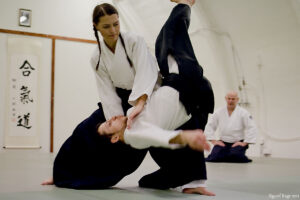
AiKiDo
Blending harmoniously with the Qi or Ki
on the path through life with Tai Chi:

read more …

Similar Posts

  • Qing-ice skating

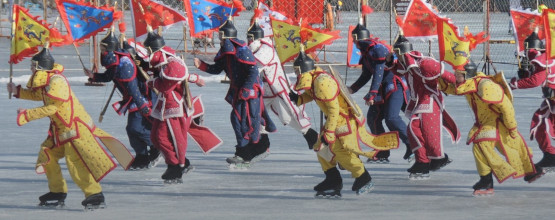
    Ice Games Bingxi (冰嬉) Winter recreations on ice was considered as one of four national traditions in the Qing Dynasty along with Manchu language, riding and shooting, and wrestling. “Ice Games Painting“, a spectacularly detailed 578-cm long artwork by Qing court painters Yao Wenhan and Zhang Weibang, is now held in the Palace Museum in…

  • Stupa Temples

    In ancient Indian art, Buddha Shakyamuni was not represented as a being but as a stupa, a reliquary containing the relics of an individual associated with great spiritual power and insight, most often (since the 3rd century BCE) with the Buddha himself. The shape, a hemisphere topped by a spire and surrounded by a gate…

  • Candida Containment

    Candida is very cunning, enigmatic, complicated, and involves many different factors. Of the more than 200 species of Candida, the one responsible for most infections and most prevalent, is Candida Albicans. The second most common is Candida Glabrata followed by Candida Tropicalis, Candida Parapsilosis, Candida Auris, and Candida Krusei, etc., etc. Within each species of…

  • Franklin Institute

    The Franklin Institute is a science museum and the center of science education and research in Philadelphia, PA. It is named after scientist/statesman Benjamin Franklin. Founded in 1824, the Franklin Institute is one of the oldest centers of science education and development in the USA. Today, it is the most visited museum in Pa. BF…

  • Jupiter Consciousness

    The Romans saw the god Jupiter as the equivalent of the Greek god Zeus. The god Neptune was his brother. Jupiter was married to Juno. Zeus was the ruler of the Olympian gods. and the presiding deity of our solar system, the ruler of our skies and planets. Zeus father was Cronus, the ruling Titan…

  • Receptors

    When a signal reaches the end of the axon it may stimulate tiny sacs. These sacs release chemicals known as neuro-transmitters into a synapse. They cross the synapse and attach to receptors on the neighboring cell. If this cell is a neuron, the signal may continue to the following cell. With electrical synapses, 2 cells…