Honor and Defend Land and Water
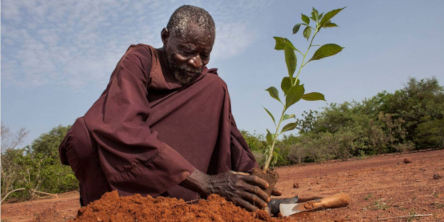
In a bold step toward ecological restoration and national pride, President Ibrahim Traoré has launched Burkina Faso’s 2025 reforestation campaign by planting a medicinal tamarind tree in Guiba.
This historic initiative marks the beginning of a nationwide mission to plant, with a focus on traditional healing plants that reflect Africa’s deep-rooted knowledge.
The movement isn’t just about combating climate change! It is about reclaiming identity, healing the land, and inspiring a continent to act.
This 5-ha project in Banguessom is part of the president’s wider vision to create medicinal groves in every province, to empower communities to protect biodiversity+revitalize ancestral knowledge.
Captain Traoré’s powerful message calls on all Burkinabè to unite, plant, and preserve not only the environment but also the spirit of self-reliance & intergenerational wisdom.
The 2025 goal includes planting 5 million trees in one hour on each National Tree Day, June 21, and 15 million during 2025:
This is the story of The Green Hour — a national awakening where students, elders, soldiers, and healers came together not to protest, but to plant.
From dusty Sahel towns to sacred village rituals, this was more than an environmental act — it was a return to dignity.
No foreign script. No international applause. Just an African nation writing its own future through roots, faith, and will.
What does it mean when the President himself kneels to plant healing trees in silence? What future is born when children learn to sow before they can spell?
🌠Burkina Faso’s Green Hour is a movement — one that teaches us that the real revolution does not start with slogans, but with soil.
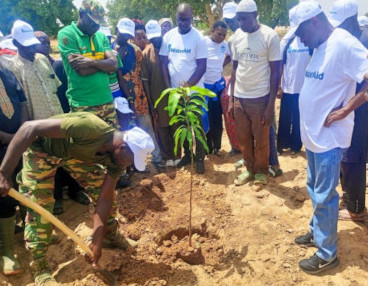
In Burkina Faso, a farmer named Yacouba Sawadogo successfully transformed arid land into a thriving forest using a traditional farming technique called zai.
This innovative approach has not only restored degraded land but also empowered other farmers in the region and beyond.
Yacouba Sawadogo’s Method, reviving a Traditional Technique:
Sawadogo adapted and improved the ancient zai pits, which are small, bowl-shaped holes dug into the earth.
- Water Retention: The zai pits are designed to collect rainwater, which then seeps down to the roots of planted seeds, providing crucial hydration.
- Organic Matter: He further enhanced the pits by incorporating organic matter like manure, which improves soil fertility and water retention.
- Biodiversity: The resulting forest contains a variety of tree and plant species, including edible and medicinal varieties, attracting diverse animal life.
- Impact: His work led to the creation of a 40-ha oasis near his village in Yatenga province, demonstrating the potential for land restoration in arid regions.
Land Ownership Reform
In 2025, Captain Ibrahim Traoré declared that land in Burkina Faso would belong only to its people—forever. No ownership. Only access, based on need, not wealth.
ITraoré’s bold Burkina Faso Land Reform is reshaping Africa and redefining Land Ownership by empowering Smallholder Farmers and asserting National Sovereignty.
Discover how an African Agrarian Revolution upended centuries of dispossession, sparked a global Geopolitics debate, and Land Rights Movement that even rural development experts can’t ignore.
See how farming cooperatives, women’s groups, and youth collectives are turning leaseholds into legacies:
High-Tech Slaughterhouses
process & package
animals that graze those lands
Captain Ibrahim Traoré opened the country’s first high-tech export slaughterhouse, a game changer for West Africa’s livestock industry. Burkina Faso has turned from a raw livestock exporter into a world-class meat powerhouse.
This FASU facility will process thousands of tons of meat to international standards and create 245 new jobs for youth and women in rural communities.
These plants bring cold storage, hygienic processing, training centers, and export logistics right to the heart of West Africa. It is more than slaughterhouses – it is a fully integrated national meat eco-system, with FASU (Food and Agriculture Sovereignty Unit) as the Regulatory Nerve-center, a revolution for Burkina Faso’s farmers.
Sahel water management
President Traoré had assembled a team of water diviners and engineers who discovered ancient aquifers beneath the Sahara Desert – potentially 500 billion cubic meters of pristine water that could transform the entire region.
Dam Projects in Burkina Faso
without external financing:
BF faces challenges like low rainfall, high temperatures, and limited resources, which affect agro-production and food security.
- Sanghin Dam: This dam is a large hydro-agricultural project with a 123 million cubic meter capacity, designed to irrigate 400 ha of farmland and provide drinking water.
- Samandeni Dam: This dam, located near the Black Volta River, is an irrigation dam currently under construction, with excavation work ongoing.
- Dourou Dam: This multipurpose dam in the Passoré region is already in operation, providing irrigation and electricity generation.
- Boulgou Dam: A new dam is under construction in the Boulgou province, featuring an earth fill design and a hydropower plant.
- Bagre Dam is a 233m deep multi-purpose dam on the White Volta located near Bagre Village in Burkina Faso. Its hydropower plant generates 16 MW of power.
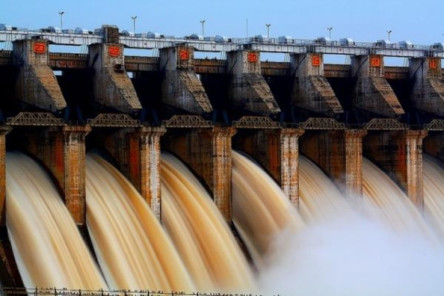
These projects are part of a broader effort to enhance water management, boost agricultural production, and improve access to drinking water in Burkina Faso.
The government is investing heavily in these initiatives to combat the effects of climate change and ensure food security.
Now, landlocked BF is transforming part of the Samandeni reservoir into 45 state-of-the-art floating fish farms producing annually 300 ton of fresh fish!
ðŸŒðŸŸ Partnering with Dutch fish farms, this groundbreaking US$22Mio project is boosting food security, creating jobs, and empowering local communities.
This project is one way to address some of these challenges through sustainable aquaculture, thereby reducing dependency on imports, stabilizing prices, and inspiring a new era of economic independence.
Defend the Land
When the last French helicopter vanished into the sky, it left more than dust behind:
It left 30,000 rifles, 1200 rocket launchers. anti-tank missiles, drones, encrypted comms, and NATO-grade radars, sabotage kits, buried across Burkina Faso.
Was it a trap? A war that did not yet happen?
President Ibrahim Traoré didn’t wait to find out. He seized the arsenal, armed his people, and declared:
“We will no longer borrow guns from those who used them against us.”
This was not looting — it was liberation. Not chaos — but strategy. Soon thereafter……
Villagers became defenders. Youth became soldiers. NATO drones now fly under Burkinabè command. From border patrols to rapid-response brigades, a new defense force was born — not funded by aid, but fueled by pride.
And the message? Africa doesn’t need to wait for peace. It can build some on its own, while learning from the various Chinese manufacturers, how to safely industrialize a nation:
Reclaim what was in the land
A simple yellow folder once carried by a village teacher now rests in a glass case. What it holds shook the world. After that, the people of Burkina Faso opened a new museum wing dedicated not to war or conquest, but to dignity:
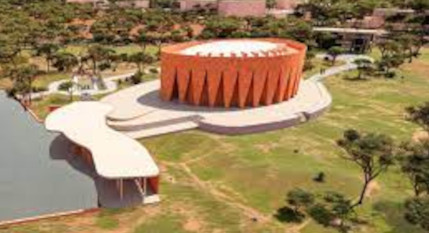
Sankara Rotunda Mausoleum:
Museum of Dignity
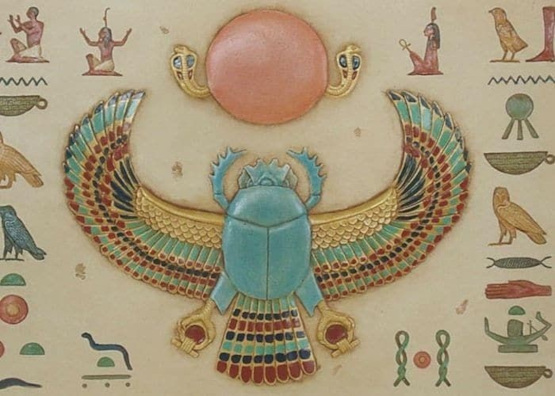
This isn’t just history. It’s justice, finally honored. How one letter -one act of courage- became the cornerstone of a country’s rebirth. Or how one ton of dung beetles (scarab) completely changed livestock waste to super fertile soil:
Reclaim the fruits of the trees of the land
Ancient Tree products:
powder, oil, fruits, leaves
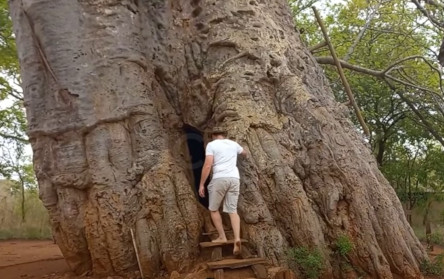
The ancient and huge Faso baobab tree, as a living carbon vault, will be a cornerstone of BF’s future, because this “Tree of Life” will feed children, heal the sick, restore the land, and power a new economy — by creating over 120.000 jobs, produce huge carbon credits, all without foreign aid.
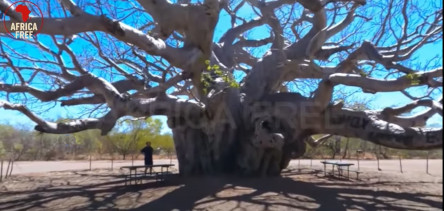
From dusty savannas to global markets, millions of baobab trees will transform BF into a model of African self-reliance.
Land & Legacy: Fossil Gold
BF’s 900 year old indigenous potato
called Naama
For nearly 900 years, a secret lay buried in the red soil of Burkina Faso — a drought-resistant crop so valuable it could feed millions, create tens of thousands of jobs, and break the continent’s dependence on imported food. Western colonial regimes tried to eliminate local seed networks and replace it with their cash crops.
The largest hidden potato-growing region in Africa. From the ancient farming terraces of the Sahel to the modern irrigation systems now powering production, a forgotten tuber became a national treasure, which could turn BF into a global potato powerhouse.
Clean the land from
all non-biodegradable materials:
President Ibrahim Traore made a decision that stunned both his nation and the world: Burkina Faso would become the first West African country to ban all non-biodegradable plastics—no exceptions, no compromise.
Factories shut down. 10K jobs disappeared. The headlines screamed collapse. But then… something else happened.
The rain returned. The rivers cleared. The people breathed. A movement was born, not for the environment, but for dignity.
This is not just policy. It’s a revolution of values: Choosing life over convenience, memory over trash, and future over fear.
Newly built canals
irrigate dry forgotten land
In just 8 months, President Traoré launched a giant irrigation canal system, not with loans from the IMF, USAID, or the EU, but with the hands and hearts of his own people:
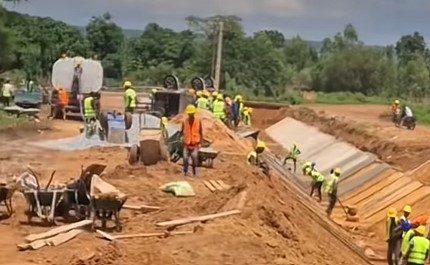
What started as a dry, forgotten region in the Bama Plains has now turned into a thriving agricultural zone, producing over 50,000 tons of food annually.
Control the prices of the minerals
dug out from the land
Africa holds about 30% of the world’s gold reserves and produced 20% of the world’s gold in 2022. It is locally refined in Burkina Faso and Uganda.
Africa holds over 50% of the world’s cobalt, 92% of its platinum, and much of the world’s lithium and copper. It exports 75% of it crude oil, and 45% of its natural gas.
An electric car needs 6x more rare earth minerals than a regular car. A modern wind turbine needs 9x more rare earth minerals than a comparable gas facility.
Recently, the global demand for Lithium tripled, for cobalt rose 70%, and nickel 40%; 3B-6B tons of these minerals are needed in the next 3 decades to meet climate goals.
A lateritic manganese ore deposit from the Tambao mine, N-BF, is among the richest cryptomelane in the world: 52% Mn. The mine is said to contain over 100Mio ton Mn.
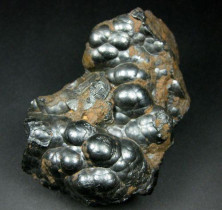
Manganese is essential for electric vehicles, military steel, and energy storage. Rising global demand and unstable supply from Ukraine and S-Africa, makes BF’s product super-hot.
Build new roads
from recycled materials only
In Burkina Faso, President Ibrahim Traoré has sparked a silent rebellion; not with weapons, but with rubber tires and courage. Just the will of a people long ignored.
The above is a story of roads made from old tires and villages connected without a cent of aid. How a “fragile” state turned discarded materials into symbols of dignity and defiance.
See your land from the sky:
In a historic move, Burkina Faso has launched its first-ever satellite — not to explore space, but to protect farmland, track rainfall, and serve rural communities.
Built by local engineers with support from Algeria, China, Japan, and the UN, the 10kg nano-satellite, called FasoSat-1, marks a bold step in Africa’s techno-sovereignty.
Unlike Western satellites built for war or profit, FasoSat-1 was designed to serve small farmers — offering real-time data on drought, soil, and water. It speaks local languages, connects directly to villages, is already exposing illegal deforestation and secret mining routes.
This is not just a satellite. It’s a symbol of African independence, changing the balance of power from above.