Number 9
In the numerology of many cultures, the number 9 represents descension, longevity, eternity, and supreme imperial power.
Core Meanings in Chinese culture:
Auspicious Sound: The number 9 is pronounced jiǔ. It sounds like the word jiǔ (久), which means “long-lasting” or “forever”.
Enduring Relationships: Because of its meaning, 9 is a popular choice for weddings, Valentine’s Day gifts (like 99 or 999 roses), and birthdays to wish couples or individuals an everlasting bond and long life.
Highest Single Digit: As the largest single-digit number (before reaching 10), number 9 symbolizes the highest tier of luck, completeness, and maximum attainment possible for mortals.
Imperial and Historical Significance:
The Emperor’s Number: Ancient Chinese emperors heavily associated themselves with the number 9 as a symbol of supreme authority and divine power. Emp. Qianlong died in 1799, and left behind 9 concubines.
Dragon Symbolism: Chinese dragons are deeply tied to the number 9. Imperial robes often feature 9 dragons. Folklore states that the dragon has 9 distinct children.
The Forbidden City: Imperial architecture famously incorporated the number 9. Legend says the Forbidden City has 9,999.5 rooms—just shy of the gods’ perfect 10,000—and many gates feature arrangements of 81 (9×9) door studs:

The number 9 has always been respected by the Chinese, for it has tonal resonance with “long-lasting” and was also associated with the emperor, who ruled over a court divided between 9 ranks of courtiers who could gain 9 sorts of reward.
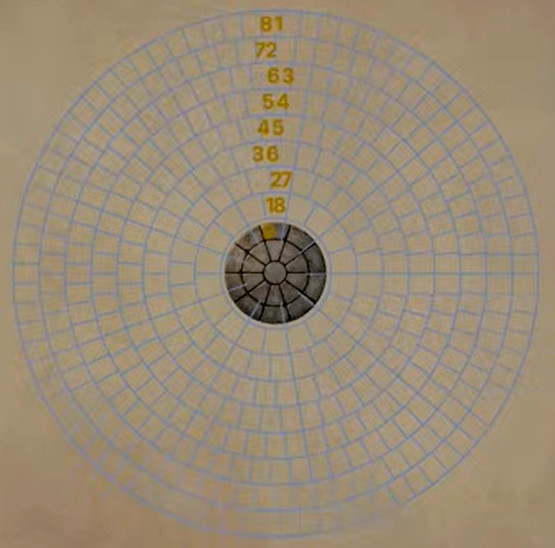
Number of stones for each ring
of the circular Mount Altar at
the Temple of Heaven, Beijing.
This respect for the power of 9 led to many social listings of 9, often charged with a sense of humor, as well as the more serious concept of how individuals were bound 9-fold to family, clan, and community.
Here are the 9 Admirable Social Habits:
- Relieving tension
- Courteous attention
- Discreet mention
- Tenacious retention
- Industriousness
- Wise abstention
- Calculated prevention
- Truthful intervention
- A sense of dimension.
The 9 Virtues:
As defined for the Emperor Yu (2205–2100 BC), by his chief minister Kao-Yao.
- Affability combined with dignity
- Mildness with firmness
- Bluntness with respectfulness
- Ability with reverence
- Docility with boldness
- Straightforwardness with gentleness
- Easiness with discrimination
- Vitality with sincerity
- Courage with goodness.
The 9 Follies:
- To think of oneself as immortal
- To think investments are secure
- To mistake conventional good manners for friendship
- To expect any reward for doing right
- To imagine the rich see you as equal
- To continue to drink after you have begun to declare that you are sober
- To recite your own verse
- To lend money and expect its return
- To travel with too much luggage.
The 9 Jollities of a Peasant:
- To laugh
- To fight
- To fill the stomach
- To forget
- To sing
- To take vengeance
- To discuss
- To boast
- To fall asleep.
The 9 Deplorable Public Habits:
- Drunkenness
- Dirtiness
- Evasiveness
- Over-loud voice
- Scratching
- Unpunctuality
- Irritable
- Spitting
- Repeated jokes.
The 9 Final Griefs:
- Death
- Judgment
- Irretrievable loss
- Inevitable fatigue
- Unreturned favors
- Unerasable doubt
- Unanswered prayers
- Perpetual abandonment
- Disappointing expectations

6+9 or 9×9
Golden Spiral
Unblocking the Sun’s rays