Pierre de Berchères
GEOLOGICAL ORIGIN
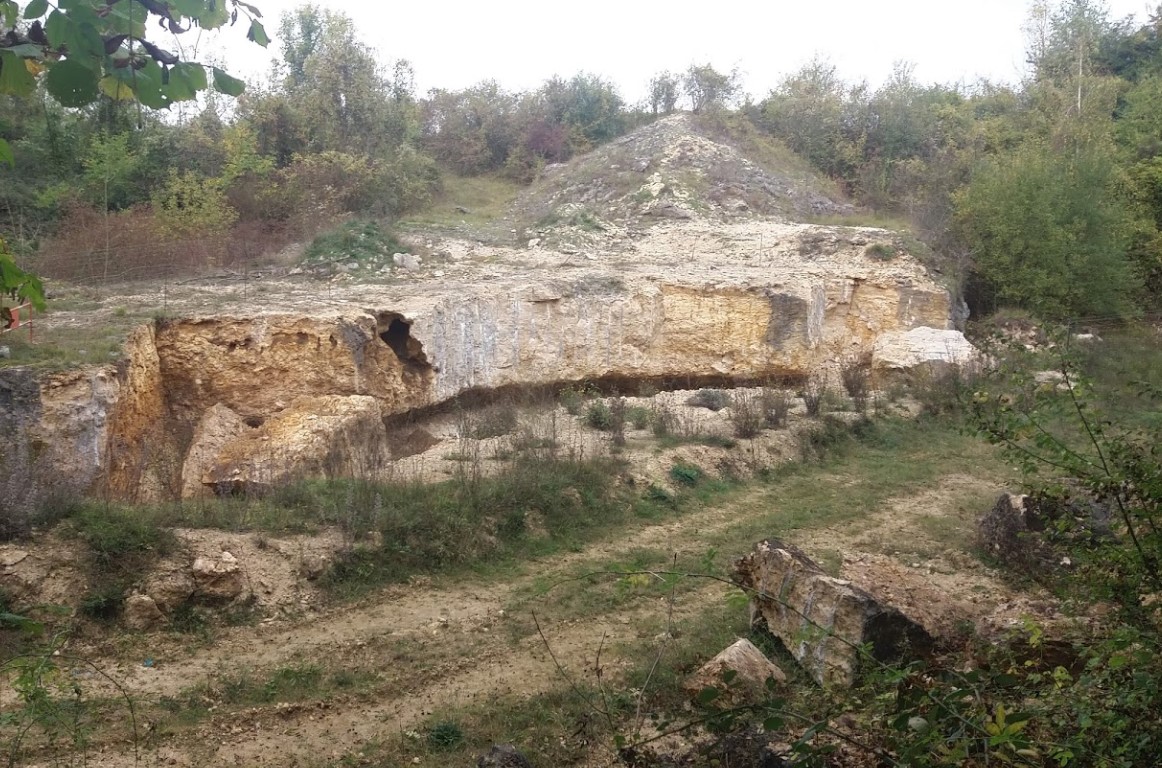
It is a fine-grained cellular gravel limestone with the same density as marble or granite of 2.7 ton/m3. It was deposited about 22 million years ago as sediment by streams into the marshy lowland of a lake known as “Lac de Beauce”, has been subject to erosion by periods of heavy rain alternating with seasonal drying in hot weather.
Although the Berchères stone does not contain fossils or snails, its geological environment does. During these 22 million years, successive cracking of the rock, caused cavities, and contribution of calcite (limestone dissolved by acid rainwater) closed these same cavities. The freeze-thaw phases of successive ice ages, fractured the surface rock.
The cold winds of a temperate climate, brought fine dust that covered the rock over the millennia and formed the layer of fertile silt. This complex geological history has made it possible to conserve a layer of hard, very dense limestone, 2 – 4 m thick with remarkable mechanical characteristics, at shallow depth.
Main qualities of the stone
• Easy to polish (Beauce marble);
• Non freezing once dried after extraction;
• Huge resistance to vertical pressure (crushing);
• Insensitive to stone “diseases” (leprosy, saltpeter, etc.);
• lightly colored (beige yellow) and hardens over the years.
This magnificent stone made André Martin, the marble craftsman from Chartres who bought the quarry in 1946, say: “We admire an exceptional and beautiful stone like a peasant admires a beautiful harvest. It is one of the finest materials, both in tone and in resistance.”
The stone, used for the Cathedral, homes, and as street pavement, was prefabricated in the quarry to avoid the transport of waste materials. Berchères stone was chosen for its resistance, and impermeability to weather and diseases.
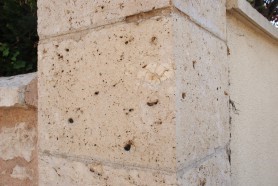
Its extraction from the quarry in the village of Berchères-les-Pierres went on for over 1000 years. The qualities of this stone have enabled its exploitation by thousands of devoted and courageous men who built the superb Gothic Cathedral of Chartres in only 66 years (1194-1260).
This work, funded by the clergy, kings and Christian princes, brought together a mystical and passionate group of masters, companions, workers, thousands of pilgrims from afar, as well as the entire local population.
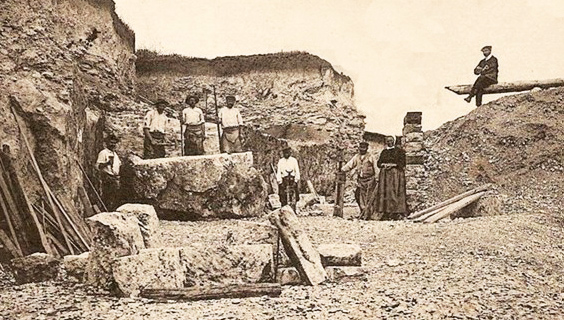
Remove the silt and the small stones to be used for blocking courtyards and paths and for the wall of local dwellings.
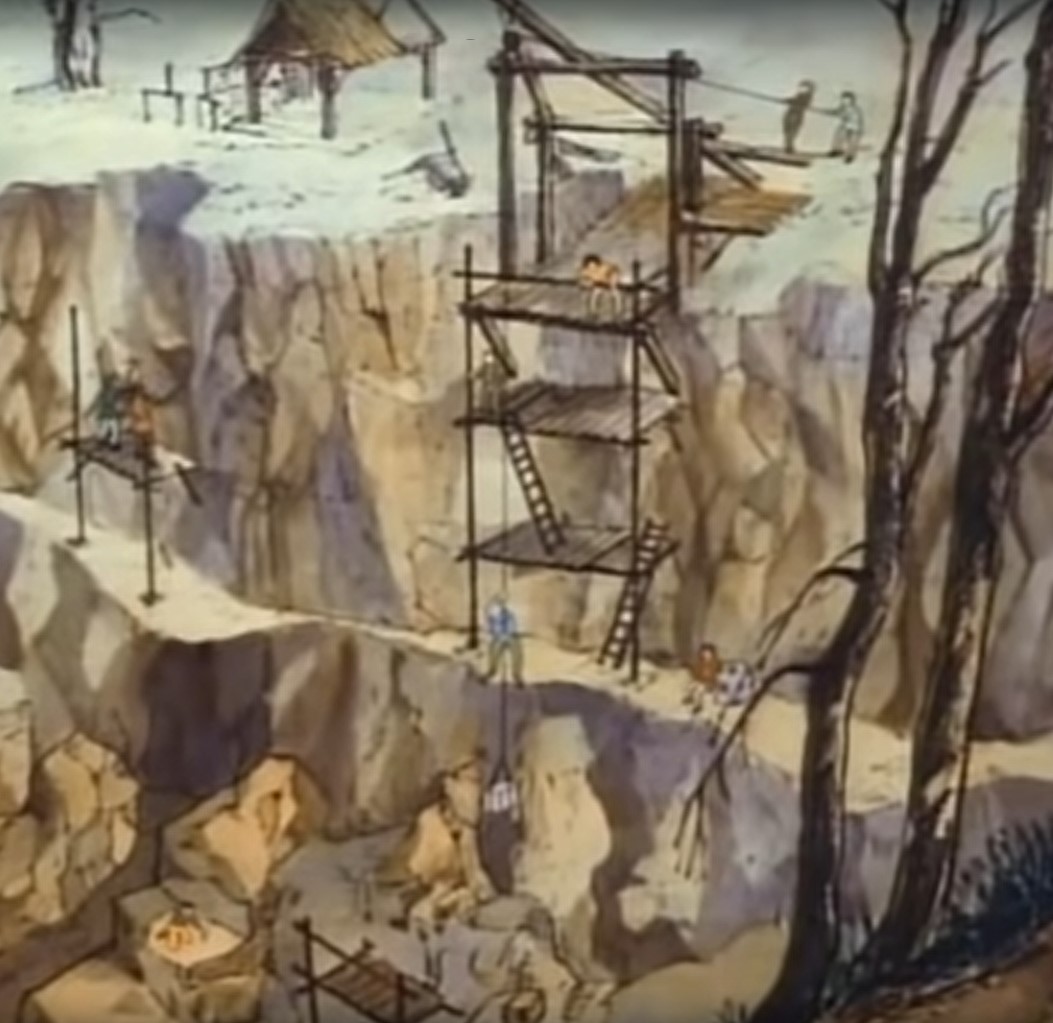
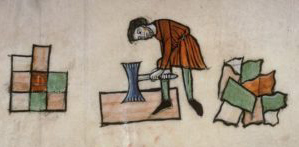
Once the stone bench was discovered, the quarrymen had to dig under this bench so that blocks of several tens of tons could come off. Meanwhile, vertical holes were drilled with metal wedges around the perimeter of the block to be extracted. The workers pushed the ground corners into the block until it came off the bench. This block was then “spread out” according to the order of the client.
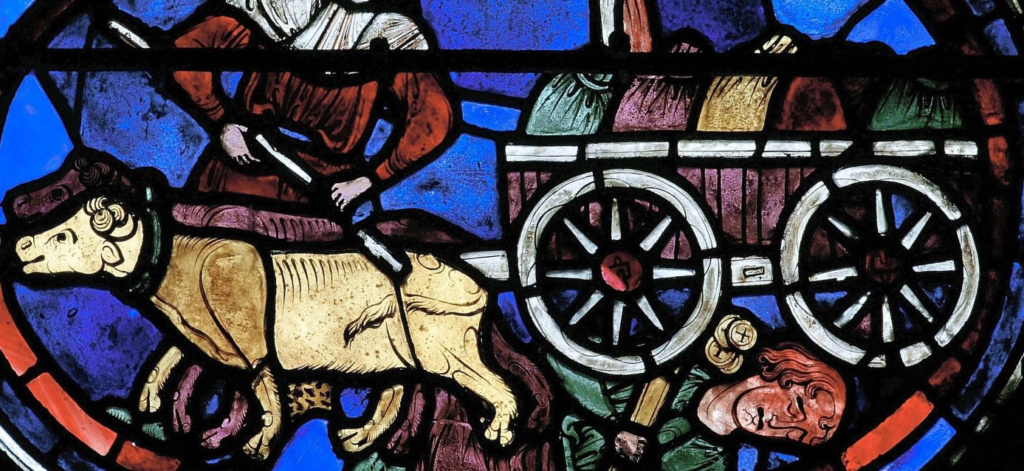
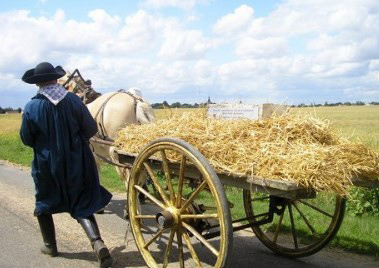
For 60 years, the stones were loaded onto a dunnage cart pulled by oxen or draft horses which took the 14 km “path of the quarrymen” to reach the cathedral square via various bridges. The stones, up to 7 tons, could also be loaded on boats to transport them to central Chartres via the Eure.
As a penance, some pilgrims carried stones in handcarts or on their backs! Some were crushed by the stones and died.
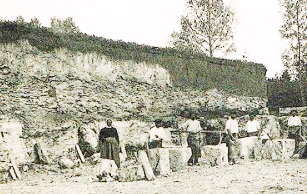
In 1886, there were still 27 quarries at Berchères les Pierres, 6 in 1950, and only 1 in 1980.
Mr. André Martin, a marble worker in Chartres, bought the last quarry in 1946 and worked it until 1980, when there was so little stone left that the central government decided to keep the remainder for the future restauration of the Cathedral in Chartres. Mr. Martin’s main innovation was to saw the stone into 3 to 5 cm thick slabs and polish it. This “glazing” allows this stone to be called “Beauce marble”.
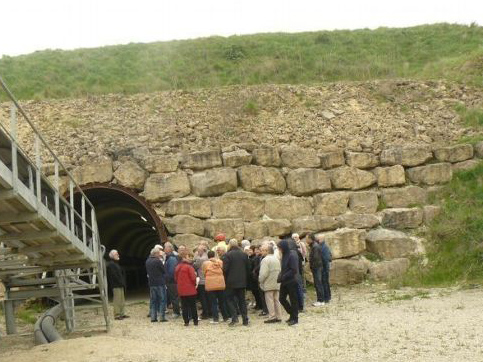
The stone was used for the external cladding of the town hall of Chartres, the old library (900 m² of veneer), and other buildings and houses in the city.
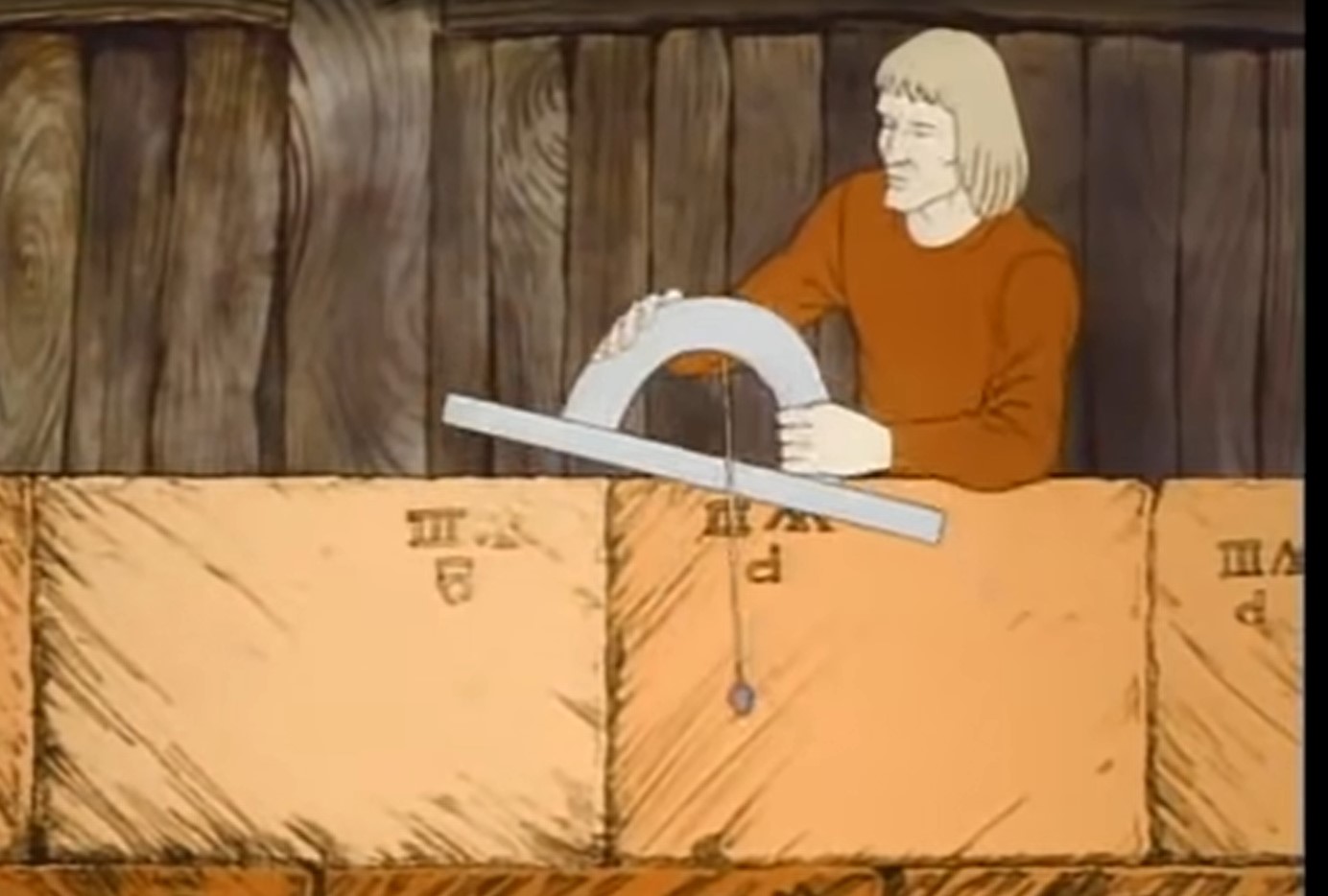
Mr. Martin also made more than 30 Berchères stone altars in places of worship throughout France. A fine example is the church of Rechèvres, place de l’Abbé Stock, as well as that of Dangeau, whose plateau was cut from a 10-ton block.
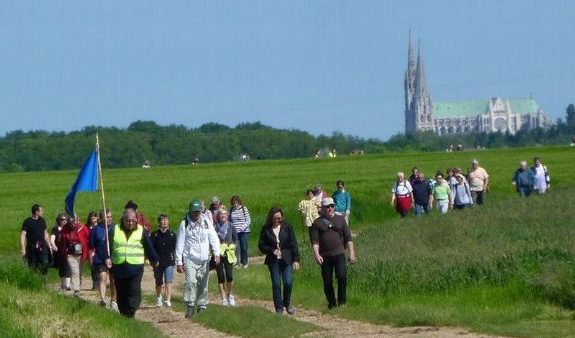
The Berch-Pierre association, commemorates this link and the very hard journeys of 800 years ago, by organizing every June, a hike to retrace the footsteps of the quarrymen along this historic 14 km mythical “chemin des quarries”, called La Berchéroise, starting at the Bercheres-les-Pierres quarry.
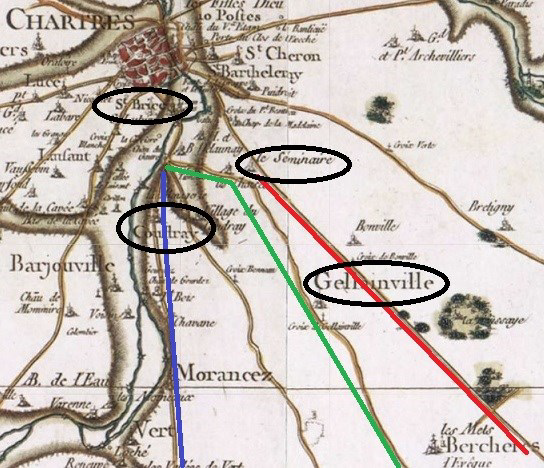
The roads that existed in the 13th century
There were ancient Roman roads, two of which passed near Berchères:
- Allonnes towards Allaines, the way VII or “the way of César” (traced in red)
- Voves, track XVI which is a deviation from the path from Chartres to Orléans (outlined in green)
- Track IX was that of Chartres-Varize which passes through Dammarie and Morancez (blue line).
The main characters in the construction of
the Chartres cathedral (1194-1260)
Three categories of people are behind this impressive development since it is the only cathedral that has been erected so quickly:
Sponsors: the Chapter with its very powerful bishops in the Middle Ages such as the instigator of the previous cathedral, Bishop Fulbert who found sufficient funds. He allowed his successor Geoffroy de Lèves to build the royal portal after the fire of 1134. In 1194, after a new fire, it was Bishop Renaud de Mouçon who would return to launch the construction of the 6th and final version consecrated by King Louis IX.
Builders: The anonymous master masons, prime contractors of Chartres as well as Simon Daguon, Bérenger and Jehan le Texier also named Jehan de Beauce.
Donors: The Kings of France and Denmark, the count of Chartres, the dukes of Aquitaine and Normandy, plus the many local farmer taxpayers, called the Beaucerons.
The revenue from the flow of 10.000’s of pilgrims visiting the well of Saints-Forts, the Black Virgin, and the miracles of Chartres, especially Le Voile de La Virgin Mary. It was donated by Charles the Bald about 876.