Hagia Sophia
“Little Hagia Sophia”
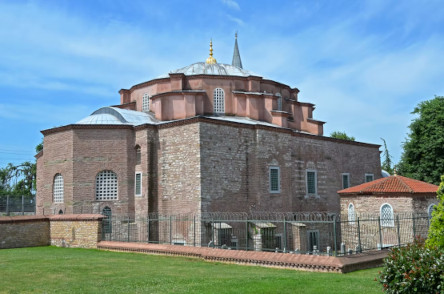
The Church of Saints Sergius and Bacchus built in Constantinople (modern Istanbul) during the reign of Justinian (527-565).
Now known as Küçük Ayasofya Camii (“Little Hagia Sophia Mosque”), it was converted into a mosque in the 16thC.
The Great Hagia Sophia:
Historical Overview
Early Beginnings: The First Church
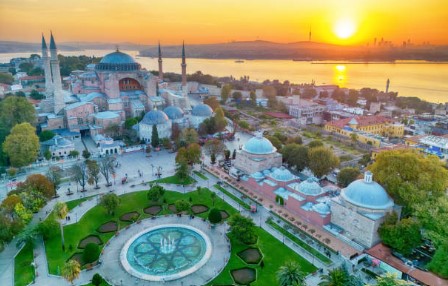
The Hagia Sophia, (Gr: “Holy Wisdom”) has its roots in the early days of the Byzantine Empire. The first church on this site was established in 360 CE by Emperor Constantius II. Known as the “Great Church” or Magna Ecclesia, it was a wooden-roofed basilica that served as the center of Eastern Orthodox Christianity for centuries.
Key Features of the Early Church:
• Design: The initial structure was a basilica with a wooden roof, thereby reflecting the architectural norms of the time.
• Significance: It quickly became a central religious and cultural hub, symbolizing the power/influence of the Byzantine Empire.
The Nika Riots and the Reconstruction by Emperor Theodosius II
In 404 CE, the first church was severely damaged by a fire during the riots following the exile of the patriarch John Chrysostom. The second church was constructed under the rule of Emperor Theodosius II in 415 CE, only to be destroyed again during the Nika Riots of 532 CE, a significant uprising against Emperor Justinian I.
Reconstruction Efforts:
• Theodosius II’s Contribution: The reconstruction saw a more elaborate basilica built with stone walls and an expanded layout.
• Destruction and Rebuilding: Despite the grand design, the church met its fate during the infamous Nika Riots, which led to its complete destruction.
Justinian’s Vision: New Era in Architecture
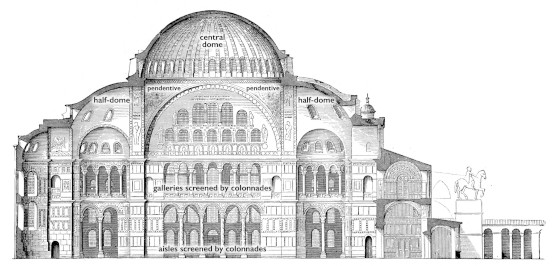
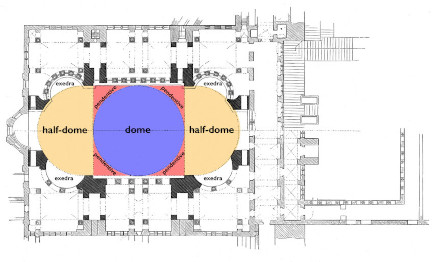
Emperor Justinian I embarked on a mission to rebuild the Hagia Sophia, transforming it into the architectural marvel we see today. Between 532 and 537 CE, the church was reconstructed under the supervision of renowned architects. This iteration of Hagia Sophia was groundbreaking, incorporating a massive central dome that seemed to float above the nave, a feat of engineering that was revolutionary for its time.
Architectural Innovations:
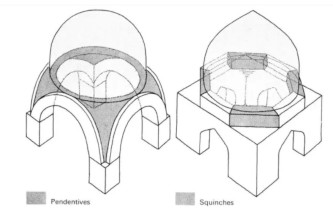
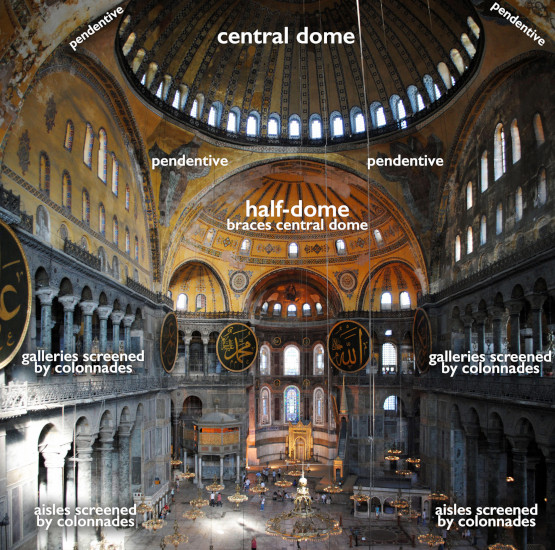
• Dome Construction: The innovative use of pendentives allowed the massive dome to sit atop the square base, creating an awe-inspiring interior space.
• Materials and Design: The use of marble, gold mosaics, intricate stonework, reflects the empire’s wealth and artistic prowess.
Hagia Sophia: Spiritual & Cultural Symbol
The Hagia Sophia remained the world’s largest cathedral and a symbol of Byzantine Christianity for nearly a thousand years. However, with the fall of Constantinople to the Ottoman Empire in 1453, Sultan Mehmed II converted it into a mosque, reflecting the region’s shift to Islamic rule.
Byzantine to Islamic Transformations:
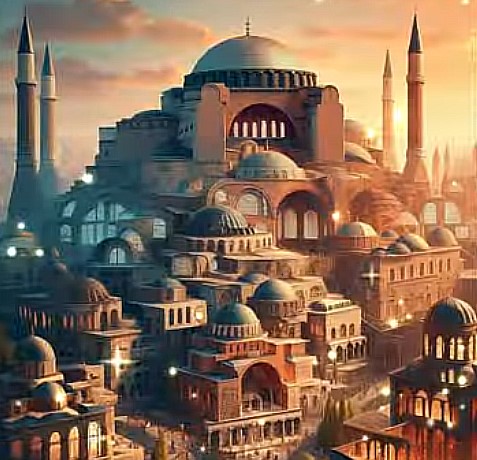
• Architectural Additions: Minarets were added, and Christian iconography was replaced or plastered over, aligning with Islamic religious practices.
• Cultural Shift: The Hagia Sophia became a vital center of Islamic worship and a symbol of the Ottoman Empire’s power.
A Museum of History and Art
In 1935, under the leadership of M. Kemal Atatürk, the Hagia Sophia was secularized and transformed into a museum. This move aimed to preserve its historical significance and showcase its architectural and artistic beauty to the world.
Museum Highlights:
• Preservation Efforts: The conversion to a museum allowed for the preservation and restoration of its intricate mosaics/artwork.
• Cultural Significance: As a museum, Hagia Sophia became a place where visitors from all over the world could appreciate the blend of Byzantine and Ottoman influences.
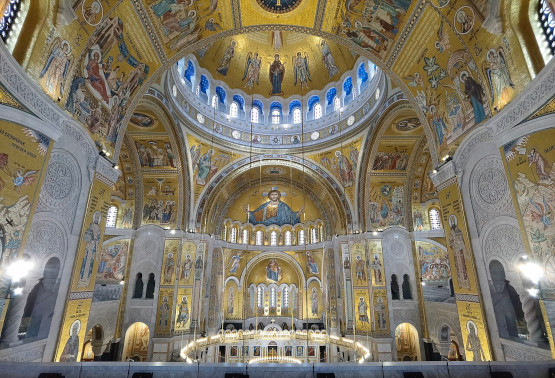
Reversion to Mosque
In July 2020, the Hagia Sophia was reconverted into a mosque, sparking international debate and highlighting its enduring significance in religious and cultural discourse, but it is still offering a unique glimpse into its layered history.
Modern-Day Usage:
• Open for Worship: As a functioning mosque, it holds regular prayers while still welcoming tourists from all over the world.
• Cultural Controversy: The decision to revert its status was met with mixed reactions, reflecting its complex identity as a symbol of both Christian and Islamic heritage.
Architectural Marvels of Hagia Sophia
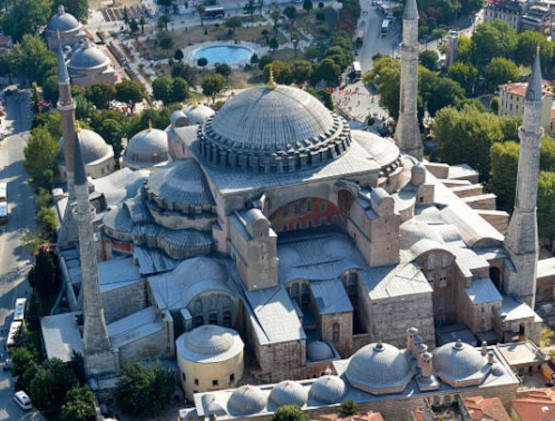
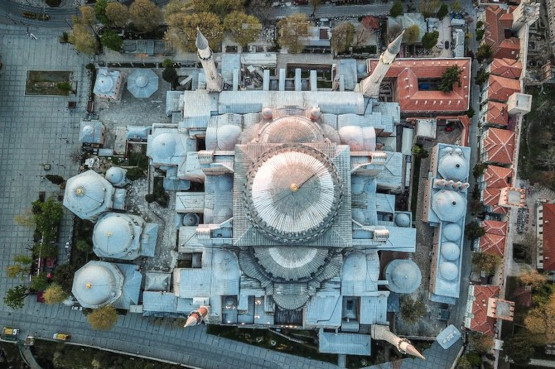
One of the most striking features of Hagia Sophia is its majestic & magnificent dome, which spans 33 meters in diameter and reaches a height of 55 meters. The dome’s innovative design, supported by four massive pendentives, allows it to appear as if it is floating above the central nave.

Engineering Feats:
• Pendentive Innovation: The use of pendentives was a revolutionary architectural technique that allowed the circular dome to rest on a square base.
• Structural Challenges: Over the centuries, the dome has undergone several restorations due to damage from earthquakes, showcasing the resilience and ingenuity of Byzantine engineering.
Intricate Mosaics and Marble Decorations
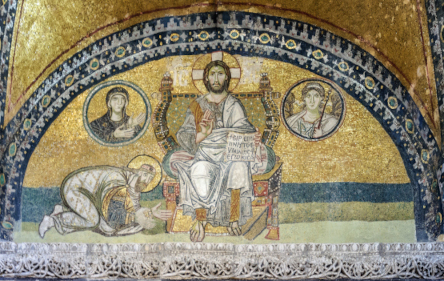
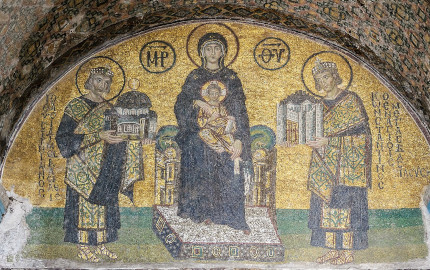
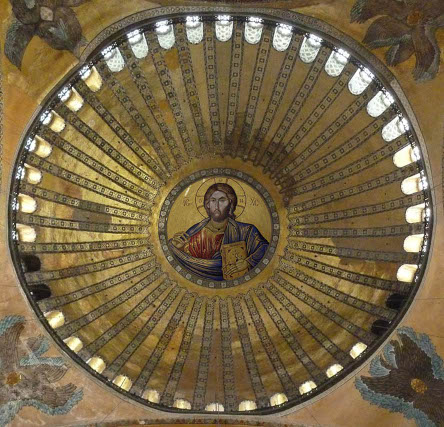
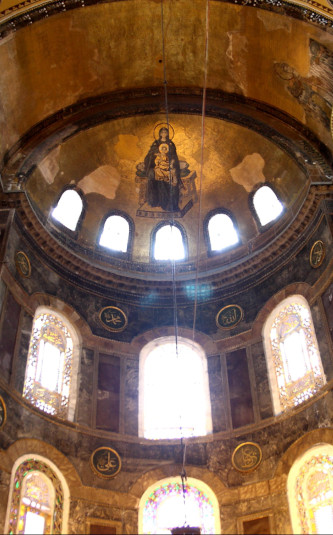
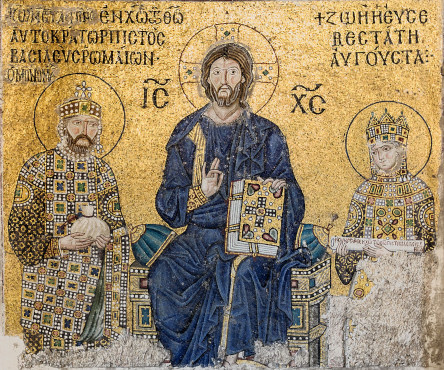
The interior of Hagia Sophia is adorned with stunning mosaics and marble decorations that reflect the artistic achievements of the Byzantine Empire. These mosaics, which depict religious figures and scenes, are a testament to the craftsmanship and devotion of Byzantine artists:
Artistic Highlights:
• Mosaic Masterpieces: The mosaics of the Christ Pantocrator and the Virgin Mary are among the most famous, illustrating the religious fervor and artistic talent of the era.
• Marble Splendor: The polychrome marble panels add to the visual grandeur, creating an atmosphere of opulence and reverence.
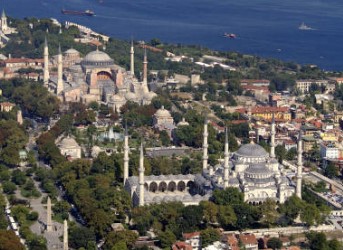
The neighboring Blue Mosque is an Architectural Wonder: Known for its stunning blue tiles and grand architecture, the Blue Mosque is one of Istanbul’s most iconic religious sites. Its central dome diameter measures 77 ft:

Basilica Cistern:
• Underground Marvel: This ancient underground water reservoir is a testament to Byzantine engineering, featuring impressive columns and eerie lighting. Visitors can walk along elevated platforms, exploring the cistern’s mysterious and captivating interior: