Hippocampus
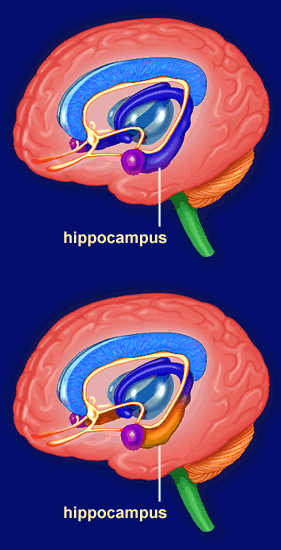
The hippocampus converts and directs incoming info into the appropriate memory areas. It is involved in learning through day-to-day experiences and deliberate study.
Repeated use of its nerve networks enhances memory storage from short term to long term and its recall.
It attaches an “emotion marker” to some events for easy recall. It has extensive influence on human behavior because most behavioral components, such as judgments, are connected to the hypothalamus.
Located just above the brain stem, it is also involved in regulating hunger, thirst, body temperature, fatigue, circadian cycles, and spatial navigation.
It is responsible for certain metabolic processes and other activities of the ANS. It links this to the endocrine system via the pituitary gland. Its hormones stimulate or inhibit the secretion of pituitary hormones.
The hippocampus also specializes in processing sets of stimuli, such as the context of a situation. The entire context associated with a traumatic event can provoke anxiety, because of the close connections between the hippocampus and the amygdala.
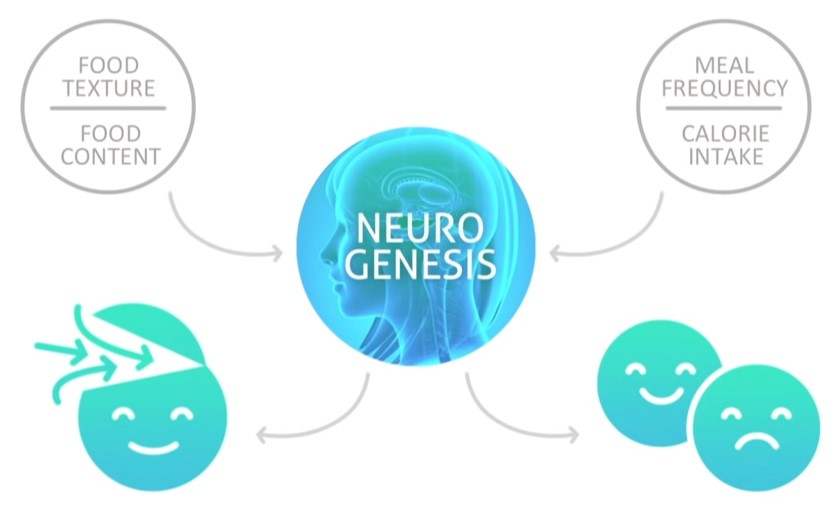
Recent research shows that the hippocampus produces about 700 new neurons/day, called neuro-genesis. Diet aspects on the white background below stimulate neurogenesis. This results in improved mood and memory.

Stimulation occurs with chewing of food, meal frequency, and eating less calories.
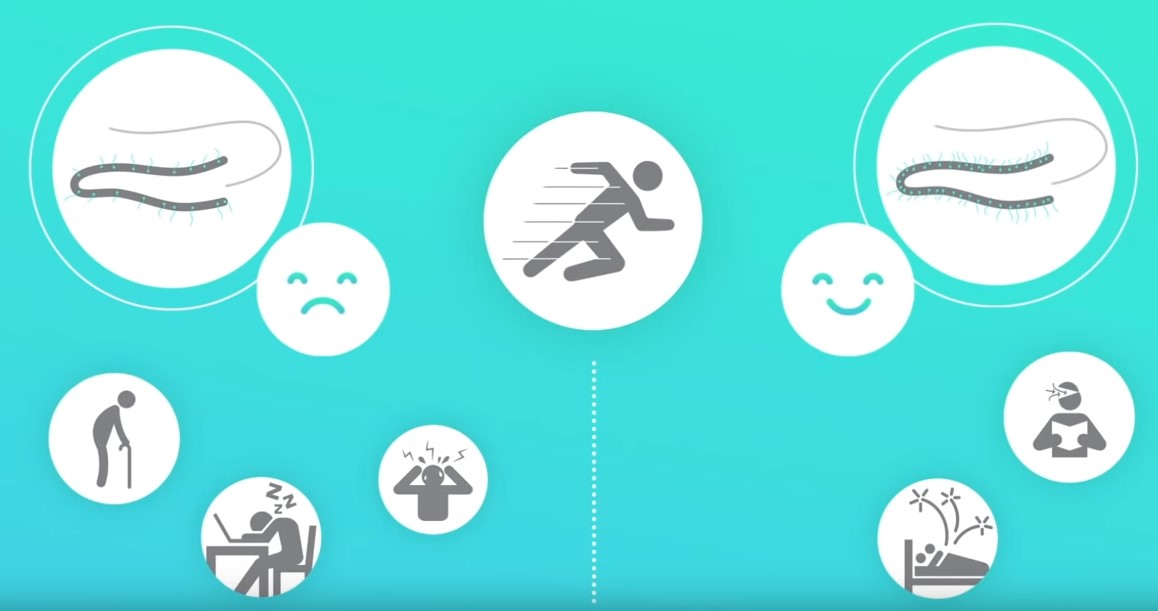
Physical and mental exercises, sex, sufficient sleep, increases neurogenesis. Stress, lack of sleep, and aging diminish it.