
Quantum Conditioning 2

Quantum Conditioning (QC) is a way of getting what your soul desires by Practicing:

What sets QC apart from other ways of conditioning? You may know that everything we pay attention to consists of miniscule molecules. Each molecule is made up of a bunch of atoms. Each atom is composed of a nucleus and lots of electrons orbiting it.

This nucleus comprises of protons and neutrons, which break down into elementary quantum bits or particles, such as quarks, leptons, bosons, photons, and neutrinos.

Everything we observe is in essence nothing more than a huge soup of quantum vortices fractally compressed to particles (≈4%) and seemingly empty space (≈96%).
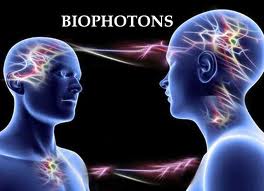
Quantum physicists notice that when the energy beam of their attention, a stream of bio-photons, is focused on a quantum phenomenon, its multi-dimensional properties and behavior changes.

Therefore, a different way of perceiving is required: a shift from mostly linear ‘left brain’ thinking in words and numbers, via a more ‘right brain’ thinking in images, to a more quantum-based heart-centered living.

Is Quantum Perception the new Paradigm ?

read more …

Similar Posts

  • Is NRI the Real You?

    Why does it work this way? There are a few key reasons for why the NRI mirror reflects the real you: Eye-to-eye contact: the strongest way we understand what people are saying. When you communicate with every other individual in the world, your eyes always meet left-eye-to-right-eye and right-eye-to-left eye. This normal biological pattern conveys…

  • Zoroastrianism

    Zoroastrianism is a religion and one of the world’s oldest organized faiths, based on the teachings of the Persian-speaking prophet Zoroaster. It has a dualistic cosmology of good and evil within the framework of a monotheistic ontology and an eschatology which predicts the ultimate conquest of evil by good. Zoroaster created the doctrine of Zoroastrianism,…

  • How many senses?

    Our senses are the physiological methods of perception. Similar to plants, each sense has its own dedicated sensory system within your nervous system. Definition Among scientists there are differing definitions of what constitutes a sense. The traditional five senses are sight, hearing, touch, smell and taste. However, humans have more senses, some of which, such…

  • Formal Sciences

    Formal sciences are conceptual systems that study formal systems, based on analysis, definitions, rules and laws, rather than actual facts. However, their methods hold in all possible conceivable worlds and are thus applied in empirical sciences and procedures, whose theories (general relativity, etc.) do not hold everywhere or even in our world: Logic (explicit analysis…

  • Operation Paperclip

    This reveals the 1100 Nazis who emigrated after WWII. The Nazis did not really lose WW-II. They made it appear that way so as to divert attention from the alliance between the 4th Reich Nazis and the alien reptilian race — an ancient galactic civilization obsessed with conquest & domination. After the German surrender in…

  • Attention Conclusion?

    Extensive clinical research has shown that patients interpret ‘visual’ communications as reality. A traumatized individual may end up believing that he or she was tortured when the actual message the organism is trying to convey is that these sensations you are experiencing feel like torture. The actual culprit could just as easily have been a…