EM Radiance

Radiance is used to characterize diffuse emission and/or reflection of EM radiation, or to quantify emission of neutrinos and other particles. Historically, radiance is called “intensity” and spectral radiance is called “specific intensity”.

Radiance is useful because it indicates how much of the power emitted, reflected, transmitted or received by a surface will be received by an optical system looking at that surface from a certain view angle.

Spectral radiance expresses radiance as a function of frequency or wavelength. Radiance is the integral of the spectral radiance of all frequencies/wavelengths.

For radiation emitted by an ideal black body at a given temperature, spectral radiance is governed by Planck’s law, while the integral of radiance over the hemisphere into which it radiates, is governed by the Stefan–Boltzmann law.
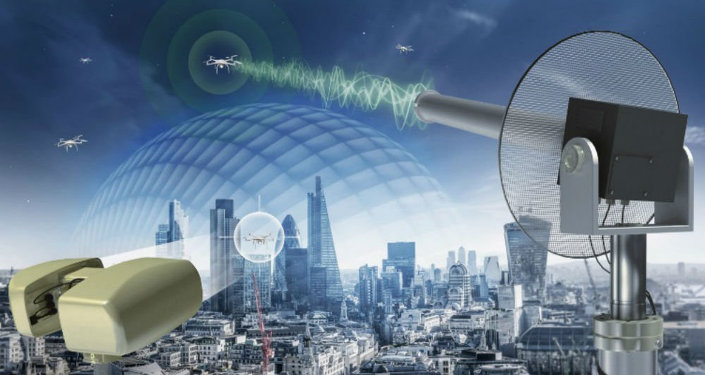
Hyperspectral imaging collects and processes data from across the EM spectrum. Its goal is to obtain the spectrum for each pixel in the image of a scene, with the purpose of finding objects, identifying materials, or detecting processes.

The human eye sees visible light in three bands (red, green & blue). Spectral imaging divides the spectrum into many more bands. This technique of dividing images into bands can be extended beyond the visible.

In hyperspectral imaging, the recorded spectra have a fine wavelength resolution and cover a wide range of wavelengths.

Hyperspectral sensors use almost the entire EM spectrum. Objects leave unique ‘prints’ in the EM spectrum. These ‘spectral signatures‘ or ‘fingerprints’ enable identification of the materials that make up a scanned object. 

Hyperspectral sensors and processing systems are used in surveillance, physics, astronomy, agriculture, biomedical imaging, and geosciences. A spectral signature for oil helps geologists find new oil fields. 
read more …


Similar Posts

  • Basilica Sagrada Familia

    Temple of Cosmic Light and Sound A musical instrument of colossal dimensions Gothic Naturalism at its best: Basilica de Sagrada Familia The tallest Christian Church on Earth The original Sagrada Família church was inspired by José Bocabella, founder of the Spiritual Association of Devotees of St. Joseph, and designed by the architect Francisco de Paula…

  • Summer Palaces

    Qingyiyuan, Gardens of Clear Ripples, the Summer Palace with Kunming lake Around 1749, the Qianlong Emperor decided to build a summer palace in the vicinity of Jar Hill to celebrate the 60th birthday of his mother, Empress Dowager Chongqing. Longevity Hill is about 60 m-high and has many buildings positioned in sequence. The front hill…

  • Hyper-arousal

    During times of conflict or stress, most people experience symptoms such as increased heartbeat and breathing, agitation, difficulty in sleeping, tension, muscular jitteriness, racing thoughts or perhaps an anxiety attack. These signs are usually due to some form of hyper arousal. If hyper-arousal, constriction, dissociation, and helplessness form the core of the traumatic reaction, then…

  • Red blood cells

    Every second 2½ million new red blood cells develop in the bone marrow and circulate for about 4 months in the body before their components are recycled. About ¼ of our cells are red blood cells (±25 trillion). During each circulation (±20 seconds), they take up oxygen in the lungs and release it into the…

  • Garima Gospels

    Garima Gospels The three Garima Gospels are the earliest surviving Ethiopian gospel books, containing all 4 canonical gospel books, and supplementary material like lists of Gospel chapters. They provide glimpses of lost late antique luxury gospel books and art of the 5th to 7th centuries, in the Aksumite kingdom of Ethiopia (350-650 AD) as well…

  • Is the Atlas critical?

        The little Atlas bone is the first vertebra of the spinal column (C1) and supports the weight of the head. It is concave on top to accept the convex base of the skull, and it is convex on the bottom to fit into the concave of the next vertebra. Central to the vertebra runs…