EMS + TENS

Electrical Muscle Stimulation (EMS)

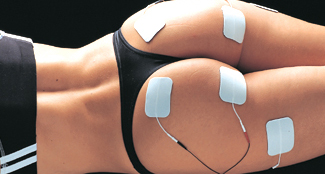
EMS is to evoke muscle contraction by using electric impulses. These impulses are generated by a device and delivered through electrodes and pads adhered to the skin near the muscles to be stimulated.

The impulses mimic the signal coming from the CNS and cause the muscles to contract.

EMS can serve as a strength training, rehabilitation, recovery, and/or preventive tool for partially or totally immobilized people, or athletes.

Effects:

EMS promotes both neural and muscle fiber training that complement the effects of voluntary resistance training. Different types of fibers can be activated to differing degrees by different patterns of EMS activity.

These patterns, protocols, or programs, will cause a different contraction response from different fiber types. Some programs will improve fatigue resistance and endurance, others will increase force production.

Use:

EMS can be used as a training, therapeutic, and cosmetic tool. In medicine, EMS is used for rehabilitation purposes, such as to prevent ‘disuse muscle atrophy’ which can occur after musculoskeletal injuries, like damage to bones, joints, muscles, ligaments and tendons.

In EMS training, only a few muscle groups are targeted together for specific training goals. Some coaches use professional EMS devices as an integral part of the training of their athletes.

EMS devices cause only a marginal calorie burning and weight loss. Physical exercise allows several muscles, the heart, and the respiratory system to be engaged all at once.

Because of the effect that strengthened and toned muscles have on appearance it can be used for aesthetics goals.

TENS

In TENS, Transcutaneous Electrical Nerve Stimulation, an electric current is used for pain therapy.


read more …

Similar Posts

  • Gut Attention?

    Focus Attention with our Gut ? Shifting the focus from wide to narrow changes the feedback of what we observe. This then changes the electrical patterns and chemical actions in our brains, causing system-wide effects, like increased muscle tension, respiratory rate, and a higher flow of neurotransmitters and hormones. All of these influence our perception,…

  • Implicit Memory

    Perhaps the best known of the various types of implicit memory is procedural memory, which enables people to acquire motor skills and gradually improve them. Procedural memory operates unconscious to us, because it is composed of automatic sensory-motor behaviors that are so deeply embedded, we are no longer aware of them. People with profound amnesia…

  • GM-Starry-W-DC

    Golden Mean Star projections onto Washington-DC “Cosmic-creators” are solar beings who create new civilizations Cicero: ” Stars are living gods, beings composed of the noblest and purest portions of the ethereal substance.” Destiny had brought together great men to do great deeds. The sacred/secret architecture of the material and legal USA’s capital Knowledge of star-constellations…

  • Gene sequencing

    Gene sequencing is a process in which the individual base nucleotides in an organism’s DNA are identified. It laid the foundation for the Human Genome Project, completed in 2003. Different genes are activated in different cells, creating specific proteins that give each cell type its trait. Gene sequencing is used to learn about the genome…

  • Hommie in Medicine?

    somato-sensory cortex The cortical homunculus is used to describe “the body within the brain”, a distorted human drawn or sculpted to reflect the relative space certain body parts occupy on the somato-sensory cortex (sensory homunculus) and the motor cortex (motor homunculus). The left hemisphere receives input from the body’s right side. The right one from…