Articles

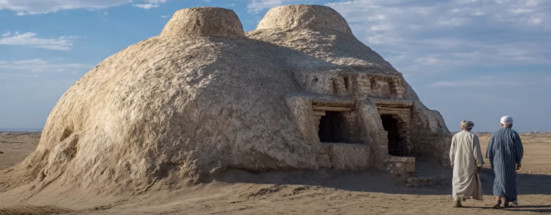
  • Ice-producing domes

    The ancient Persians invented refrigerators without electricity over 2,400 years ago. They are called Yakhchals, a very clever design. They preserved ice for months in the middle of the desert using mud, water, straw, sand, clay, egg whites, lime, goat hair, and ash in specific proportions. These ancient refrigeration systems used underground chambers, 15m high…

  • Vijaya Vittala Temple

    Vijaya Vittala Temple complex In Hampi, India, near the Tungabhadra River, is the grand Shree Vijay Vitthala Temple, a magnificent testament to the architectural prowess of the Vijayanagara Empire. Constructed in the 14th-15thC during the reign of King Krishnadevaraya II, the temple has undergone architectural evolution with each successive king adding their unique touch to…

  • Indian Rock Temples

    Indian Rock-hewn Temples There are over1,500 known rock-cut structures in India. These structures contain artwork of global importance, and most are adorned with exquisite stone carvings. These ancient and medieval structures represent significant achievements of structural engineering and craftsmanship. Unlike traditional structures that are constructed, these stone-cut monuments are hewn directly from natural rock, making…

  • Rock-hewn Churches

    The 11 monolithic still-active churches of Lalibela are not built from stone, but carved out of soft volcanic rocks. Some stand as isolated blocks in deep pits, while others have been cut into the face of a cliff. Doors, windows, lintels and all decoration are also chiseled artfully from the rock in the earth. So…

  • Garima Gospels

    Garima Gospels The three Garima Gospels are the earliest surviving Ethiopian gospel books, containing all 4 canonical gospel books, and supplementary material like lists of Gospel chapters. They provide glimpses of lost late antique luxury gospel books and art of the 5th to 7th centuries, in the Aksumite kingdom of Ethiopia (350-650 AD) as well…

  • New Delhi -SG

    British/Indian Government buildings & infrastructure done by Edwin Lutyens (GB) from 1911 onwards Parliament – Connaught Place – India Gate Triangle P is location of old and new Parliament: read more …

  • Niushou Mntn Park

    This expansive park consists of several temples, pagodas, ponds and parks scattered around Niushou Mountain, Nanjing. This has been a holy Buddhist site since the Tang dynasty (618 – 907), but the original Usnisa temple was destroyed during the Taiping Rebellion in the 1850s. Later, when a fragment of the Buddha’s skull was allegedly found…

  • Orthodox domes

    Coptic Christianity is a form of Christianity that originated in Alexandria, Egypt. Coptic means Egypt. The apostle Mark was the 1st Bishop ≈42 AD. The Pope of Alexandria is the head of the Coptic Orthodox Church, which has been separate but distinct Christian after the Council of Chalcedon in 451 AD: Saint Mark’s Coptic Orthodox…

  • Mosque Domes

    Gigantic Mosque complex in Medina, Saudi Arabia, Burial site of the Prophet Muhammad under the green dome, where in 1279 a wooden cupola was built over the tomb. World’s largest (400K sqm) Mosque, Mecca, Saudi Arabia, developed around the Kaaba, built by Abraham & Ishmael, as the first house of worship on earth: Birthplace of…

  • Stupa Temples

    In ancient Indian art, Buddha Shakyamuni was not represented as a being but as a stupa, a reliquary containing the relics of an individual associated with great spiritual power and insight, most often (since the 3rd century BCE) with the Buddha himself. The shape, a hemisphere topped by a spire and surrounded by a gate…

  • Hagia Sophia

    “Little Hagia Sophia” The Church of Saints Sergius and Bacchus built in Constantinople (modern Istanbul) during the reign of Justinian (527-565). Now known as Küçük Ayasofya Camii (“Little Hagia Sophia Mosque”), it was converted into a mosque in the 16thC. The Great Hagia Sophia: Historical Overview Early Beginnings: The First Church The Hagia Sophia, (Gr:…