Global G-Drug Supply
India’s government realized its huge population was never going to be able to afford imported patented drugs to cure diseases, and adopted the Patent Act of 1970, that granted legal protection only to the processes used to make a drug, not a drug’s content.
Indian companies reverse-engineered big-name drugs and launched copycat versions, legally. Then, in the mid-1980s, USA regulatory changes allowed importation of India’s cheap copycat drugs, too.
In 1995 the WTO gave drug patents 20 years’ protection. When the HIV/AIDs crisis hit and poor countries needed cheap drugs, the WTO conceded that member states could grant licenses to manufacturers to make generic versions of patented medicines needed to protect public health.
India produces ≈70% of the global hydrochloroquine supply, covering ≈50% of USA’s needs, with most of the API’s coming from China.
Then, Cipla reverse-engineered several brand-name drugs, and mixed them in a revolutionary anti-HIV drug cocktail. African countries & Aids groups were offered the drug for $1/day, a discount of over 96% on brand-name versions.
Cipla is reverse-engineering 3 drugs to counter Covid-19: Remdesivir, Favipiravir and Baloxavir.
However, challenging IP rights is only half the battle.
API Supply issues during pandemic
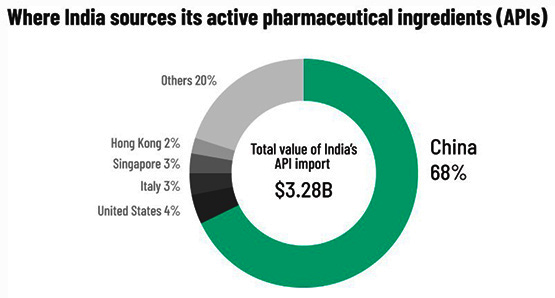
China’s C-19 lockdown of Active Pharmaceutical Ingredient (API) factories left Indian pharmaceutical companies struggling to get raw materials.
India used to have a thriving bulk drug and API industry, but when imports were allowed, its generic drug manufacturers began to buy 70% of their raw materials from China, for 30% lower prices, because the sheer size and scale of the 7,000+ Chinese government incentivized API facilities were able to leverage economies of scale to reduce cost.
Now, the Indian government revived plans for Bulk Pharma Parks to boost domestic production of 53 critical key starting materials, drug intermediates and API’s for local and foreign markets, pending environmental clearances or accessing finance. However, it will take at least 10 years to end their dependency on China.
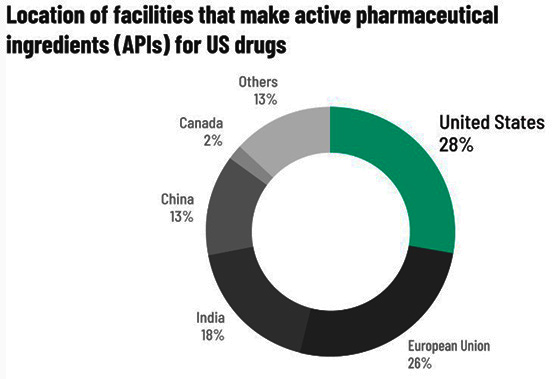
As the USA imports ≈35% of its generic drugs from India, there are plans to move all pharmaceutical manufacturing onshore, probably taking 10+ years to accomplish, thus ignoring the strength of a robust and geographically diverse global supply chain.
The solution should be an international system where the producer countries have to ensure a sufficient capacity to continue supplying the world during a crisis.