
Persistent Infections
- infectious agent,
- reservoir,
- susceptible host,
- portal of entry,
- mode of transmission,
- portal of exit.
Each of the above links must be present in a chronological order for an infection to develop. Understanding these steps helps cure or prevent the infection.
Certain bacteria are known to generate a variety of toxic enzymes which can lead to vomiting, diarrhea, shock, and sepsis. Others present no symptoms.
Persistent infections are characterized by the continual presence of the infectious organism resulting in recurrent relapses. A persistent infection can be maintained by infecting different cells of the body.
Some viruses never leave the body. The herpes virus tends to hide in nerves and becomes reactivated when specific circumstances arise.
A weakened immune system, will often lead to Candida Overgrowth, a fungus that forms reservoirs made of biofilms of yeast throughout the body that become colonized by micro-organisms such as bacteria that will cause all kinds of debilitating discomforts and infections, such as:
1. Skin and nail infections, such as athlete’s foot or toenail fungus.
2. Feeling worn down, or suffering from chronic fatigue or fibromyalgia.
3. Digestive issues such as bloating, constipation, gas, IBS, diarrhea.
4. Autoimmune diseases such as thyroiditis, rheumatoid arthritis, ulcerative colitis, lupus, psoriasis, scleroderma, muscle aches, gingivitis, sinusitis and recurrent colds, GERD, multiple sclerosis, or cancer.
5. Poor concentration & memory, lack of focus, ADD, ADHD and brain fog.
6. Skin issues: ringworm, eczema, psoriasis, staph, blemishes, rashes.
7. Irritability, dementia, mood swings, headache, anxiety or depression.
8. PMS, rectal or vaginal itching or yeast & urinary tract infections, thrush.
9. Male prostate, kidney, and bladder infections; decreased libido.
10. Sensitivities to common foods, chemicals, perfumes.
11. Alcohol intolerance, seasonal allergies, sores, or itchy ears.
12. Strong sugar, alcohol, drugs, tobacco, and carbohydrate cravings.
13. Lime disease, which triggers auto-immune type symptoms!
14. Deep sleep & REM sleep deprivation. Eyesight degeneration.
15. Paralysis of the creative impulse. Inability to fully manifest.
 The Candida Monster
Although the healthy gut bacteria normally keep Candida levels in check, a weakened immune system can cause the Candida population to grow out of control.
We become fixated on these discomforts and try to get rid of them via medications and treatment. Unless we discharge the psycho-biological traumas that led to the weakened immune system, these symptoms will re-appear.
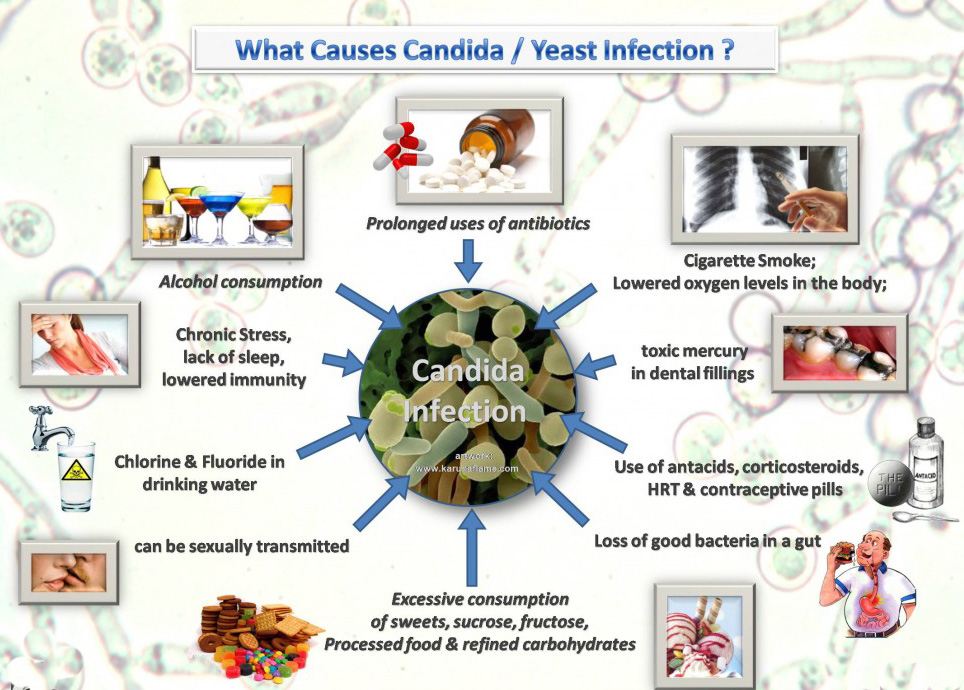
Sugars feed the yeast. Remedies: an anti-candida diet + blue/red light + ACV + iodine drops + baking soda + castor oil + lauric & caprylic acid, found in coconut oil. These acids “poke holes” in the yeast cell wall, causing it to die.