
EM-Wave Signatures
Electro Magnetic (EM-3D) Wave Signatures
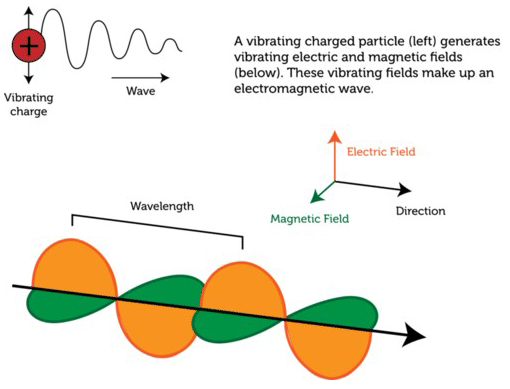
Our duality consciousness creates by default both the Positive and its opposite, the Negative. A perpendicularly oscillating magnetic field is thus created by default, when any vibrating particle or part in our body and/or environment creates an oscillating electric field of a specific wavelength with a unique pattern of varying amplitudes, called EM-Frequency signature:

Electromagnetic (EM) waves are created from the combined oscillations of an electric field and its magnetic field, traveling perpendicular to both of them, at the speed of light photons.
The electrical field carries energy, and the magnetic field carries information. They are interconnected and super-ordinate to the biochemical processes and thus control them as well as change the substances’ characteristics as they flow through.
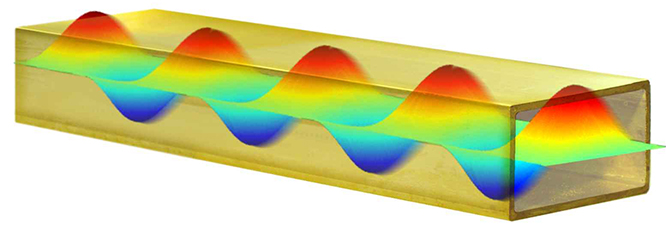 EM-3D waves
EM waves are ‘transverse’ waves, because they are measured by their amplitude and wavelength. EM waves transfer energy and information, called EM radiation, through matter or across empty space. The number of waves/second is called Frequency.
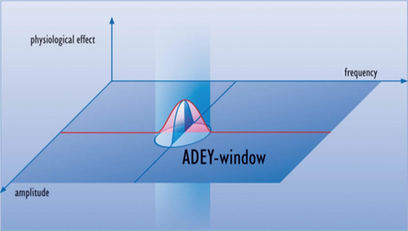
Amplitude has to do with Intensity. There is an amplitude- or intensity window that matters much. The graph shows the range of both Amplitude / Intensity / Potency and Frequency plotted vs positive physiological effect. If either frequency or amplitude is outside this ADEY-window, the body and its cells do not respond favorably.
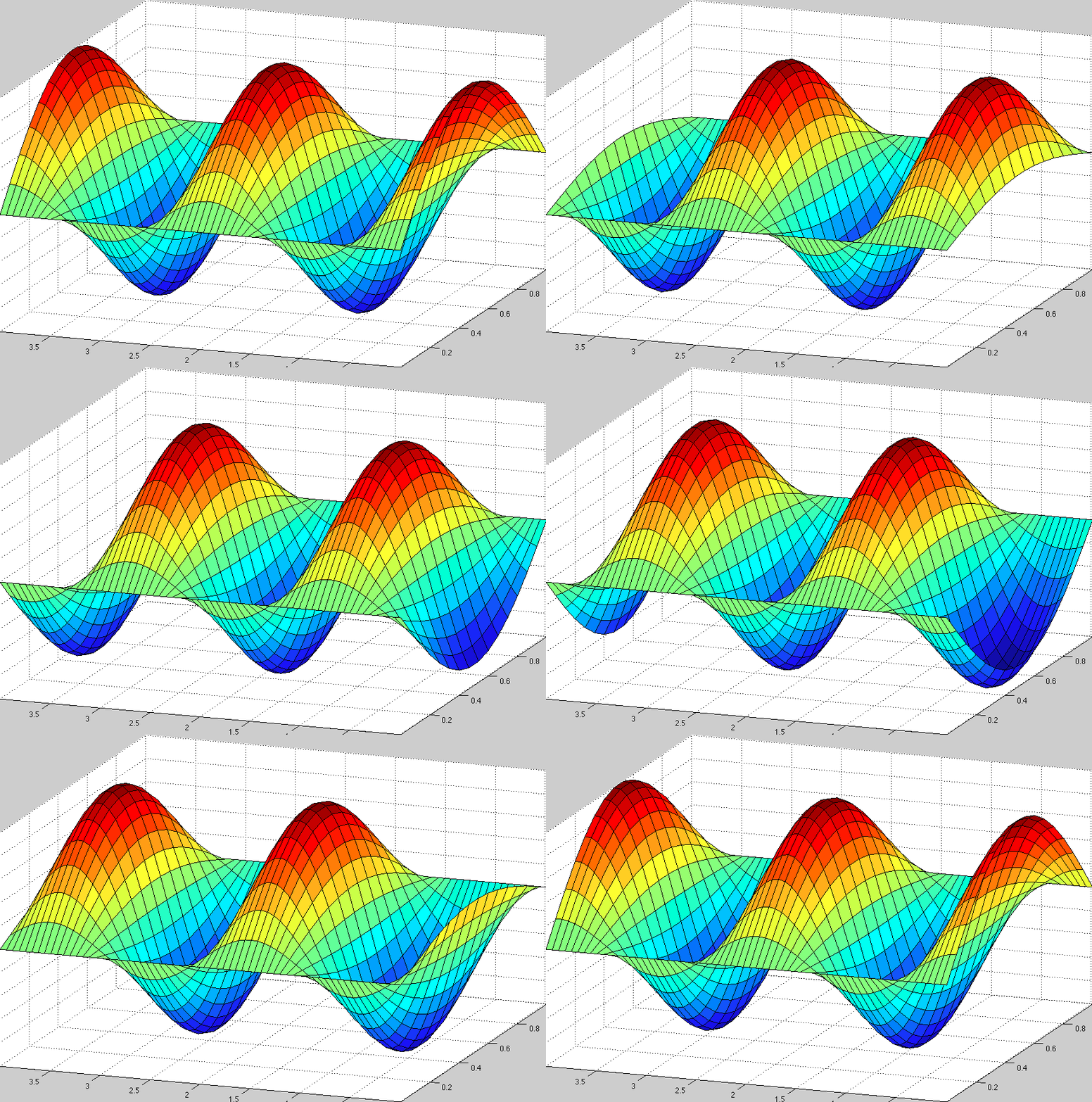
There appears to be a very weak force of correlation between protein chains. Their typical frequencies allow them to only pass a signal if it is strong enough to excite them, but not so strong as to break them.
EM waves show interference or diffraction. Interference refers to the phenomenon where two waves of the same kind overlap to produce a resultant wave of greater, lower, or no amplitude. Diffraction is defined as the bending of a wave around the corners of an obstacle/aperture. See video.
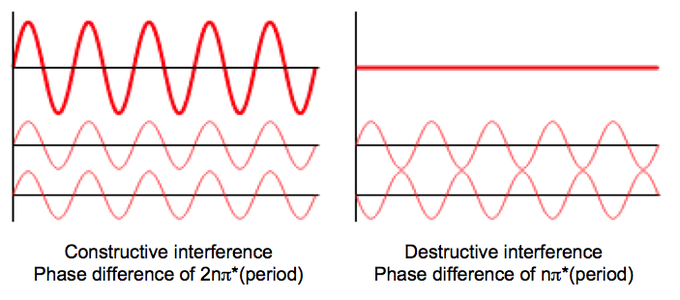
In Bioresonance therapy, constructive interference is caused by a device that adds EM waves that resonate coherently with the EM signature of a specific body part that needs help.
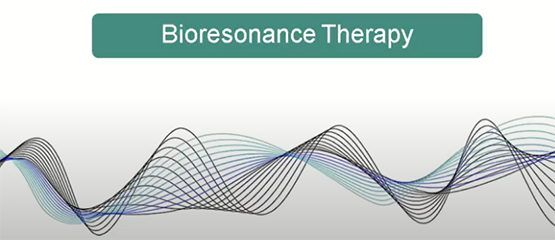
Destructive interference is accomplished when a device is adding EM waves that have the polar opposite signature of that of a pathogen, and thereby nullifies the wave of the pathogen, which is then destroyed, or by coherently resonating waves of increasing amplitude / intensity / potency, ultimately disrupting / exploding / lysing the cell walls and/or interior of the pathogens, after which these pathogens implode. Then their remains are drained from the body.
Now the Creator of the pathogen has to be destroyed in order to avoid recurrence of the pathogen. See C2C page, CF page, IHP page, and D2D page !