Materia Medica

Homeopathic Materia Medica

The German physician Samuel Hahnemann began practicing homeopathy when he began to translate the botanical Materia Medica of a Scottish physician in 1790. In that work, 20 pages are devoted to the Peruvian cinchona bark, which is used to prepare the medicine quinine.

While this substance produces fever-like symptoms in a healthy human, they cured fever in sick humans. Thus, he conceived the “law of similars” that like cures like.

Hahnemann developed the first Homeopathic Materia Medica by a system of homeopathic provings. With this, a substance was ingested by the “prover” and the symptoms that the “prover” developed were recorded in great detail.

These Materia Medica books are encyclopedia of materials which are used to prepare homeopathic medicines. They list the materials along with details of the provings that established the unique conditions for that case.

They constitute a homeopathic prescribing reference guide and are often used along with the Homeopathic repertory.

References:
Extracts from
Hahnemann’s Materia Medica Pura.
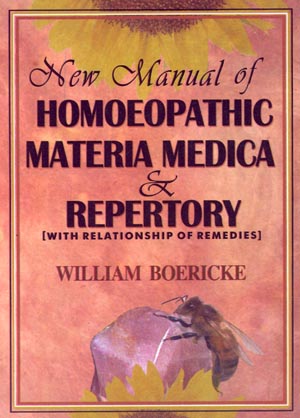
William & Oscar Boericke: Homeopathic Materia Medica.
read more …

Similar Posts

  • Is NRI the Real You?

    Why does it work this way? There are a few key reasons for why the NRI mirror reflects the real you: Eye-to-eye contact: the strongest way we understand what people are saying. When you communicate with every other individual in the world, your eyes always meet left-eye-to-right-eye and right-eye-to-left eye. This normal biological pattern conveys…

  • Most Effective Techniques

    Which techniques will be most effective? Since techniques based on brute physical force won’t do it, are the most efficient techniques then the ones that either disable an opponent or afford a quick escape? The so called flight, fight, or freeze mechanism of our reptilian brain? It would make sense that those be the parameters…

  • Subconscious Self

    Our subconscious Self is like the huge submerged part of an iceberg. You can only see it, when you swim under the surface, because you intuitively know it’s there. In Greek Mythology, King Neptune is the ruler of this ‘Under world’. We talk to ourselves at the rate of 150-300 words a minute, nearly 50,000…

  • The dance of blood

    With the word blood, we reach at the beginning of creative actions. Proteins dance as they shake their bodies and wave their limbs, with the goal of optimizing their interaction with other molecules, including other proteins. These tiny motions, called vibrations, enable the molecules to change shape quickly to bind to one another, which in…

  • Coherent–Network Bio-Quilt?

    Is our Coherent Tools Network like a Bio-Quilt ? Lakota Star Quilt Most research findings we analyzed, focus only on part or parts of the ‘Attention > feedback > Body-Brain re-action’ process. Most remedies or tools that various authors offer are too costly, complex or too elaborate in our view. After we exhausted our own…