Memory Effectiveness

Psychologists have identified a number of factors that can influence how effectively memory of an event functions:

  1. Degree of vigilance, alertness, attentiveness, and concentration. More attentiveness can engrave more info into memory. Repeated reading leads to better integration of information.
  2. Interest, strength of motivation, and necessity. It is easier to learn when the subject fascinates you.
  3. The mood and intensity of emotion during an event. The processing of emotionally-charged events in memory, events like “9/11/89 and 9/11/01 and 9/11/02”, involve nor-epinephrine, a neurotransmitter that is released in larger amounts while excited or tense.
  4. The details of the environment during the event, such as location, light, sounds, smells, etc. Our memory systems are contextual. When we have trouble remembering a particular fact, we may retrieve it by recollecting where, or from what book we learned it. Was there a picture or was the information near the top of the page, or the bottom? Since the context is always memorized with the content we try to absorb, recalling this context by associations leads to recalling the content itself.

Forgetting is another aspect of the process of memorization. It allows the removal of chunks of information that some entity in your brain decided it does not need it now.

read more …


Similar Posts

  • Gene Mapping

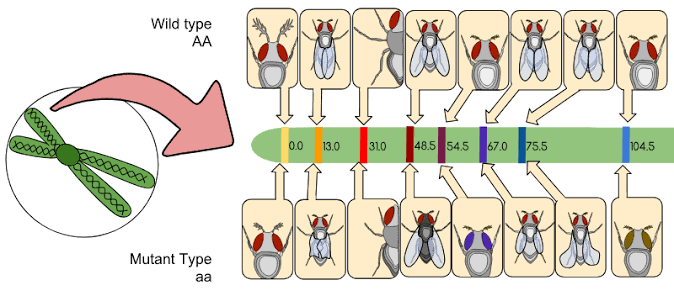
    There are 3 different types of genes: A regulator gene. That is a gene that causes the production of a protein that regulates or suppresses the activity of one or more structural genes. A structural gene. That is a gene that determines the amino acid sequence of a protein. An operator gene activates the production…

  • Emerald Tablets

    Emerald Tablets of Toth the Atlantean “Thrice Great” Thoth, later Hermes Trismegistus Thoth was an immortal, that is, he had conquered death, passing only when he willed and even then not through death. His vast wisdom made him ruler over the various Atlantean colonies in Africa and the Americas, from 52.000-36.000 BC. After the flooding…

  • Ben Franking

    Benjamin Franklin helped unify and liberate the 13 States of America, and saved its Postal System On February 13, 1766, Franklin testified against the American Stamp Act before England’s House of Commons, answering Parliamentarians’ questions so deftly that the ill-advised nature of this legislation became obvious. The tax act was abolished one month later, mostly…

  • Burial site St Peter

    Circus Maximus Circus of Nero with the Egyptian Obelisk, that stands now at St.Peter’s square. Peter crucified inside the Circus of Nero and buried right next to the circus! Only Peter can be seen as Christ’s vicar on Earth. No Catholic Pope or other Prelate can claim the same. Crucifixion and bones of St Peter:…

  • SNS & PSNS

    SYMPATHETIC NERVOUS SYSTEM: The SNS actions prepare the organism for physical or mental activity. When facing a major stressor, the SNS orchestrates the response. It dilates the bronchi and the pupils, accelerates the heart rate and the respiration, and increases perspiration and arterial blood pressure, but reduces digestive activity. Two neurotransmitters are primarily associated with…

  • Ice-producing domes

    The ancient Persians invented refrigerators without electricity over 2,400 years ago. They are called Yakhchals, a very clever design. They preserved ice for months in the middle of the desert using mud, water, straw, sand, clay, egg whites, lime, goat hair, and ash in specific proportions. These ancient refrigeration systems used underground chambers, 15m high…