Memory & Learning

Learning forces the brain to continuously modify its own structure to better reflect the experiences that we had. Thus, it is a relatively permanent change in behavior that marks an increase in knowledge, skills, or understanding, thanks to our memories.

A memory is the fruit of this process. It leaves concrete traces in your neural networks, whereby it is easier to remember a new piece of information if you can associate it with previously acquired knowledge that is already firmly anchored in your memory. The more meaningful the association, the easier it is to remember.

We all formed associative memories of past events, based on particular preferences at that time. One thing reminding us of another, which reminds us of yet another, and so on. Instead of being a vast collection of data stored like books on shelves, most of our memories are reconstructions.

When we perceive an object, groups of neurons in different parts of our brain process the information about its shape, color, smell, sound, and so on. Then, our brain connects these different groups of neurons. These relationships constitute our perception of an object. When we remember an object, we rebuild these relationships.

The parallel processing done in the right hemisphere of your neo-cortex, alters your memory of an object.

read more …


Similar Posts

  • Surgery or not?

    2. Removing the painful Substance through Surgery: In extreme cases, surgeons may have to sever pain pathways by altering areas of the brain associated with pain perception, or performing a rhizotomy (which destroys portions of peripheral nerves) or a chordotomy (destroys ascending tracts in the spinal cord). Usually a last resort. Surgical interventions can be…

  • The Baldacchino

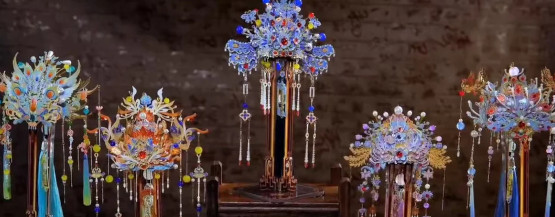
    St. Peter’s Baldacchino is a towering bronze canopy sculpted over the High Altar of St. Peter’s Basilica in Rome. It was built over the tomb of St Peter. Even though sculpted canopies are ordinary in medieval churches and buildings, the Baldacchino in St. Peter’s church was noted for its grandeur and the man who executed it,…

  • Cell replacement

    Zygote A zygote is the 1st cell in an organism’s development, often a exchange between an ovum and a sperm cell, forming a single diploid cell, containing DNA from both. Prior to cell division, a process called mitosis takes place, in which cells create 2 copies of their DNA. One is called RNA. Cell growth,…

  • The Wave-based Genetic Code

    Grazyna Fosar , an astrophysicist, and Franz Bludorf, a mathematician and physicist, are also hypnotherapists. They research the quantum physics of consciousness, geomancy and environmental influences of ElectroMagnetic (EM) waves. In their book Vernetzte Intelligenz (Interlaced Intelligence) these Germans wrote the following on this subject: “In W-Europe and N-America, we speak matter-of-factly about the ‘genetic…

  • Draco consciousness

    Draco constellation and its consciousness as intelligent energy The constellation Draco has a dragon-shape and is one of the largest constellations in the sky and one of the Greek constellations. It is located in the northern celestial hemisphere, and part of the Ursa Major constellation family. It has single, double, triple, and quadruple star systems. There…

  • MFB + PVS

    Aversive stimuli that provoke action responses activate the brain’s punishment (pain) circuit which enables us to cope with unpleasant situations. It includes brain structures, such as the hypothalamus, thalamus, amygdala, hippocampus, and insular cortex. The Peri-Ventricular System (PVS) or punishment circuit, functions by means of acetylcholine, which stimulates the secretion of adrenal cortico-trophic hormone (ACTH)….