Gene sequencing

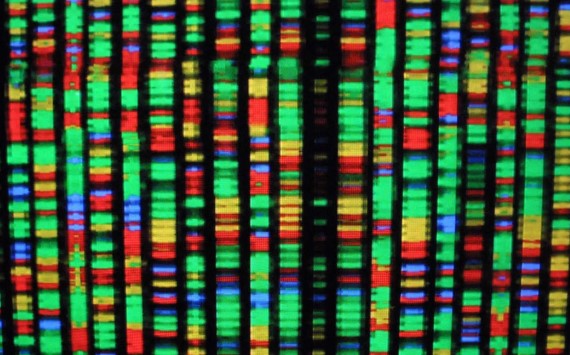
Gene sequencing is a process in which the individual base nucleotides in an organism’s DNA are identified. It laid the foundation for the Human Genome Project, completed in 2003. Different genes are activated in different cells, creating specific proteins that give each cell type its trait.

Gene sequencing is used to learn about the genome of the organism as a whole, and to identify specific areas of interest and concern. Samples like hair, skin scrapings, and blood can all be used for that. Only a few cells are needed to extract their DNA and run it through a sequencer.

By looking at genetic variations across multiple individuals, researchers can identify the precise nucleotides used to code specific traits, from certain heart conditions to brown hair. They learn when a trait first appeared in the organism, and what kinds of factors influence that trait.

The process can be used to identify genetic abnormalities. Samples are checked for common genetic conditions in fetuses, and compare them with samples from parents who are concerned about passing down hereditary diseases.

It may lead to cures for specific conditions. It is also used to test unknown samples against known DNA to see if someone was present at the scene of a crime.

Watch the sequencing process at the Broad Institute in Boston, USA. Its DNAtrium is dedicated to the exploration of the human genome, our genetic recipe and instruction book. The space unites science, technology, art, and community.

It showcases how genomic science is propelling progress in biology and medicine. Visitors can hear from scientists about their groundbreaking work, and peer into the lab-machines that yield torrents of biological information, and connect with recent global discoveries in genomic science.

read more …

Similar Posts

  • Burial site St Peter

    Circus Maximus Circus of Nero with the Egyptian Obelisk, that stands now at St.Peter’s square. Peter crucified inside the Circus of Nero and buried right next to the circus! Only Peter can be seen as Christ’s vicar on Earth. No Catholic Pope or other Prelate can claim the same. Crucifixion and bones of St Peter:…

  • ABOUT YOU

    What most people in this world want is: Solve their most painful problems: physical pain, stress, loneliness, debt! Click here! Solve them in the most convenient way! Click here! Have experiences they can really feel with heart and soul, but wonder where to find them! Click here! Are you one of them? Try some of…

  • Types of Beliefs?

    I have observed in myself two types of beliefs: consciously adopted beliefs (some of which might qualify as “knowledge”) and unconsciously adopted beliefs. They usually have an emotion attached. Consciously adopted beliefs are easily accessible to my conscious mind. I decided to adopt them because they make sense, feel satisfactory and/or comfortable, and fit the…

  • NEURAL SPIKE TRAIN?

    The human brain has this formidable ability of its basic unit, the neuron, to integrate all information received from thousands of other neurons, via vortex impulses. Each of them has its own unique shape, unique position in the nervous system, and unique connections to other neurons, receptor or sensory cells, and muscle or gland cells….

  • QC Theme Park

     People Amusement Overview People amusement venues evolved from Greek amphitheaters and Roman circus maximus & colosseum, to the participation in church services. From the Greek Parthenon and the Roman Pantheon to the modern stadiums and music halls & parks: Theme Parks and Amusement Parks An amusement park is an elaborate park, usually catering to adults,…

  • SCIENCES

    Science is a methodical study of nature that forms testable explanations + predictions. The groupings listed are empirical sciences, which means the knowledge must be based on observable phenomena and capable of being tested for its validity by others working under the same conditions. The hard sciences rely on a scientific method, quantifiable empirical data,…