Homeotic Genes

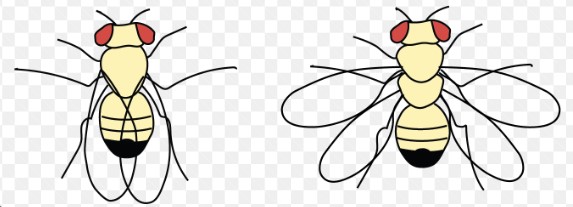
The human body is composed of several trillion cells, all coming from the same single fertilized egg, having the same genes, yet almost all of them have become specialized to perform certain tasks. This is because not all genes in a cell are activated at the same time.

Several of the proteins that can bind to DNA come from genes which, when expressed, give the cell a specialty according to its position in the body.

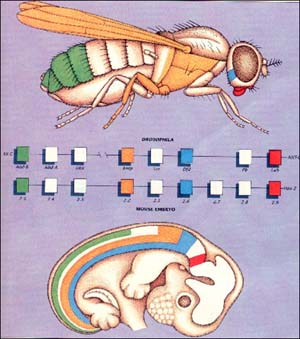
The term homeotic genes applies to these genes that encode proteins that bind to specific DNA sequences, and thus influence the organism’s subsequent development.
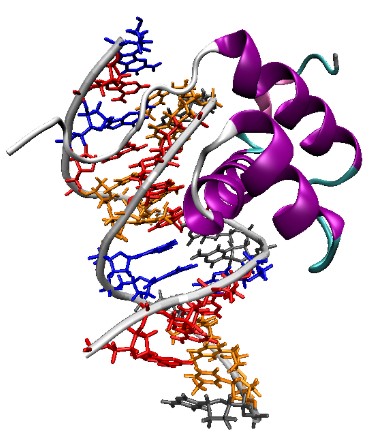
These specific sequences of DNA are called homeoboxes. See above. The proteins that arise from a gene containing a homeobox sequence can bind to another gene in turn.

This triggers a cascade of gene expressions resulting in the segmentation of the embryo.

We thus can see how certain “master” homeotic genes control the transcription of a set of secondary genes that in turn influence the activity of other target genes at a lower level in the hierarchy. These genes will then produce the proteins used to build the structures and organs of the body.
read more …

Similar Posts

  • Digital Detox Events

    Digital Dependence Detox for ‘Adicciones digitales’ To bridge the digital divide and poverty gap, many nations still need to build a stronger digital infrastructure, being the best catalyst for lasting economic growth. It comprises of broadband, data centers, cloud services, big data, and IoT, the Internet of Things, a network of physical devices, vehicles, buildings,…

  • Epi-Genetics

    The unique sequence of more than 3 Billion base-pairs in our DNA molecule is what makes each of us unique. Our DNA is like a cookbook full of ‘recipes’ and ‘bookmarks’. Different cells use different recipes, which we call ‘genes’. The bookmarks help each cell know which genes to use. These bookmarks exist as chemical…

  • Zoom into the Pain?

    Maintaining a tense, emergency mode of attention, will tire you out. So you need another cup of tea or coffee to muster the energy to keep paying attention or grab a cigarette or a class of wine to relieve the tension of narrow focus. Chronic 2D Object-Attention prevents the diffusion of stress. Its accumulation causes…

  • Particle Gen-Code II

    Particle-based Genetic Code II DNA Mutagens? Most of our DNA is non-coding and thus useful for research by other disciplines and further consciousness expansion. Non-coding DNA is split into 2 groups: LINE (Long Interspersed Nuclear Element). LINE repetitive DNA is about 6500 base-Twins long and is dispersed throughout the Human Genome. SINE (Short Interspersed Nuclear…

  • Human Cell Parts

    The major parts of human cells are: Nucleus: the cell’s command center. It sends directions to the cell to grow, mature, divide, or die. It also houses DNA, the cell’s hereditary material. The nucleus is surrounded by a membrane that protects the DNA and separates the nucleus from the rest of the cell. Cytoplasm: a…