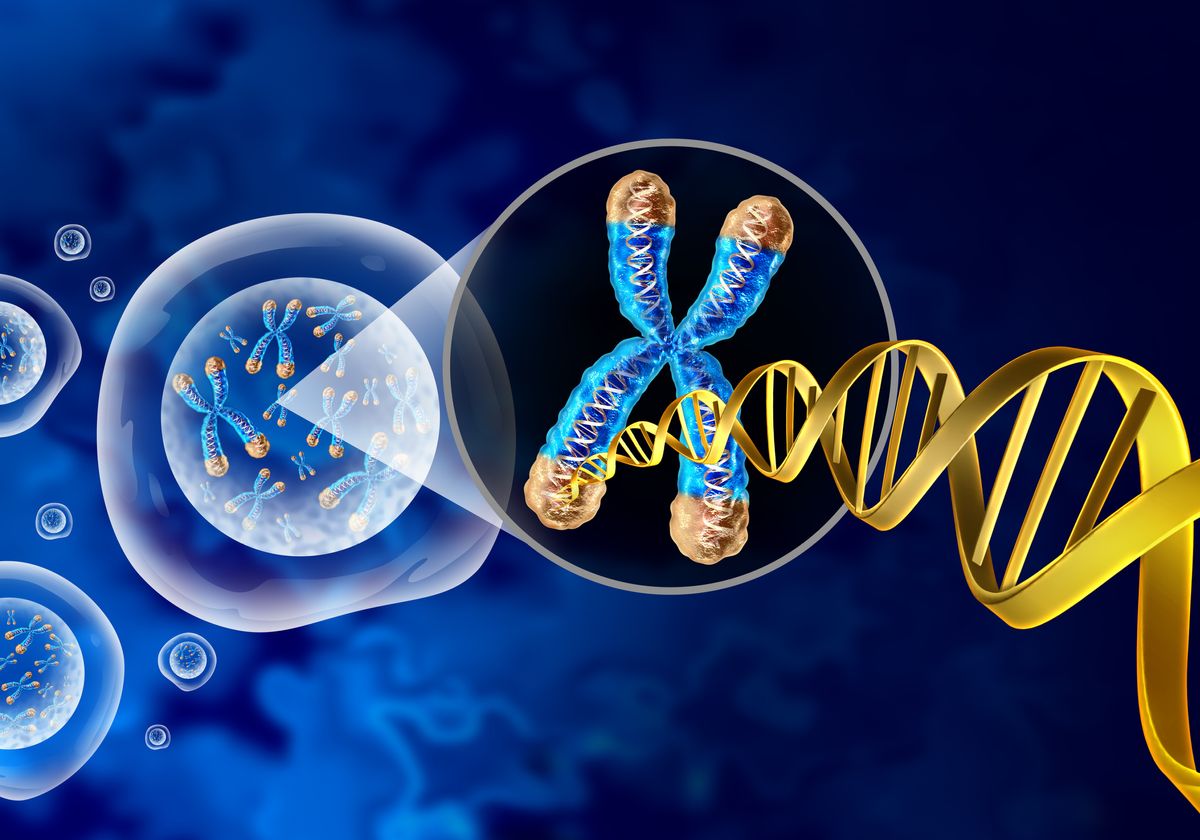
Chromosomes
In molecular biology, the genome is the sum total of an organism’s hereditary info. The genome includes both the genes and the non-coding sequences of the DNA.
The human genome of the modern (cro-magnon) human is stored on 23 pairs of chromosomes. Previous creatures, such as the Neanderthalers and primates, had 24 chromosome pairs.
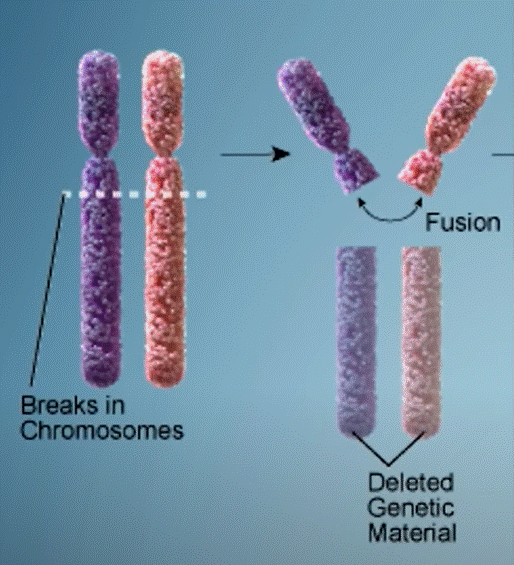
The fusion between their 2nd and 3rd chromosome led to the creation of the modern human. Only ± 2% of the human genome codes for proteins. The other 98% comprises of non-coding RNA genes, introns, and noncoding DNA.
Each cell has 46 chromosome molecules of double-stranded DNA. Each molecule is made up of 50-250 million base pairs. The Genome has over 3 Billion base pairs.
One set of 22 chromosomes comes from the mother, the other 22 from the father. Women get the 23rd X (sex) chromosome from each parent, while males get an X from the mother and a Y from the father.
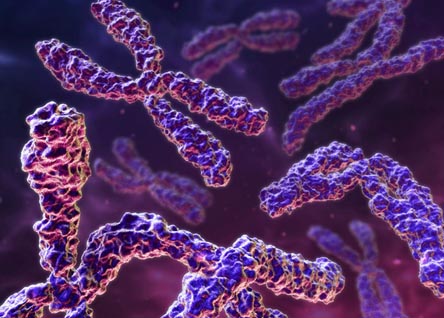
Each chromosome ends in a neatly tied loop, and contains unevenly distributed gene-rich and gene-poor regions. Discovering the locations of genes on chromosomes, could facilitate the understanding of how genes are inherited and expressed in the offspring.
DNA consists of loops of code with a consistent but often unique current flowing through each. The current sets up a small magnetic field, which allows for the transfer of information through magnetism.
These magnetic ones are part of the programming of the biological ones, and are part of the electro-mechanical-chemical system of the human body.
The DNA ladder twists because it is magnetic, and thus polarized. The polarized proteins in their coded stranded groups of 12 move in a symmetry that twists in reaction to the attraction and repulsion of the magnetic polarization.
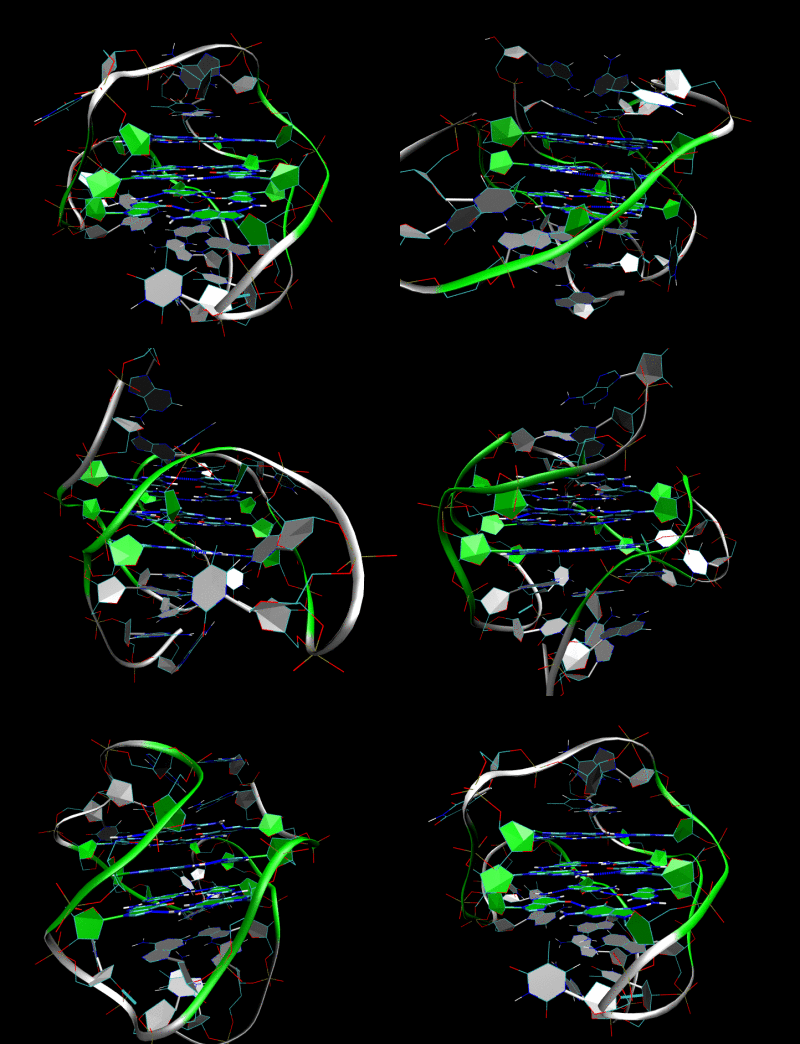
The end caps on chromosomes are called telomeres who insure that our DNA is replicated without errors during normal cell division. The longer the telomeres the more accurately DNA is replicated.
The younger the body, the longer their telomere. The longer the telomere the less likely someone will develop cancer and other older age related issues.
Your biological age can be measured thru telomere testing, using a blood sample.