Mycology – Fungi
Fungi, the world’s most creative environment adaptors
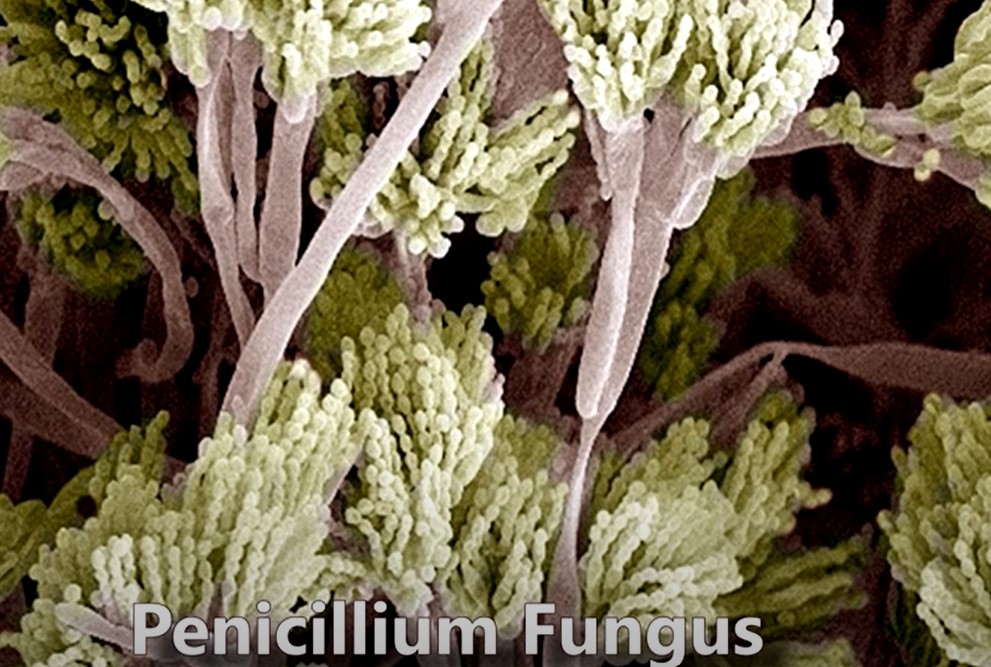
Mycology is the branch of biology that studies fungi. This includes their genetic and biochemical properties, their classification, and their use as a source for medicine, wine, cheese, edible mushrooms, and spiritual experiences, as well as their dangers, such as poisoning or infection.
Only a few hundred of the 6 million different species of fungi cause human disease. Fungi are in a class by themselves, because they can be mono-cellular (prokaryote), or multi-cellular (eukaryote).
They can’t be considered true organisms, but a separate class of cellular aggregates with an organismic behavior, as each cell maintains its survival and reproductive potential intact regardless of the structure in which it exists.
Fungi need preformed compounds for food and thus depend on other living organisms. They exploit these organisms in different ways, such as change their pH, eat their organic waste, or attack the tissue of the host directly.
Fungal toenail spores
Spores
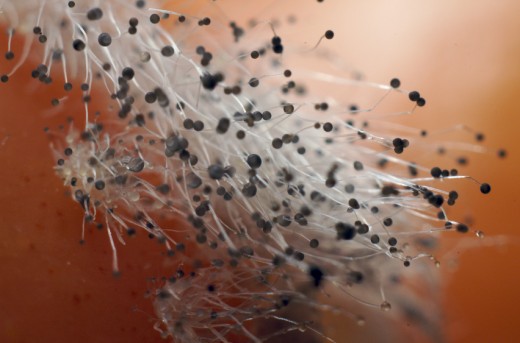
Fungi reproduce in many different ways, with different organ structures. When attacked, fungi create spores, invisible ultra-microscopic elements, that can go dormant under adverse conditions for a long time, so as to ensure the survival of the species. This production of spores can contain billions of elements dispersed at remarkable distances from their original location.
Under favorable conditions, fungi thrive on those cells that make up the outer surface layers of the human body, organs and glands. As soon as the surface tissue reaction is engaged, it massively transforms itself into spores.
If the body’s immune system continues its attack, the spore digs deeper in the lower connective tissue in a quiet and thus impenetrable, irreversible state, difficult or even impossible to detect by the immune system. Because of this, medical science calls them benign tumors.
When the tissue does not react anymore, the fungi will gradually expand again to the whole organism through the blood and lymph vessels.
Fungi in their many forms can both cause dis-eases and cures. Fungi are the grand molecular dis-assemblers in nature, decomposing plants and animals, creating forests…they’re soil magicians, according to Paul Stamets, a foremost mycologist, who created a patented bio-insecticide to be used in all aspects of organic agrobusiness:
Mycopesticides
US patent 20040161440 A1
This invention utilizes the non-sporulating mycelial stage of insect-specific parasitic fungi. The fungus can be present on grain, attracting the pest, and also infecting it through digestion. More than one fungus can be used in combination. The matrix of fungi can be dried or freeze-dried, packaged and reactivated for use as an effective bio-insecticide, “cultivated on agro-waste”.
After ‘sporulation’ of a select entomopathogenic fungi (fungi that kill insects), the area becomes no longer suitable for any insect(s) the fungi are coded for. In addition, extracts of the entomopathogenic fungi can steer insects in different directions. It is a near permanent, safe solution for over 200,000 species of insects.
Testing revealed that the red belted polypore mushroom degrades pesticides, herbicides, and fungicides. This new class of SMART Pesticides (Sporulating Mushrooms And Repelling Technology) eliminates the need for Round Up ready GMO seeds and BT seeds that grow the pesticides in the crops that are needlessly endangering us.
The genes for the detoxification pathways in bees are turned on by beneficial fungi they collect from their environment.