
About yr pH + COS
About your pH and COS
Acidosis, an acidic body, will lead to a variety of health conditions like osteoporosis, chronic fatigue, muscle loss, high blood pressure, kidney stones, cravings for sugar and carbohydrates, and more.
Although the “blood” pH should be slightly alkaline for optimal health, the “gut” pH should remain acidic to function properly, and prevent Candida yeast overgrowth.
It is the acid in the “dophilus” that helps eliminate yeast overgrowth. “Acidophilus” is lactic– and acetic- acid. The acid in the stomach and intestines is your 1st line of defense against pathogenic invaders.
Antibiotics kill off acid forming bacteria in the digestive system. This will make the environment too alkaline, too high pH, and thus become more hospitable for yeast and other pathogens, like Candida.
Different parts of the body require different pH levels. In a healthy body, the pH of:
- the body tissue and blood is ≈7.3, slightly alkaline;
- an empty stomach is 1 to 3, highly acidic;
- the small intestine is 6 to 6.5, slightly acidic;
- the colon is 5.5 to 7, slightly acidic;
- the vagina is 3.8 to 4.5, medium acidic.
- the small intestine varies by location, like the duodenum and the caecum.
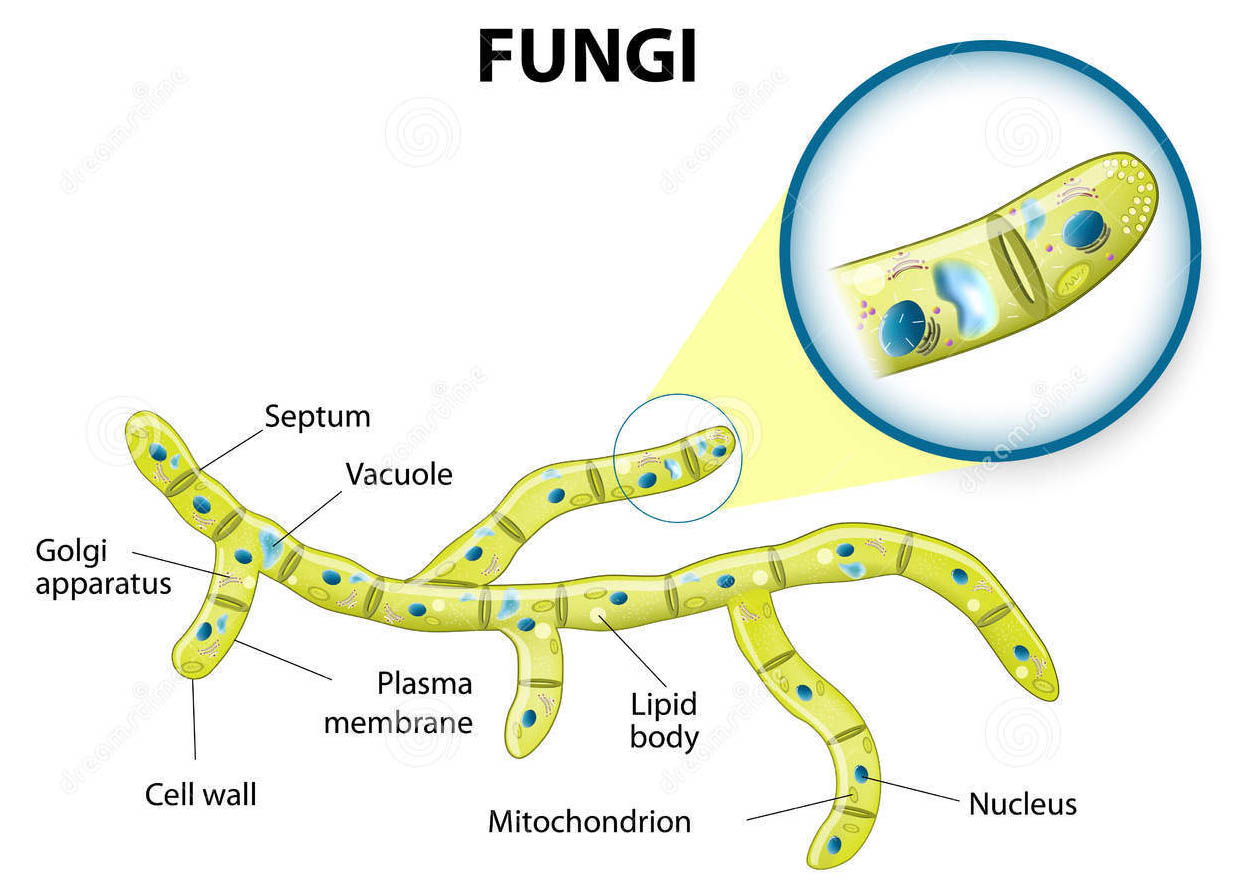
A typical fungus consists of a mass of branched, tubular filaments enclosed by a rigid cell wall. Each filament, called hypha, branches repeatedly into a complicated, radially expanding network called the mycelium. It grows by taking nutrients from its environment, just like the mycelium in the woods is sprouting mushrooms everywhere.
Candida Albicans seems to thrive in pH’s from 2-10, but studies show that it needs an alkaline environment to change from a yeast into the pathogenic fungal filament form.
One of the astounding abilities of the Candida yeast to adapt and survive is to emit one of its toxins, like ammonia (NH3, a colorless, pungent gas), to alter an acidic environment’s pH to a more alkaline one, and then morph into a filament form.

Other microbes can alter their pH as well. The large intestine contains E-coli which helps produce vitamin K, etc., but becomes pathogenic in an alkaline environment.
A diet low in animal protein (eggs and fish), and high in fruits creates an alkaline gut, which encourages yeast overgrowth.
Primarily sugar, grains and processed foods, artificial sweeteners, carbonated drinks, caffeine, and alcohol create acidosis. Low-starch alkaline vegetables will neutralize the acid in meat, when eaten together.
A Paleolithic or Hunter-Gatherer or Caveman Diet, will correct the pH of blood, stomach, small intestine, colon, and vagina, etc., because it is the diet that we are genetically designed to eat by the process of evolution and natural selection.