Articles

  • Infections

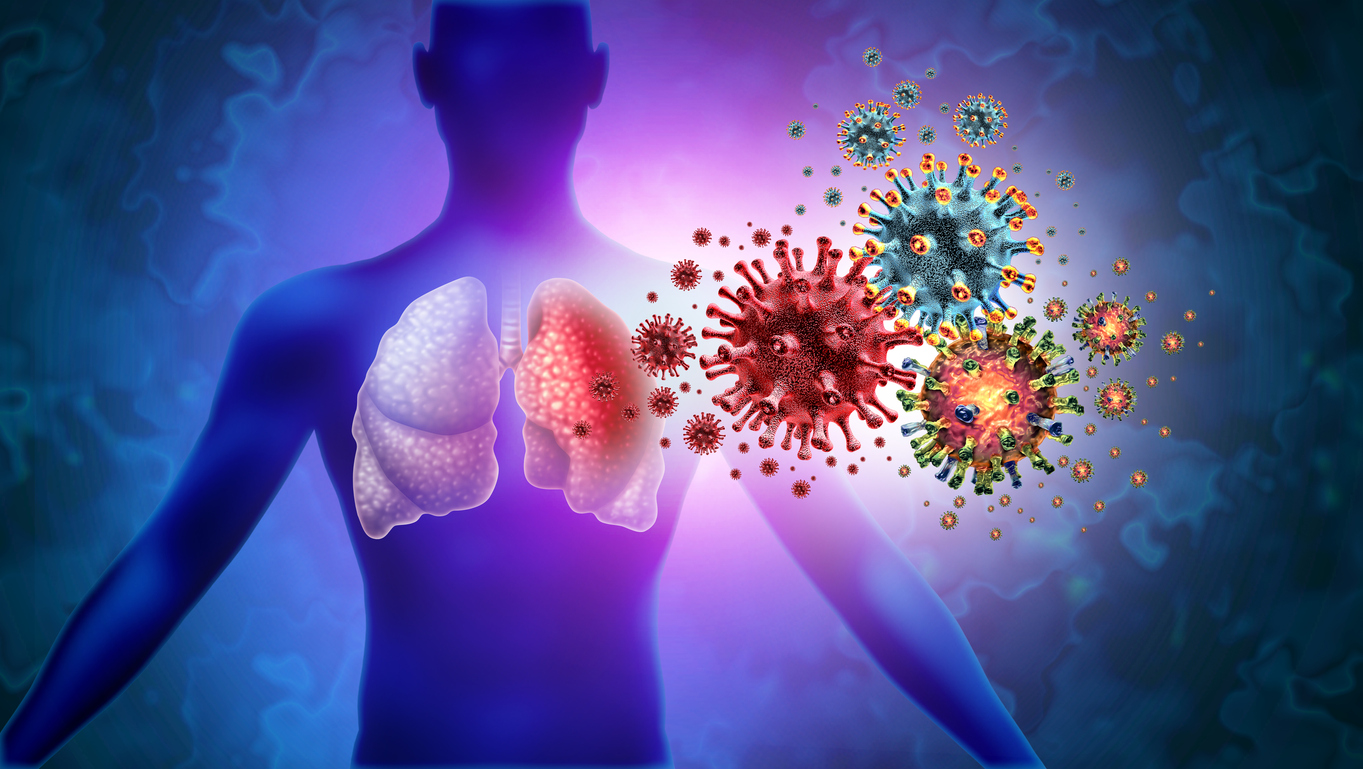
    An infection is the colonization of a host organism by a foreign organism. The infecting organism seeks to utilize the host’s resources to multiply. The infecting organism, or pathogen, interferes with the normal functioning of the host. Its response is inflammation. Rhinovirus 3 Many individuals develop a variety of infections but quickly overcome them. Some…

  • The Basic Elements

    Is the Universe’s dark energy expanding time/space from zero? Atoms are the smallest parts of an element that still contain their particular chemical properties. Their nucleus consists of protons which have a positive electrical charge and neutrons that have no charge. Seven million atoms joined together in a straight line would be about 1mm long….

  • Ultimate Alchemy?

    However, the highest layers of each society depend for their smooth functioning upon the smooth functioning of the lowest layers of society. The “most positive” cannot function well without a well-functioning “most negative”. Those living in the social strata in between, have very little appreciation for this world, and fear it, because they cannot control…

  • Hommie in Alchemy?

    In alchemy, homunculi can be seen as a particular type of Pain-catchers, entities created in moments of overwhelming or painful experiences in this or past lives, and deliberately created within the R-brain for the “protection” of the human being. These entities cultivate a crappy attitude and gutter language in order to protect themselves and their…

  • Hommie in Medicine?

    somato-sensory cortex The cortical homunculus is used to describe “the body within the brain”, a distorted human drawn or sculpted to reflect the relative space certain body parts occupy on the somato-sensory cortex (sensory homunculus) and the motor cortex (motor homunculus). The left hemisphere receives input from the body’s right side. The right one from…

  • Homunculus?

    A mini-man in the brain? Life Science Information coming through our eyes is sent to the visual cortex in the back of our head. There, the image is inverted. Then the data is sent to various areas in our brains, that filter it acc. to their functional programming. Then these areas create perceptions (thoughts &…

  • Any common senses?

    Polarized light direction/detection This is used by bees to orient themselves, especially on cloudy days. Humans can learn to detect large areas of polarization by an effect called Haidinger’s brush. Other internal senses An internal sense is “any sense that is stimulated from within the body”, like numerous sensory receptors in many of our internal…

  • Special senses?

    Direction Magneto-ception or direction is the ability to detect the direction one is facing based on the Earth’s magnetic field. Directional awareness is most commonly observed in birds and bees, but also present in humans. Magneto-tactic bacteria build miniature magnets inside them, so as to orient them relative to the Earth’s magnetic field. Echo-location Certain…

  • Any other senses?

    Temperature Thermo-ception is the sense of heat and its absence (cold) by the skin and its internal passages. There are specialized receptors for declining temperature and heat. Heat receptors are sensitive to IR radiation. The thermo-ceptors in the skin are quite different from the homeostatic thermo-ceptors in the hypothalamus which provide feedback on internal body…

  • More traditional senses?

    Smell Smell is the other “chemical” sense. Each olfactory receptor binds to a particular molecular feature. Odor molecules have a variety of features and thus excite specific receptors more or less strongly. Excitatory signals from different receptors makes up what we call the odor molecule’s smell. Olfaction is processed by the olfactory system, involving the…

  • Traditional senses?

    Sight Sight or vision is the ability of the brain and eye to detect electromagnetic waves within the visible range of light, and interpret the image as “sight.” There are 2 receptors: One for the perception of color (frequency of light-photons) and the other for brightness (amplitude/number of photons of light). Depth perception is a…

  • How many senses?

    Our senses are the physiological methods of perception. Similar to plants, each sense has its own dedicated sensory system within your nervous system. Definition Among scientists there are differing definitions of what constitutes a sense. The traditional five senses are sight, hearing, touch, smell and taste. However, humans have more senses, some of which, such…