The Forbidden City Beijing & Buddhism
Beijing’s 800 years of
Rise, Design, Destruction, and Rise
How a city at a strategic geographic crossroads — where settled China met the nomadic world — became one of the most carefully planned capitals in human history.
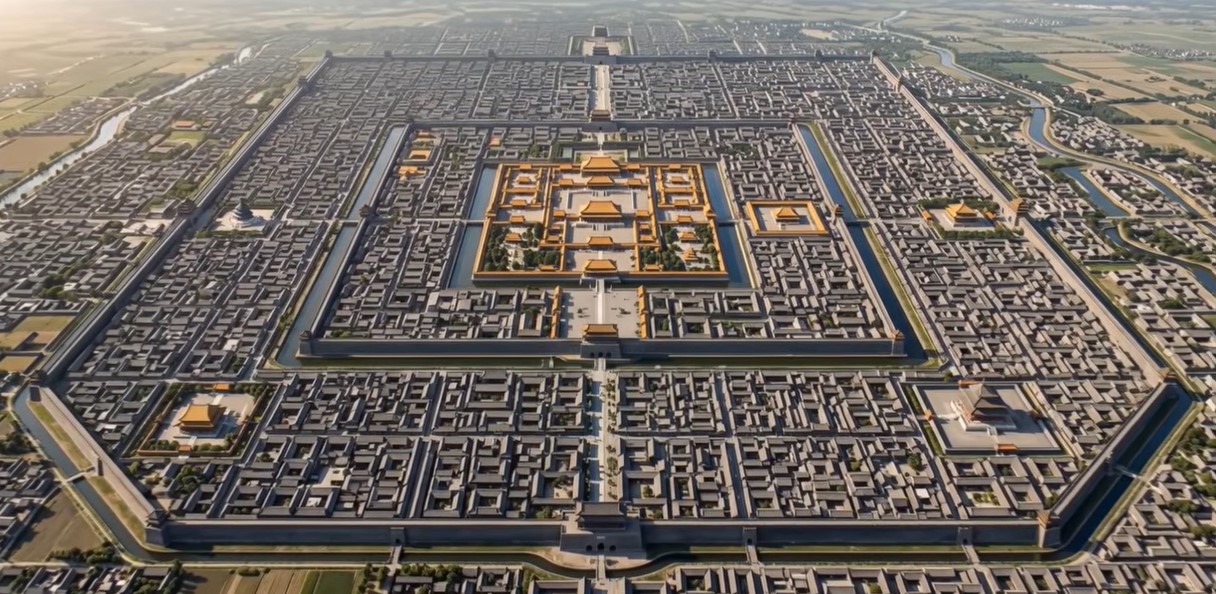
- Geography made the city. Beijing sits where mountain passes funnel every army, caravan, and migration from the steppe into China. That made it valuable and a constant target.
- The Mongol origin. After Genghis Khan burned the Jin capital in 1215, his grandson Kublai Khan rebuilt it on the same site in 1264. He ordered the largest planned city on earth, laid out around a single surviving Jin garden. His advisers built a capital that followed a 2,000-year-old Chinese ideal text more faithfully than any other Chinese dynasty had.
- The central axis. One single straight line 7.8 km long runs through the city, with gates, palaces, the throne, and towers arranged on or symmetrically around it. It was a cosmological statement — the emperor as the point where heaven and earth meet.
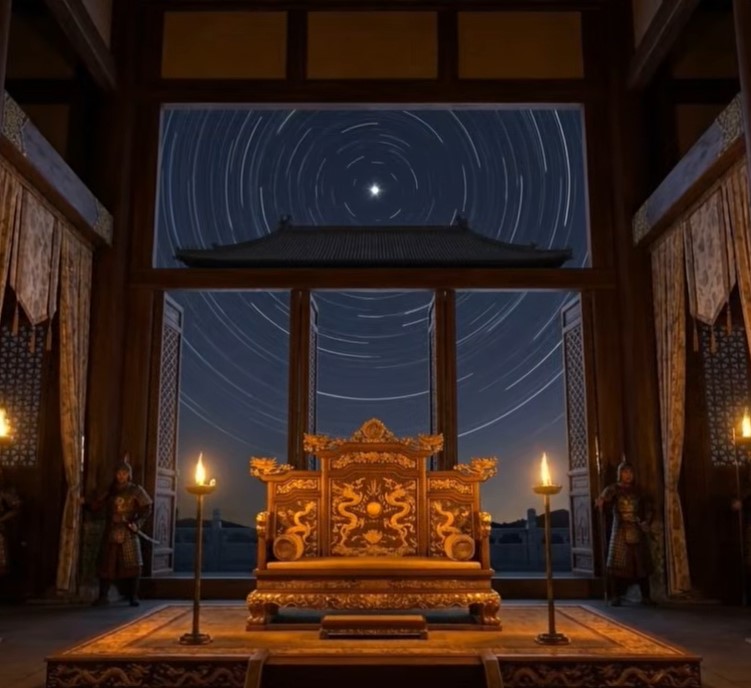
- The forbidden city was built in perfect symmetry/harmony in a North-South direction with the Polaris North star in the center. The emperor was thus seen as the North Star of his empire:
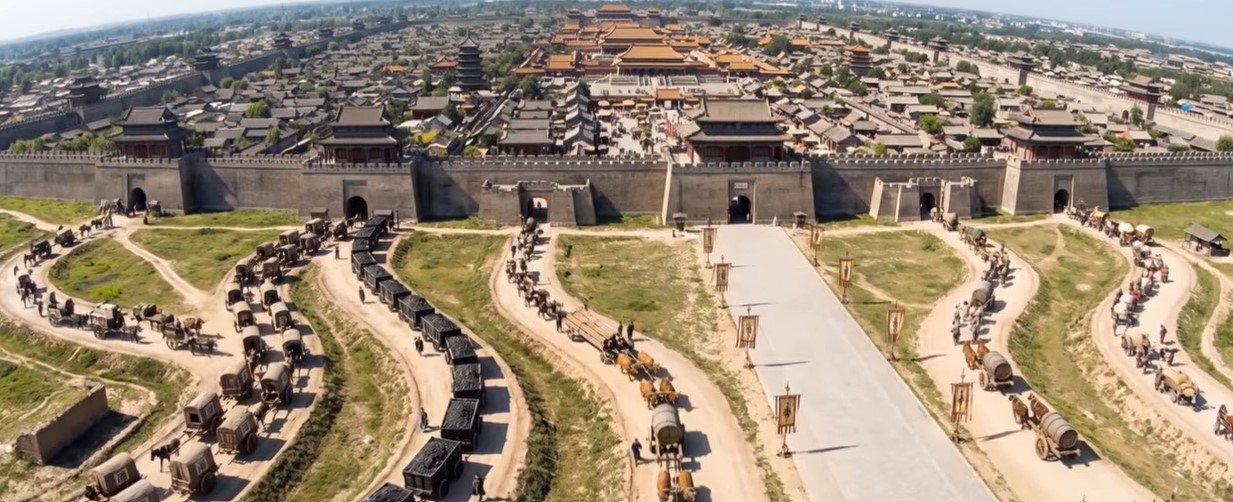
- The Ming rebuild. The Ming emperors moved the capital to the south, but Emperor Yongle seized power and rebuilt Beijing from 1406–1420, thereby creating the Forbidden City, the Temple of Heaven, a walled city with 9 gates. Each gate was assigned a specific function (wine, coal, grain, water, waste, war, prisoners, and the emperor):
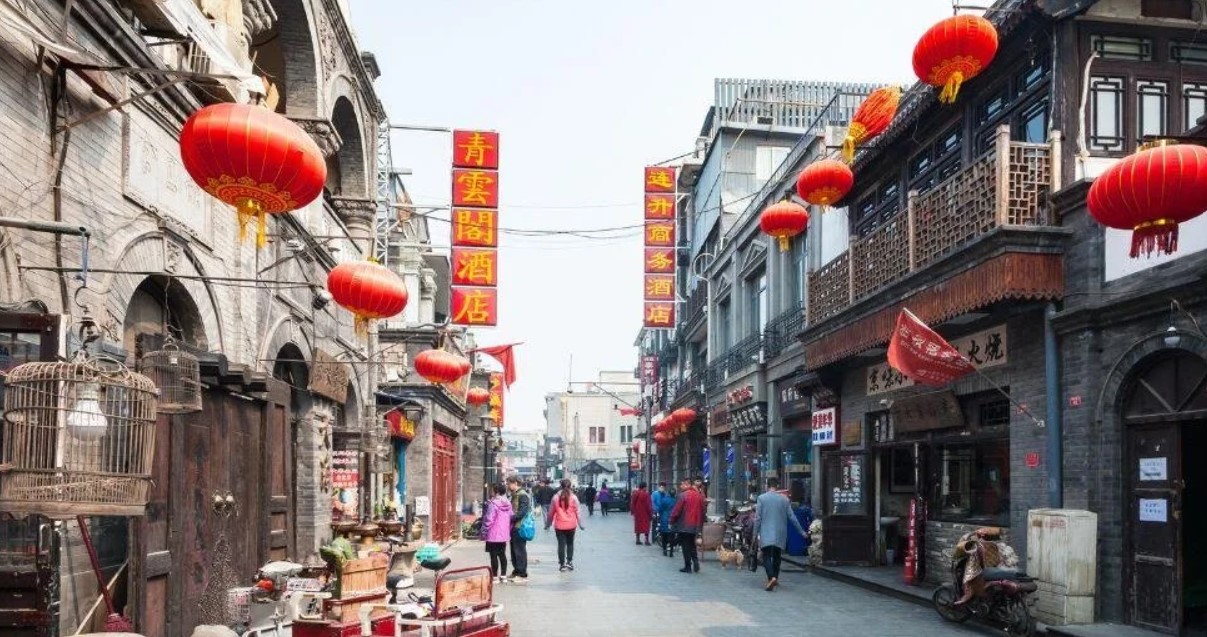
- Daily life. Between the grand avenues were *hutongs*, normal and narrow lanes of courtyard homes.
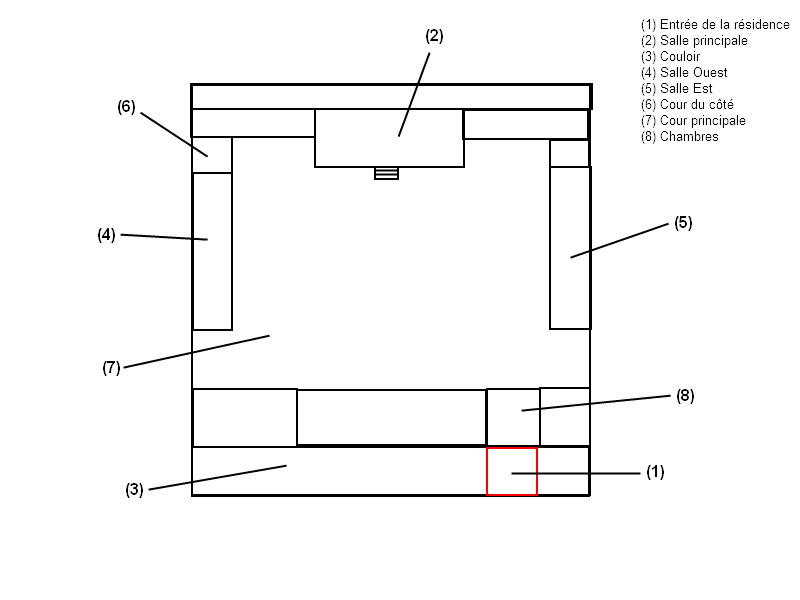
- The homes. They were laid out as diagrams of Confucian family order, from 1265 on:
- The Manchu conquest in 1644 split the city into a military inner city and a commercial outer city.
- Fire and foreign invasion. The city burned three times in 300 years. In 1644 the last Ming emperor hanged himself on an artificial hill, made from the moat’s excavated earth. In 1860, British and French forces looted and burned the Yuan Ming Yuan (Garden of Perfect Brightness). In 1900, the Boxer Uprising led to the first breach of the walls for a railway.
- The destruction of the walls. By 1949, Beijing had the best-preserved city fortifications on Earth — 40 km of walls. These walls came down between 1951 and 1969, and replaced by the 2nd Ring Road and Subway Line 2.
- What remained. Only fragments survived, and a recent reconstruction of Yong Ding Men. The subway stations still bear the names of gates that vanished 600 years ago:
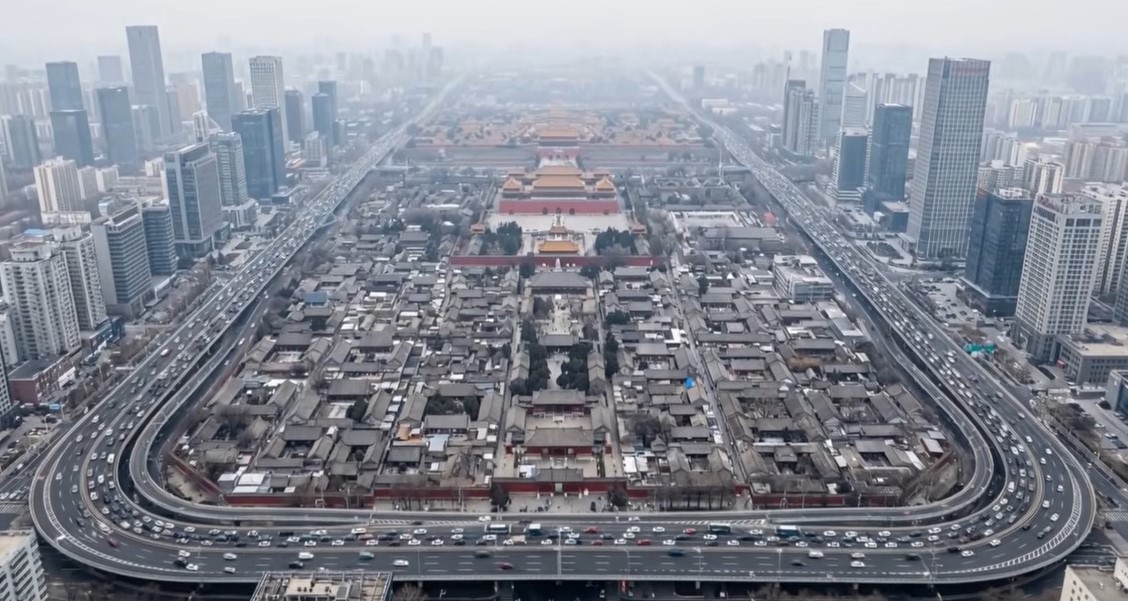
The irony: For 600 years Beijing was the best planned city that ever existed — every gate given a purpose, every tile a rank. Then, it was torn down by people, believing they were building something better.
Layout of “The Forbidden Enclosure”
(translation: Zijìnchéng: 紫禁城)
Mirroring the Purple Ziwei Enclosure: 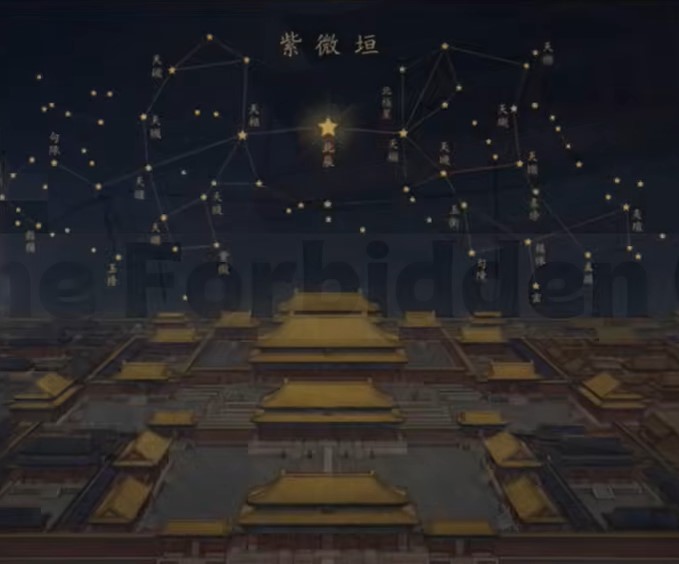
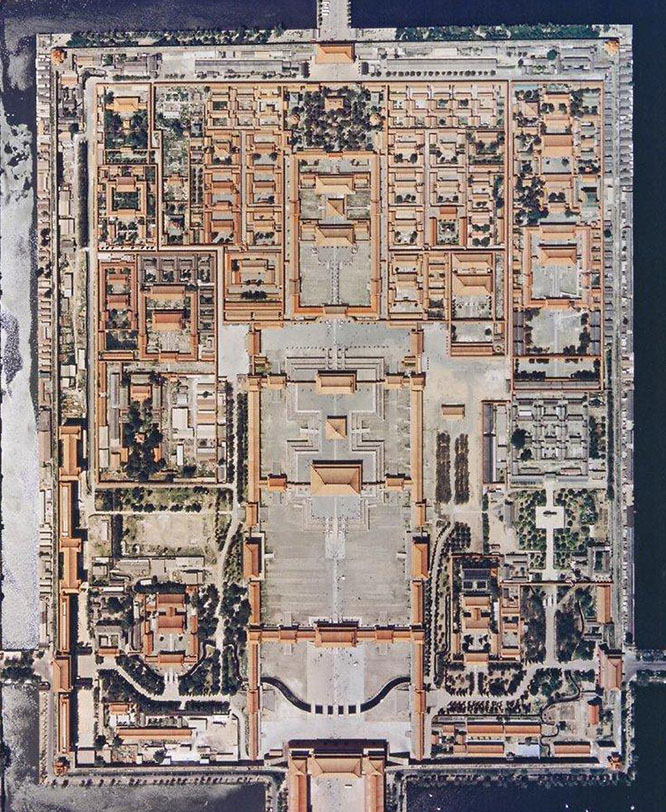
The Architecture of the Forbidden city:
The first gate you encounter before you even enter the palace grounds is Tan an Men, the gate of heavenly peace. That is where Mao’s portrait hangs today. You cross through it, cross a second gate and enter a vast open courtyard through which the Ginuhi, the Golden Water River, flows east to west in a graceful ark. Five marble bridges cross it. The central one, the widest, the most ornate, was for the emperor alone. You pass through the Meridian Gate, Wumen, a massive five towered gate house, the formal entrance to the palace.
This is where the emperor used to announce military victories, review his troops, and where officials received imperial edicts. Step inside and suddenly you’re in a courtyard so large it could hold 100,000 people. Ahead of you on a triple tiered marble terrace sits the Thai Dian Hall of Supreme Harmony. This is the most important building in China for 500 years. The largest wooden structure in the country about 30 m high, 64 m long, 37 m wide. This is where the emperor held his grand ceremonies, his coronation, New Year celebrations, military reviews, the announcement of war. Inside is the long ye, the dragon throne, the focal point of the entire palace, the entire empire. The roof tiles are yellow in Ming dynasty law. And even before them, yellow was reserved exclusively for the emperor. Noble, no official, no wealthy merchant could use yellow roof tiles on their home. To do so was a capital offense.
The walls are red, the color of joy and good fortune in Chinese tradition. The marble balustrades of the terrace are carved with dragons. Dragons on the column bases. Dragons on the ceiling inside. The number 9 appears everywhere. Nine bays on the facade of the hall of supreme harmony. Nine rows of nine studs on the palace gates. Nine dragons on the famous nine dragon wall.
The emperor’s title was Tanji or Tanzi, son of heaven. So, his palace speaks the language of heaven. The entire complex sits on a precise north south axis, what the Chinese call the central axis of Beijing. The palace faces south, receiving maximum sunlight. Behind it to the north sits Jing Shan Hill, an artificial mound created from earth dug during the construction of the palace moat which acts as the back support in fang shue principles protecting the palace from negative energy coming from the north.
Researchers have shown that the layout of the Forbidden City was deliberately designed to mirror the celestial purple forbidden enclosure of the stars. The palace is not just a building. It is a cosmological statement. The emperor is the link between heaven and earth and his home is the proof. Beyond the three great halls, the palace divides into the inner court, the private residential world of the emperor’s family. The emperor slept in Qianqing Gong, the Palace of heavenly purity.
Symbolism set in stone and wood
In 1925 the palatial complex in the heart of Beijing, known as the Forbidden City, opened to the public as the Palace Museum. Enclosed by high walls and a moat, the compound had been the home of the emperor and his consorts (wives) for more than five hundred years. Few would have ever come near, let alone venture into, the vast complex of 9.999 rooms.
The outer court, entered from the south, was reserved for official events. The inner court to the north housed the imperial family and members of its household. The museum now houses 42,000 religious artifacts, 80% of which are related to Tibetan Buddhism. This rich collection witnessed the height of Tibetan Buddhism in China.
Tibetan Buddhist Heritage
in the Forbidden City
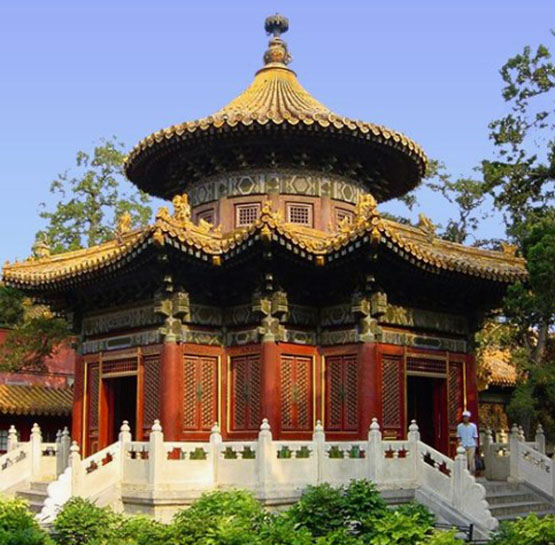
Pavilion of a thousand Autumns
The Forbidden City is one of the world’s largest and best-preserved complex of wooden buildings. Its NW corner contains a cluster of 10 Tibetan Buddhist halls. These include Baohua Hall, Yuhua Pavilion, and Fanzong Tower. None of them is open to the public, and thus retain a mystery.
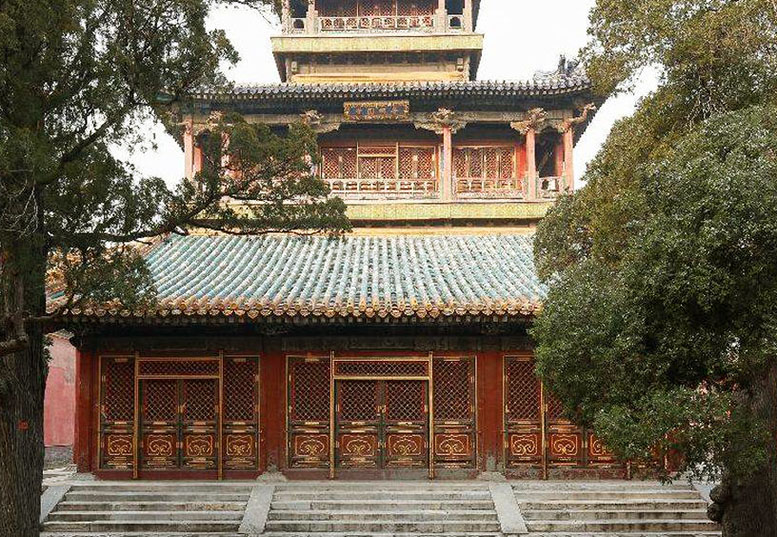
Yuhua Pavilion
(Pavilion of Raining Flowers)
It was built during the Ming Dynasty. In 1749, Emperor Qianlong decided to renovate the Yuhua Pavilion, and modeled it after the Mandala Tower at Tholing Monastery in Ngari, Tibet. It served as a place for the recitation of Buddhist sutras and workshop for religious imagery. In it was the Qianlong Emperor’s private chapel.
It is the only structure in the Imperial Palace complex to combine Han and Tibetan design elements. The Buddha statues on the top 4th floor represent 4 different levels of religious practice.
Winter sunshine filters through the huge red doors onto the rosewood Buddhist pagoda on the ground floor of Yuhua Pavilion. Above the door hangs a tablet with an inscription by Emperor Qianlong. Inside are Buddha statues that were presented as tributes to the emperors by generations of Dalai Lamas and Panchen Lamas.
The pavilion houses enamel mandalas of the 3 most important images of Buddha in Tantric Buddhism, as well as many gold and copper Buddha statues, instruments used in rituals, miniature porcelain pagodas and Thangka paintings donated by Tibetan nobles, but some were made by craftsmen from the imperial household.
Most of the Thangka paintings were created around 1750. Heavy curtains prevent the sun from fading their colors. Thus, under torchlight, the bright mineral pigments in the paint are still vibrant, and remain forever fresh. Most of the Palace Museum 2000+ paintings were created by Tibetan painters during the reign of Emperor Qianlong.
Although the large wooden structures and porcelain pagodas have been equipped with an earthquake-proofing base, most relics remain untouched. There are so many artifacts that there is no room for visitors. Thus, the pavilion is not open to the public. However, they are vividly displayed in the virtual “Digital Palace Museum” tour.
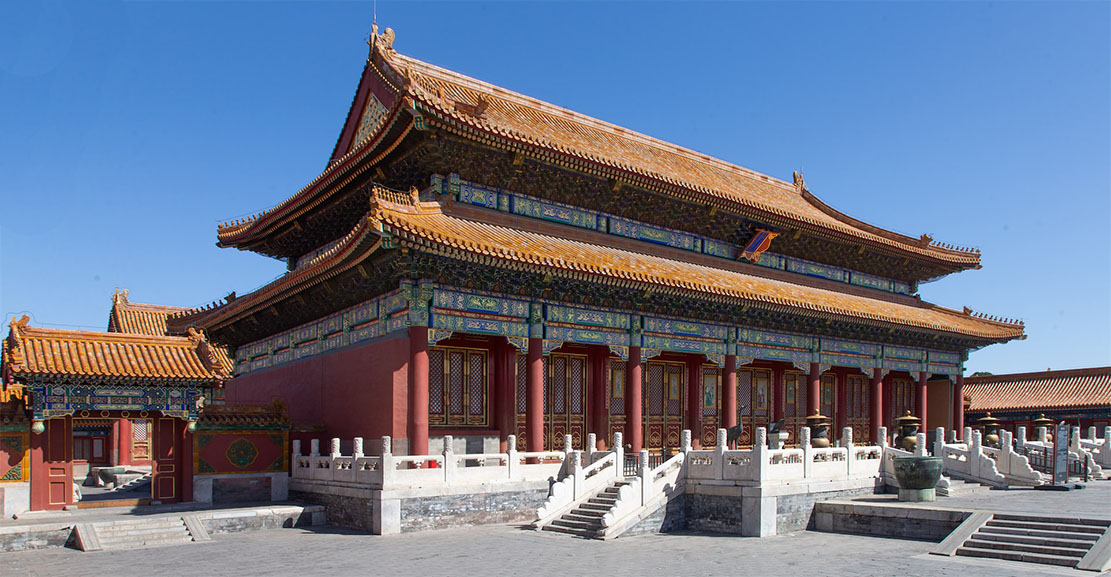
Palace of Compassion & Tranquility
In front of the main hall of the Palace of Compassion & Tranquility is a terrace from where most ceremonies took place. The back room was the place where the Empresses worshiped Buddha via statues and ritual instruments.
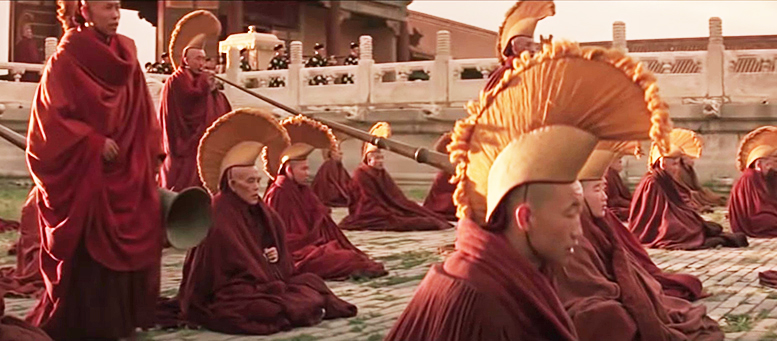
Status of Tibetan Buddhism
In 1653 Emperor Shunzhi welcomed the 5th Dalai, then leader of the Gelug sect (Yellow hat) of Tibetan Buddhism, and dubbed him the title “Dalai Lama.” In 1713 Emperor Kangxi gave the 5th Panchen the title “Panchen Erdeni,” thereby formally acknowledging the political and religious status of the Dalai and Panchen Lamas of Tibet. Their influence spread, and the number of Tibetan Buddhist halls expanded.
The Gelug sect school bases its path on the Lamrim (The Graduated Path to Enlightenment) and places supreme emphasis on logical debate, dialectics, and a exhaustive study of Madhyamaka (Middle Way) philosophy before allowing students to advance to esoteric tantric practices. Power & peace were also key elements.
In 1780 the 6th Panchen Erdeni arrived at the Forbidden City to congratulate Emperor Qianlong on his 70th birthday, when Tibetan Buddhist activity in the royal court peaked. It waned when the Dynasty began to decline.
Close to the Yuhua Pavilion is a square where large-scale Buddhist ceremonies were held. The prayer flags used during these ceremonies still remain. At the end of each year, the emperor would take part in an exorcism ceremony, the most important Buddhist event in the imperial court. On that day, the emperor would sit beside the Dalai Lama and Panchen Lama, and other senior monks, demonstrating the prominent status of Tibetan Buddhism in the Qing Dynasty.
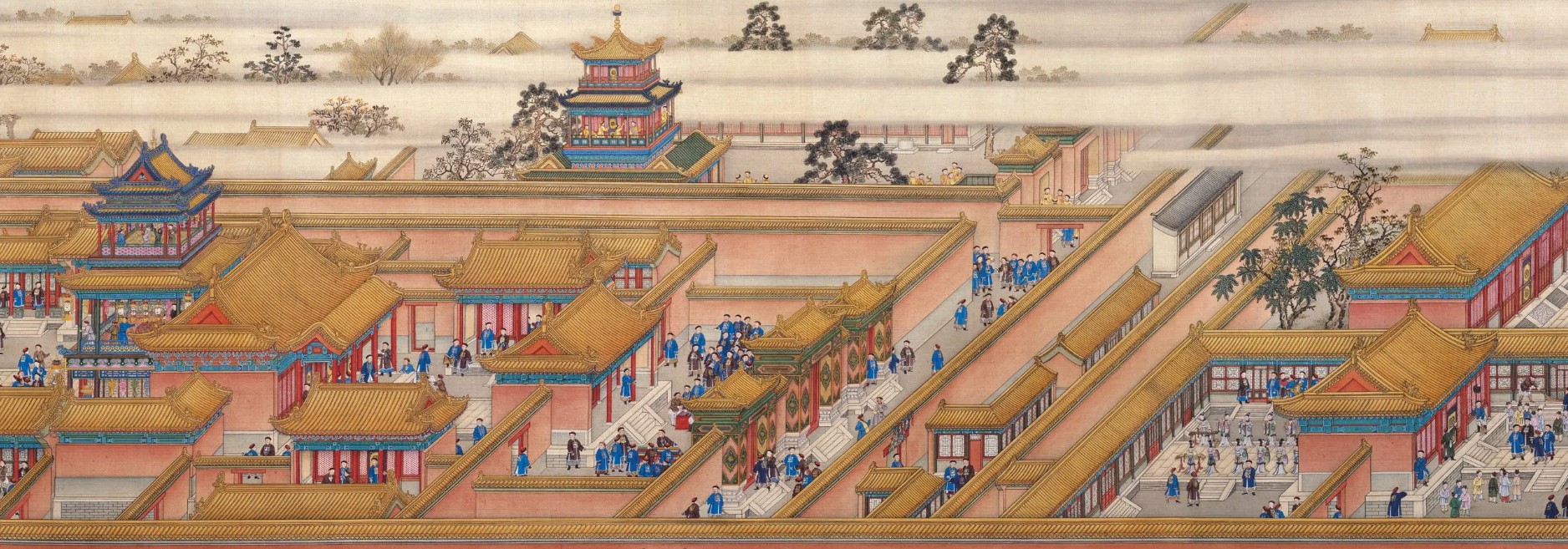 Handscroll Floor plan of the
Palace complex of Longevity and Health
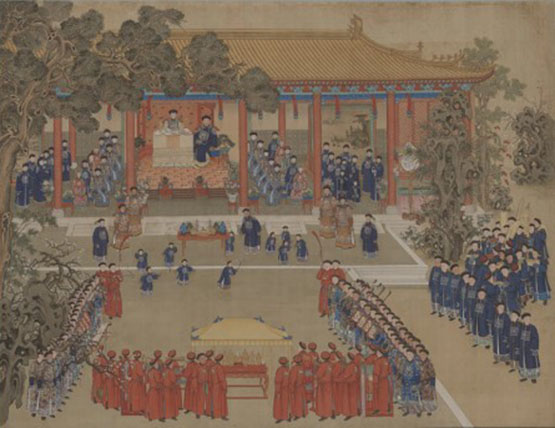
80th Birthday celebration of
the Empress Dowager Chongqing
In the Qing dynasty (1644–1912), the empresses dowager (the most senior position), empresses (the top consort and head of the imperial harem), and other consorts were assigned living quarters in the inner court. These palaces were differentiated by location, size, and furnishings to accord with a woman’s status within the imperial court.
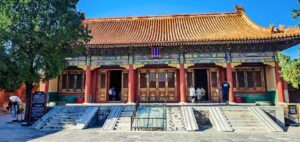
Within days of ascending the throne, the Qianlong emperor (r. 1736–95) approved architectural plans to build an elaborate complex for his mother, Empress Dowager Chongqing (1693–1777), the Palace of Longevity and Health (Shoukang gong). See banner and above.
This complex had 75 structures. Each section had a specific function, such as spaces for rituals, religious devotion, living and sleeping, and entertainment. The Main Hall was where Chongqing received the emperor, empress, and high-ranking consorts for the lunar New Year when they came to pay their respects to her:
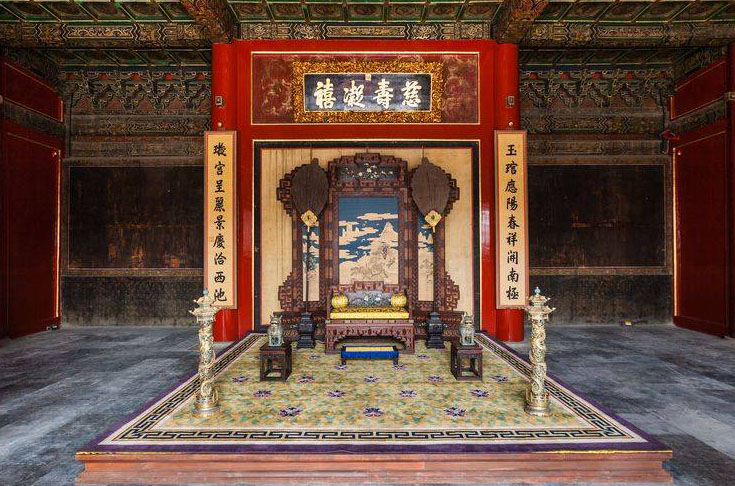
She received grandsons, great-grandsons, and lower-rank consorts, on special occasions in the Rear Hall. One chamber was reserved for her Buddhist devotions with Buddha statues and ritual instruments. Other rooms for vernation of her late husband’s “spirit tablet”, and for her living quarters. An avid lover of opera, Chongqing was entitled to a small indoor theater, complete with a stage and a “scenic illusion” wall painting (tongjing hua).
She lived in the Forbidden City only two months per year to celebrate important annual events, such as the winter solstice, the lunar New Year, and her birthday. The rest of the time she traveled or stayed in another palace complex.
Among the notable features of Chongqing’s life are the many splendid gifts she received from her son, the Qianlong emperor, government officials, and many others. Her palace was filled with treasures, such as hundreds of jade objects, wish-granting ruyi scepters, elaborate robes, paintings and calligraphies, ceramics, and lacquerware.
At her 70th birthday, he presented her with 9×9 gifts, the most prestigious gifting ritual at The Qing Court. That meant 81 gifts every day. Nine categories of treasures with nine items in each. Paintings, calligraphy works, jade carvings, silk textiles, all of it delivered in an unbroken stream for over a week.
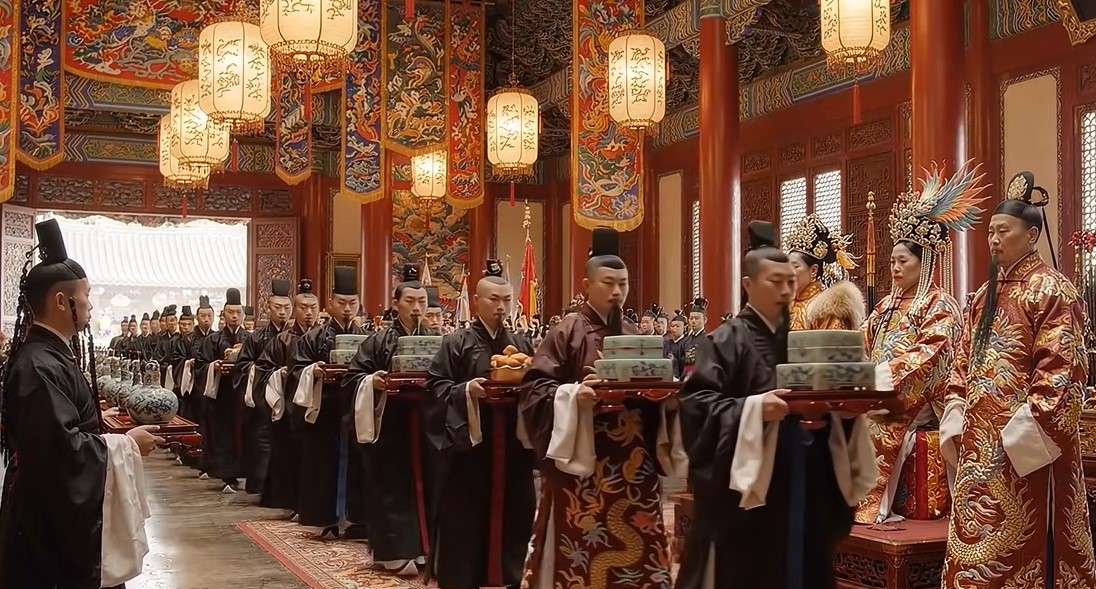
By her 80th birthday, the celebration had expanded to 11 consecutive days, meaning she received 11 x 9 = 99 (x 9) = 891 (81 x 11) individual gifts in total.
Objects of top quality were used as decorations, rotated according to season, or brought out for special viewings.
The Qianlong emperor presented his mother with a renowned scroll of ancient calligraphy called “Letter on recovery from illness”. This thoughtful gift shows how much he appreciated and recognized his mother as a connoisseur and admirer of Chinese culture. He also painted and wrote calligraphy for her, signing it in a special way to signal his high respect for her.
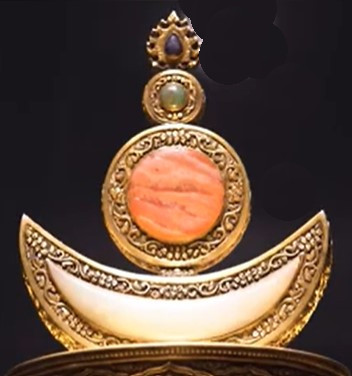
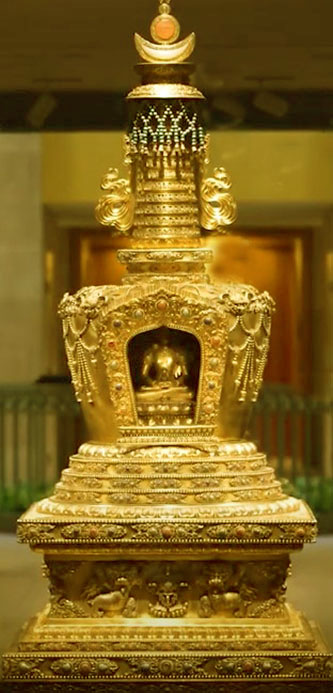
After her death, he placed some of her hair in an especially made golden stupa of 250 pnds, as a ”relic in a shrine”. This stupa with Tibetan sun & moon on top was made up of gold and silver alloy with coral, turquoise, lapis lazuli, semiprecious stones, and glass. The Pedestal was made of zitan wood.
 Preservation of
Artifacts and Cultural Exchange
To better protect Buddhist artifacts in Tibet, the Palace Museum and the government of Tibet Autonomous Region decided to cooperate and build museums, restore artifacts, and hold exhibitions. Archaeological research has also started. Preservation of artifacts have began at Jokhang Monastery.
India has a wealth of artifacts and cultural sites. China and India did conduct frequent exchanges, but nowadays, their people know little about each other. Westerners are very interested in Tibetan Buddhist artifacts, and made significant progress in Tibetan Buddhist studies.
In 1923, the Buddhist complex burned down. In 2012, the restoration work was finished. The Palace Museum mgmt hoped to take advantage of its rich resources & artifacts and become the Research Center for the Tibetan Buddhist Heritage, because its history remains still quite hidden.
But so far nothing happened …..
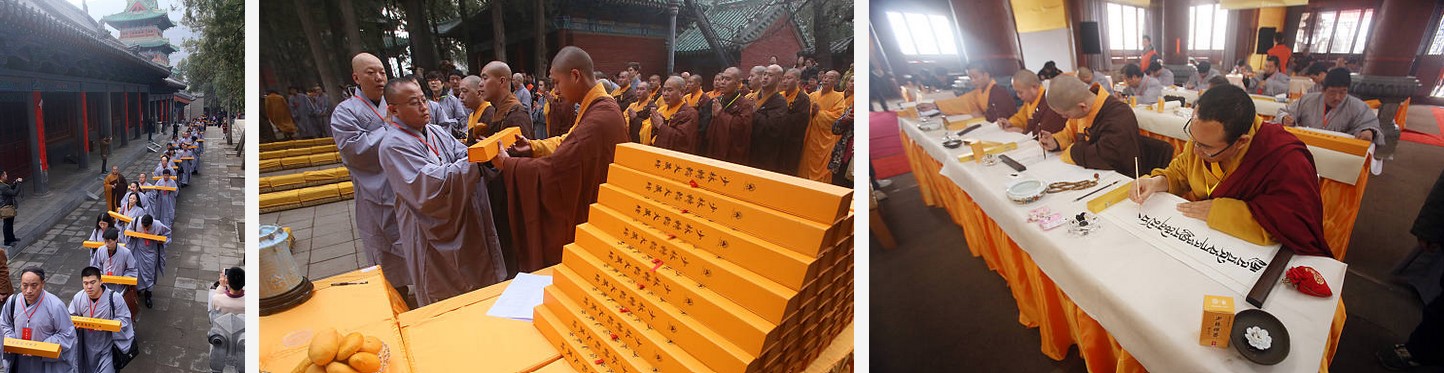
“Ten Thousand People Copy Confucian Classics” activity in the Shaolin Temple in Zhengzhou is based on the Qing Dynasty emperor Qianlong’s Tripitaka which includes Han classics, Tibetan classics as well as Southern Buddhism’s classics.
The Copying Confucian Classics activity combined Chinese traditional calligraphic art with age-old Buddhism. Several hundred masters, calligraphers, prestigious public figures, and others attend the copying activity on Dragon Heads-raising Day in the spring of each year.

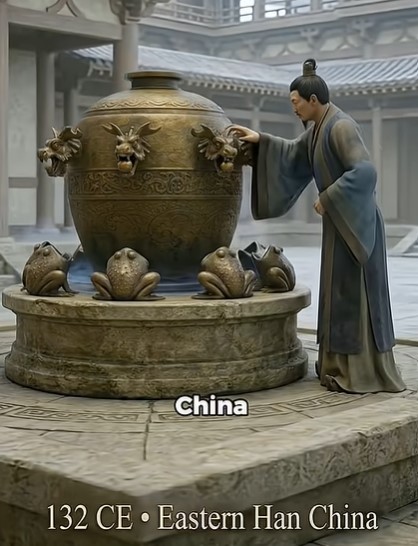
A Bronze Jar Detected Earthquakes:
8 Dragons plus 8 toads, each 45º apart.
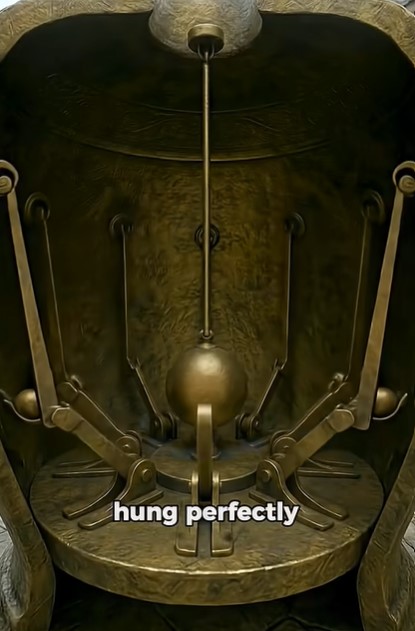
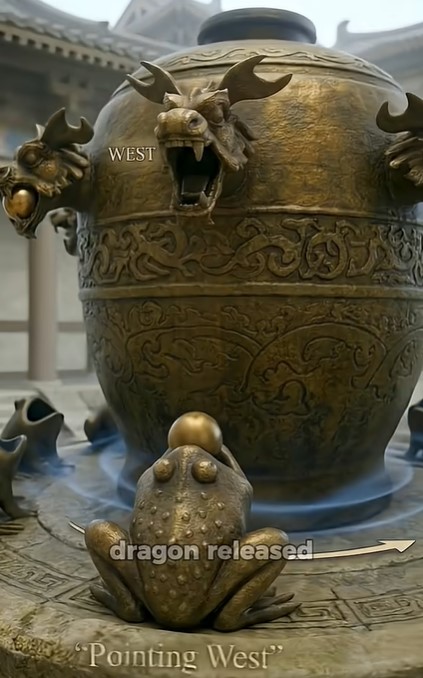
The slightest earthquake tremmer was felt,
then the pendulum swung, and
hit only 1 of the 8 levers,
causing the attached dragon to drop a
bronze ball into the respective toad’s mouth,
indicating the tremmer’s geo-direction.