
GLIALS AND NEURONS

The human nervous system is composed of 2 types of cells: glial cells and neurons. The neurons make us think and act.

Various studies suggest that the brain contains ≈100 billion glial cells and neurons, which form ≈150 trillion connections. Glial cells provide the neurons with nourishment, physical support, and protection. They also dispose of waste materials generated when neurons die.

Each of the ≈10 trillion cells in our body has a membrane that surrounds its cytoplasm and a nucleus that contains its genes. Neurons also have small organelles that let them produce energy and proteins. 

Neurons transmit energy & information via vortices. For that they have two types of highly specialized extensions that distinguish them from other cells:

  1. Dendrites, with their tree-like branching structure, gather and relay information to the neuron’s cell body.
  2. Axons, carry information from the neuron’s cell body to other neurons, with which it makes connections called synapses. Axons also directly stimulate other types of cells, such as muscle and gland cells.
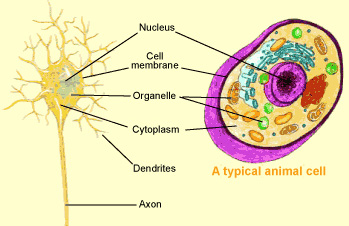
Take a good look at the trees in the winter and notice how similar they are in structure to neurons. Their branches are like dendrites, and the buds on these branches are like dendritic spines. The trees’ trunks are like axons, and their roots are like the axons’ numerous terminal buttons.


read more …

Similar Posts

  • Akshardham Temple and other Temples

    Swaminarayan Akshardham is a Hindu temple in Delhi. The modern (2005) complex displays millennia of traditional and modern Hindu culture, spirituality, and architecture. The temple, at the center of the complex, was built according to the Vastu shastra. Originating in ancient India, Vastu Shastra ( वास्तु शास्त्र, vāstu śāstra “science of architecture”) is an ancient…

  • Cosmic Layers

    The Layers of our Cosmos The Gnosis-based view of reality, structured as a series of descending layers from a perfect divine source to a flawed material world. 1. Pleroma (Fullness): This is the ultimate reality—a state of absolute and infinite completeness, harmony, balance, and unity. It is the source from which most of us, as…

  • SCIENCES

    Science is a methodical study of nature that forms testable explanations + predictions. The groupings listed are empirical sciences, which means the knowledge must be based on observable phenomena and capable of being tested for its validity by others working under the same conditions. The hard sciences rely on a scientific method, quantifiable empirical data,…

  • 500+ psycho ways?

    There are over 500 psychotherapeutic approaches or schools of thought, with new and hybrid approaches added every week. Specific schools and approaches: Hypno therapy Gestalt therapy Psycho analysis Behavior therapy Narrative therapy Expressive therapy Group psycho therapy Integrative psycho therapy Cognitive behavioral therapy Medical & Non-medical models (NLP) Psycho therapeutic adaptations for children Body oriented…