
Effects on muscle cells
Effects on your muscle cells’
DNA and protein production
Researchers recruited 14 men and women in their mid-20s who didn’t usually exercise. After a short but intense spin on a bike, samples of their muscle tissue showed temporary, but big, changes in several types of epigenetic signals.
Physical exercise sets signals in motion almost instantly that determine which of the 2%-DNA-genes get turned on or off, without altering the underlying DNA nucleotide sequence. These epi-genetic marks (Greek: epi = over, above, outer) signal to the muscles to tone up.

The study’ name: “Acute Exercise Remodels Promoter Methylation in Human Muscles“. Using biopsied samples, researchers compared the activity in a series of muscle-related genes, pre- and post-exercise. More genes were turned on in the post-exercise cells and they also showed less DNA and mRNA methylation.
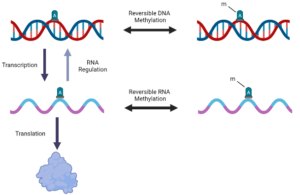
Methyl groups move in during the DNA transcription process, where a Guanine base pair follows a Cytosine base pair, as well as the mRNA translation process, where regular arginine or lysine amino acids should reside. This limits the cell’s ability to switch certain genes on or off.
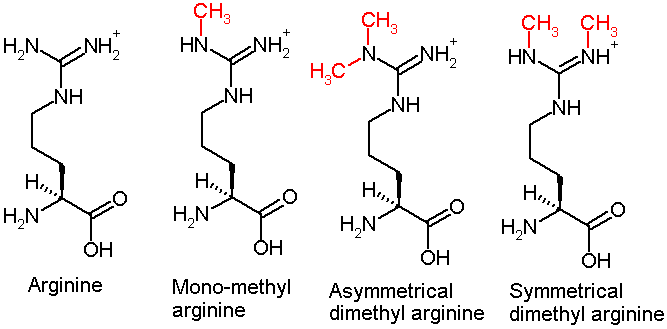
The more intense the exercise, the more the methyl groups are moving away. Controlling how much methylation goes on in certain cells at specific times, the body regulates which genes in the 2%-DNA are activated. That distinguishes the development of an eye cell from that of a liver cell.
When muscle cells gear up for intense activity (exercise), they release calcium. This fuels the contraction process. When scientists blocked calcium production, the effect disappeared, and the muscles didn’t contract as much.
Caffeine triggers the release of calcium, and can enhance the way methyl groups move aside to turn on the genes that help muscles contract. Experiments showed however that most of the physiological effect of caffeine is on the central nervous system, and not on most muscles.
 NO FREE RIDE, here!