Public Food Forests
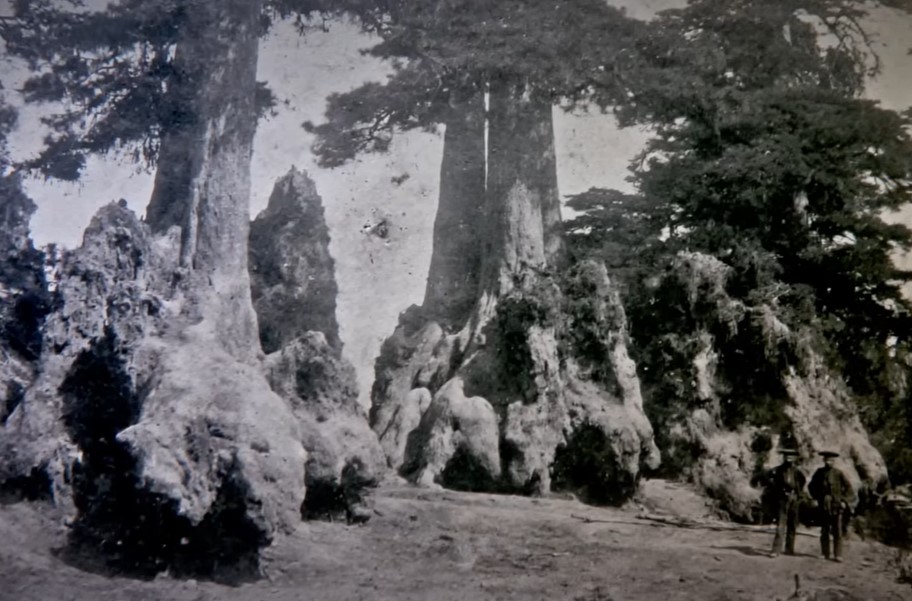
Before the modern era, a substantial portion of the Earth’s surface was covered in self-sustaining, perennial food forests—systems that produced fruit, nuts, and medicinal plants without cultivation, labor, or ownership. These systems, which functioned as communal food commons, were not gradually transformed through natural succession or agricultural evolution. Instead, they were deliberately and systematically enclosed, claimed, and privatized within what appears to be a compressed window of about 40 years (1760-1800).
This act of “claiming” was so thorough, so continent-spanning, and so quietly executed that contemporary society has largely forgotten that such a question ever needed to be asked: *Who decided that the trees belong to anyone at all?*
Part I:
The Anomaly That Started Everything
# The Estate Records
An investigation began with what initially appeared to be a minor curiosity: an examination of land transfer documents associated with heritage parkland sites in a specific region. What emerged was not the expected pattern of gradual land accumulation, but a striking density of transactions occurring within a highly compressed temporal window. More importantly, the documentation for these parcels—many covering hundreds of acres of what was described as “ancient wood and established orchards”—exhibited a profound and consistent absence. The ownership records did not trace backward through time as property records normally should. They simply *began*, as though the land had no history prior to the moment of claiming.
# The Mature Trees Paradox
The most unsettling discovery was this: the trees on these properties were already mature at the time of registration. Surveyors’ measurements indicated that many specimens were centuries old—trees that nobody had planted, that nobody had inherited, that simply appeared fully grown and already productive at the moment the first owner wrote their name beside them. This raises a critical question: If no one planted these trees, and no prior owner is on record, where did the ownership come from?
The official explanation, when available, invokes vague language about “customary use becoming formalized” or “wasteland being brought under management.” But this explanation collapses under scrutiny because wasteland does not produce centuries-old orchards. Wasteland does not maintain itself in productive, structured, staggered diversity—berry shrubs beneath fruit trees beneath nut canopy—across properties separated by hundreds of miles.
Part II: What Food Forests Actually Were
# The Default State
Contemporary discourse treats food forests as an invention, a design methodology, something you *build*. But the evidence suggests something radically different: food forests were the *default state*. The baseline ecological condition of much of the inhabited world before what some researchers call the “Old World Reset” was a managed perennial food system so vast and so integrated into the landscape that it did not require farming in the way we understand farming at all.
# Ethnobotanical Evidence
This is not as radical a claim as it might initially appear. Mainstream, peer-reviewed ethnobotanical research has demonstrated that what colonizers described as “wilderness” across North America, the Amazon Basin, and much of sub-Saharan Africa was, in many cases, deliberately maintained food-producing landscapes. These were forests managed across generations through selective planting, pruning, controlled burning, and what we now call “guilding”—companion planting that maximizes yield and ecological stability. These systems were neither farms in the modern sense nor untouched wilderness. They occupied a middle ground for which contemporary vocabulary has no adequate term, other than the name Permaculture.
# Sophisticated Systems
These systems were not primitive. They were sophisticated enough to feed dense populations without the coercive agricultural apparatus—the plowing, the irrigation infrastructure, the seasonal labor—that appears so suddenly in the historical record of almost every major civilization *simultaneously*. If these systems existed at such scale, if they were mature enough to sustain cities and produce surplus without top-down management, then what happened to them? And who was positioned to move into the vacuum their disappearance created?
Part III: The Window of Claiming
# A Global Synchrony
Across multiple regions, a remarkably synchronized pattern emerges:
- England: The great park formations—hundreds of ancient wooded estates suddenly formalized under single-family ownership, commons stripped, access routes gated.
- France: The reorganization of state forests, absorbing enormous tracts of previously unregistered productive woodland under central registry.
- German-speaking territories: Consolidation of ancient protected forest designations, transferring what had been communal harvesting grounds into noble and eventually state holdings.
- Ottoman territories: Reclassifications during the reform period, redefining communally used lands as state property eligible for private grant.
- North America: Settlement acts that in practice formalized claiming systems over land that already had established productivity, tree cover, and water management—land described as “empty” but revealed by subsequent records to be already meaningfully arranged.
- Australia: Crown Lands Acts.
- India: Forest Acts.
- Africa: Similar legislation written into colonial charters during the same compressed decade.
# The Pattern Emerges
The pattern repeats with unsettling precision: same window, same mechanism—the redefinition of pre-existing productive land as waste, royal reserve, or state forest. Same result—enclosure. And always, the same conspicuous silence about what the land was doing and who was using it before the paperwork arrived.
# The Coordination Problem
For these to be independent, unconnected regional events, the following would have to be true simultaneously:
- Land administrators across multiple nations and empires would all have independently arrived within the same compressed window of 40 years at the same legal mechanism.
- They would have done this without documented communication about the policy’s world-spanning application.
- The resulting ownership structures would have ended up, without coordination, in the hands of a remarkably small number of interconnected families.
- The historical record documenting what those lands were doing before the claiming would have to have been lost, destroyed, or rendered inaccessible in *every single case*.
Part IV: The Families Behind the Enclosure
# Structural Analysis
Cross-referencing land acquisition records reveals a pattern in the structure of the families doing the claiming. Notably, these were not in most cases old aristocratic families with centuries of documented land tenure. Many were recently elevated, recently wealthy. Their fortunes appeared in the documentary record with the same abruptness as the land they were claiming, as though wealth and land arrived together from the same source at the same moment.
# Connections
Through marriage records, documented financial partnerships, and the interlocking directorates of colonial-era trading companies, these families were connected—not loosely, not coincidentally—in ways that suggest coordination. A rough consensus has emerged around a small number of primary lineages extending outward through branches and intermarriages that appear to sit at the original point of claiming in enough jurisdictions to constitute something that looks structurally like a system.
# The Critical Question
Is it possible that the enclosure of the world’s food-producing landscapes was not a series of independent regional events, but a single coordinated action executed through different local instruments in different languages under different legal frameworks, directed by a small enough group of interconnected interests that calling it a handful of families is simply a rough demographic fact? If it was coordinated, then this was the largest theft in human history—and no one even remembers what was taken.
Part V: The Trees That Survive
# Ancient Specimens in Urban Spaces
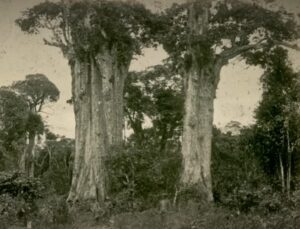
In examining old-growth trees still visible in what are now private estates and royal parks, a remarkable pattern emerges. The surviving ancient specimens—the ones that predate park creation by several centuries—are almost universally food-producing species: sweet chestnut, walnut, mulberry, medlar, quince, perry pear, apple. In park after park, estate after estate, across countries and climates, the oldest trees—the ones nobody can explain the presence of—are the ones that feed.
# London, Paris, Berlin
- A London park contains mulberry trees the park’s own documentation cannot account for.
- A Berlin garden contained fruit and nut specimens described as “long established” without anyone able to say by whom.
- A Paris park contains chestnut stands of uncertain provenance:
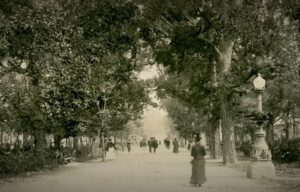
These trees were not planted by the park commissioners. They were not planted by the estates that absorbed them. They were *already there*. And here is where the question becomes genuinely strange: What were they doing there, in the middle of what would become some of the world’s great capital cities? Massive, ancient, food-producing trees embedded in urban land subsequently surrounded by ornamental planting that produces nothing. Could it be that these surviving specimens are not metaphorically but literally remnants of a food system that once served those cities? That the parks built around them are not green spaces that happen to contain old trees, but old food forests that have been surrounded by lawns, fenced off, declared heritage sites, and slowly rendered inaccessible?
Part VI: The Architecture of Silence
# Protected Sites
In country after country, the parcels containing the highest concentrations of unexplained ancient food-producing tree assemblages are now under formal legal protection. Not protection in the sense of public stewardship, not managed commons, not community access—protection in the sense of *restricted entry*. World Heritage Sites, Sites of Special Scientific Interest, Royal Parks, National Trust holdings held in perpetual covenant, private foundations managing historic landscapes, land held by ancient institutions whose original acquisition documents are sealed, incomplete, or formally exempt from information requests.
# Attempts at Access
Attempts to access survey records for these sites yielded instructive responses:
- “Comprehensive species surveys are not publicly available in the interest of preserving ecological integrity.”
- “Historical use records predating the estate’s establishment are not held by this institution.”
- “Access is restricted”—not denied for a specific reason, not subject to appeal, simply restricted.
The silence is deafening. Why would the trees need protecting from *information*? What is it about knowing what grows there, how old it is, and what it used to produce that requires restriction? Unless the trees themselves are the evidence—unless knowing what they are, doing the arithmetic on how old they must be, and asking who was eating their fruit before the first estate map was drawn leads somewhere the documentation was specifically arranged to prevent anyone from reaching.
# The Shape of What’s Missing
You can lose documents through neglect, fire, or flood. But what we’re looking at is a specific category of information—pre-enclosure land use, pre-estate food productivity, pre-claiming community access—that is absent uniformly worldwide across jurisdictions with entirely different archival traditions and political histories. That kind of absence is not accident. That kind of absence is architecture.
Part VII: The Disappearing Designation
# Pre-Enclosure Maps
On older cadastral surveys and estate maps produced before the consolidation period, a category of land designation appears that disappears entirely after a certain point:
- English records: “common orchard,” “town wood,” “parish grove”
- French records: “communal woodland,” “village forest”
- German records: “community fruit tree forest”
- Ottoman records: parallel designations for productive communal woodland
These designations appear frequently—in some regions accounting for a substantial percentage of the recorded land area. They are established, named, productive—and then they disappear. Not because the land disappears; the land is still there. The trees are still there. But the designation—the legal acknowledgment that the land was communally productive, that it belonged to everyone and no one, that its yield was a commons—disappears. It is replaced by private estate designation, royal park designation, state forest designation.
# The Implication
For this to be simple administrative modernization, one would need to believe that dozens of legal systems simultaneously decided that productive communal woodland was better managed as private property, not because of documented policy imperative, not because of recorded community decision, but simply because administrative language required updating. Alternatively, one must consider the possibility that someone understood what those lands were, understood what they were capable of, and understood that the first step toward controlling the food supply of a civilization is to establish that the food forest belongs to *someone*. Not the village/city, not the commons—*someone*.
Part VIII: The Legacy and the Question
# The Replacement Structures
Consider the lineage of structures that replaced the food forests: the private estate, the agricultural empire, the colonial plantation, the royal park, the enclosed hunting ground. Each is a transformation of the same thing: productive communal land into controlled private yield. Each required the same first step—the establishment of ownership over land that did not previously require an owner to function. And each, by the time it was established, was in the hands of a remarkably small number of families whose genealogical connections, traced forward into the modern era, run through the boards of agricultural commodity companies, the management structures of world-spanning food distribution systems, and the foundations and trusts that hold the world’s largest private land holdings today.
# The Foundational Question
Is the foundation of modern food economics—the entire architecture of who owns the land that food grows on—built on a claiming event that happened in a single generation by a small enough group of connected interests that calling them a handful of families might actually understate the concentration? This is not a demand for belief. It is a request to hold the question, because the alternative—the comfortable story in which modern land ownership is the natural, gradual, organic development of agricultural civilization—requires you to *not look at the maps*. Requires you to not read the estate formation documents. Requires you to accept without examination that what grew on those ancient parcels before the first owner’s name was written beside them was simply nothing.
Part IX: Observations Without Conclusions
# Site After Site
- An estate whose parkland contains an assemblage of fruit and nut species too diverse and too evenly distributed to be explained by deliberate modern planting or any known history of cultivation. The survey author’s conclusion: “of unknown origin and great antiquity.” The estate’s first documented acquisition: “grant of wasteland.”
- A valley where behind the walls of a classified historic property, a botanist recorded dozens of varieties of fruit and extensive chestnut and walnut stands in a “naturally ordered system without evidence of recent planting.” Acquisition documents describe it as “undeveloped woodland.”
- A hillside in one mountain range, a valley in another, riverbends in the American Midwest where the oldest trees are the ones that feed.
Thousands of these sites exist on every inhabited continent. Almost all passed into private hands in the same generation (1760-1800) under the same mechanism with the same silences in the record. And many of the most significant are now protected—not managed, not accessible—protected *from the question* of what they are and what they were and who used to eat from them.
# The Impossible Question
The world that existed before the window of claiming appears to have operated on a fundamentally different food logic—a logic where the trees produced, the yield was communal, the management was distributed, and no one needed to own a walnut tree for the walnuts to be eaten. That logic was replaced not gradually but in one generation.
The deeper the investigation goes, the more it returns to the same impossible question: *What did they know that we’ve forgotten?* To look at an ancient food forest, to recognize it for what it was, to understand its yield, its self-maintenance, its capacity to feed a city without a plow in sight—and then to claim it, to enclose it, to convert it from commons to private estate, from food system to ornamental park, from productive wilderness to restricted heritage site—to do this in a coordinated way across the entire surface of the inhabited earth—you would have to understand what you were taking.
# The Silence Continues
Somewhere in the files that aren’t public, in the surveys that aren’t accessible, in the estate records sealed by covenant and the foundation documents exempt from disclosure, somewhere in all of that silence is the record of what was understood and what was taken and what we have been carefully, efficiently, and very quietly taught to never think to ask for back. The trees are still there—some behind gates marked “private,” behind fences marked “no entry,” behind plaques marked “protected site”—still producing, still standing, still carrying in their roots and their fruit and their impossible age the memory of a system that fed everyone without an owner.
Conclusion: The Weight of the Evidence
This investigation does not offer definitive proof of a coordinated conspiracy—at least not in the conventional sense of that term. What it offers is a pattern so consistent, so widespread, and so systematically obscured that to dismiss it as coincidence requires more faith than to entertain the alternative. The evidence from land records, estate maps, botanical surveys, and legal documentation collectively suggests that:
- Pre-existing systems: Before the modern era, vast food forests existed across multiple continents, producing abundant yield without conventional agriculture.
- Deliberate enclosure: These systems were systematically enclosed within a compressed historical window through remarkably similar legal mechanisms across diverse jurisdictions.
- Coordinated interests: The resulting ownership structures concentrated in a remarkably small number of interconnected families and institutions.
- Systematic silence: Documentation regarding pre-enclosure land use is conspicuously absent across regions with otherwise robust archival traditions.
- Physical evidence: Surviving ancient food-producing trees in what are now private estates, royal parks, and protected sites stand as silent witnesses to what was taken.
- Recent research showed that when someone plants certain seeds in the ground with their bare hands, the seeds and soil “read” the health of that individual, and as a result will produce certain polyphenols, proteins, amino acids, etc. in their leaves and fruits that will compensate for whatever the planter lacks for good health.
The question that matters most is not *who* took the food forest, but in “taking”, what knowledge was lost, like nr 6 above.
What understanding of sustainable, communal food systems was deliberately or inadvertently buried beneath layers of legal ownership, historical amnesia, and agricultural industrialization?
More urgently, what can we reclaim, if we learned to see the trees—and the Q&A they embody—once again for what they are?