The Heart
The Fire energy yin organ
In Chinese, the word for ‘heart’ (shin) is also used to denote ‘mind’. An ordinary heart can be strong and steady, but also weak and wavering. In that case, the pain-parts in us can rebel and prey upon the mind of the Upper Heart chakra, which then loses its command over the body.
The heart is the Emperor: constantly emitting a Fa sound at 639 Hz Solfeggio, pressure waves, heat, light, EM-, electro-, magnetic-signals, that are sent to all 100 trillion cells, at different times and speeds, through its circulatory system.
Its EM-field is a carrier wave modulated with information + emotional patterns, coherent (love) and incoherent (hate) beating patterns, directly linked to how we feel.
Thoughts & emotions affect most organs and neurons via the heart’s pulse (pressure-wave) and blood pressure.
The heart controls the circulation and distribution of blood, and therefore all the other organs depend upon it for sustenance. Thus, they dance and synchronize themselves to its particular rhythms.
The heart is functionally associated with the thymus gland, which is located in the same cavity and forms a mainstay of the immune system. Extreme emotions such as grief and anger have an immediate suppressive effect on the immune system by inhibiting the thymus function.
Externally, the heart is related to the tongue, to which it is connected by the heart sack muscle. The color and texture of the tongue thus reflect the condition of the heart.
Speech impediments such as stuttering are often caused by dysfunction or imbalance in heart energy. Facial complexion, which is a direct reflection of blood circulation, is also a major external indicator of heart function.
- Paired Organ: Small Intestine,
- Color: red with slight blue tint,
- Peak Hours: 11am-1pm,
- Contains over 40.000 neurons as well as neuropeptides that are stuck as they relate to our karma,
- Heart-Head optimal coherence ELF wave frequency is 0.1 Hz, with a wave length of 3.000.000 km,
- Functions: pulse/circulation, houses the spirit (shen) in a tiny spot of its sacred place,
- Physical Branches: blood, tongue, throat, sweat, facial complexion, adrenals, thyroid, prostate, pituitary.
The Heart’s associated organ is the Small Intestine. Its element is Fire. Long-term memory, thinking, emotions, intimacy, cognition, intelligence, and ideas are all dominated by the function of the Heart. A strong Heart enables a sound sleep. A weak Heart allows excessive dreaming.
The Heart’s positive emotional attributes are propriety, love, joy, peace, contentment, orderliness, forgiveness, courtesy, excitement, insight, and wisdom. Its negative attributes are hate, guilt, shock, nervousness, longing/craving.
Its 639Hz solfeggio wave frequency enables the creation of harmonious community and interpersonal relationships. It enhances communication, understanding, tolerance.
Its goals are unconditional compassion and loving kindness, by developing a deep sense of one-ness with others.
Besides a pumping machine, the heart is the most intelligent system of all our brains, with its own receptors, its own EM force, 45 to 70 times more powerful than the neocortex brains, and the only force capable of changing our own DNA.
It can turn glial cells into heart cells, dead cells into living cells. The amygdala starts forming right after the heart’s first beat. It stores all emotions of the mother and the unborn child.
Only an illuminated Lower Heart is strong and steady and has always full command over our pain-parts. It houses the spirit and soul, and manages its own emotional body.
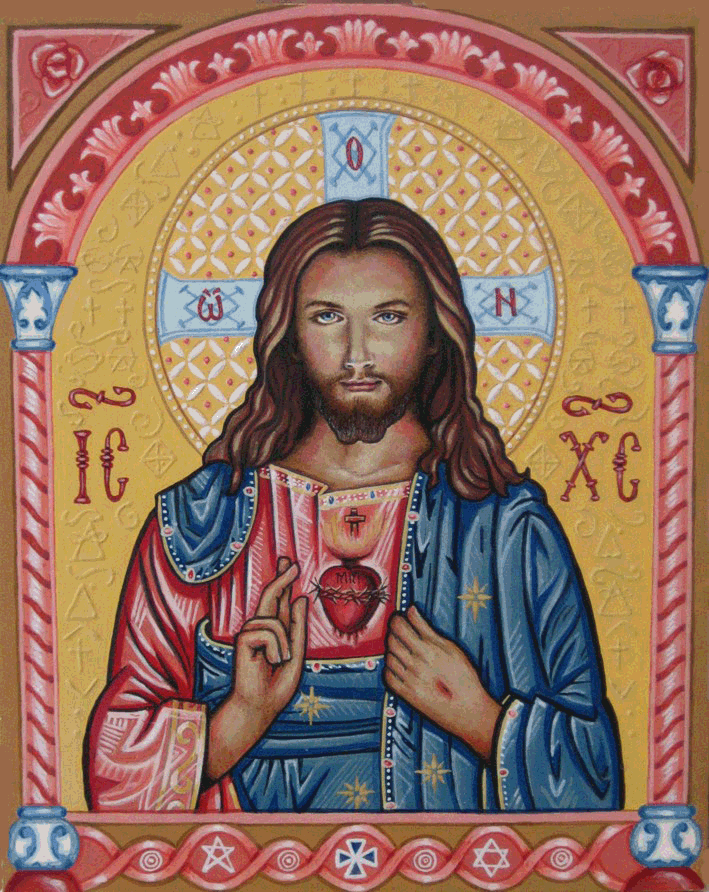
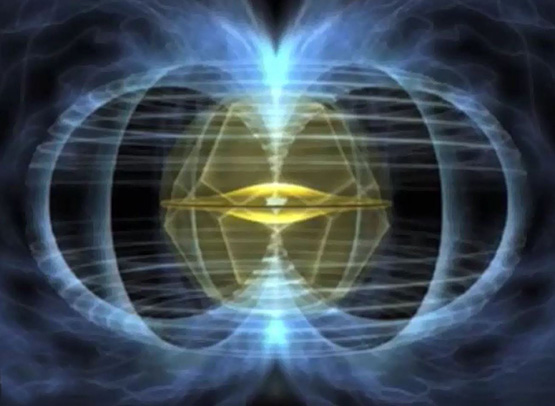
“There is new data suggesting that the heart’s field is directly involved in intuitive perception through its coupling to an Energetic Info-Field outside the bounds of space and time. Using a rigorous design, we found compelling evidence that both the heart and brain receive and respond to information about a future event before the event actually happens…
Even more surprising was our finding that the heart appears to receive this “intuitive” information before the brain. This suggests that the heart’s field may be linked to a more subtle energetic field that contains info on objects and events remote in space or ahead in time…
Called by many Physicists the “spectral domain,” this is a fundamental order of potential energy that enfolds space and time, and might be the basis for our consciousness of the whole.
We concluded that:
- The heart has its own nervous system plus nerve ganglia that process and distribute information.
- The heart is a hormonal gland producing dopamine, epinephrine, norepinephrin, neurotransmitters, and the catechlomines which affect the kidneys, the adrenal gland, the circulatory system and the neocortex.
- The heart generates a 45x-60x stronger electric-amplitude than the head-brain.
- The heart can communicate with someone else’s brain.
- Any emotion alters the heart’s EM field. A coherent pulse is the main objective.
- EM waves emanating from someone’s heart can be detected/measured in the brain waves of people near him/her.
- Transplant cases show that cellular memory resides in the heart cells.
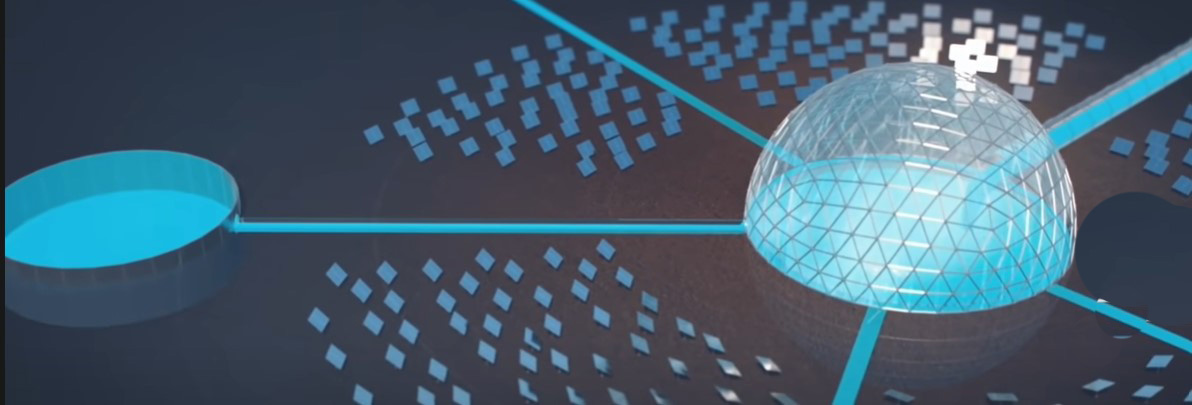
- DNA can be altered by head & heart “entrainment”, using the activated and then illuminated halo:
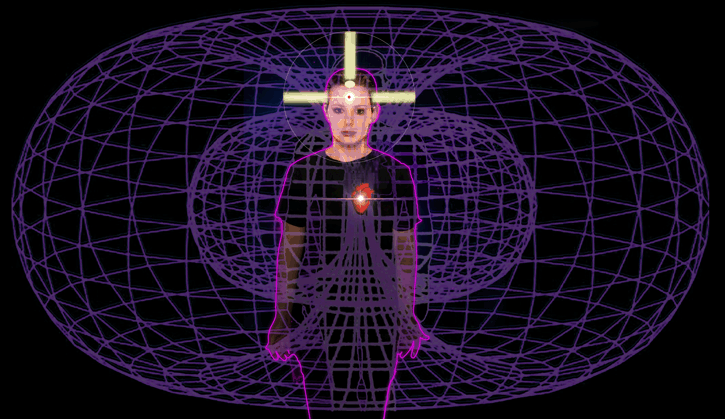
The Heart Channel Pathway, Internal Trajectories, and Acupuncture Points
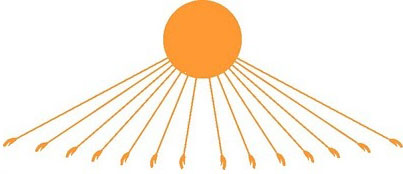
This channel begins at the heart and moves via the surrounding blood vessels to pass down through the diaphragm to the small intestine. A 2nd internal branch extends through the throat to the eye. A connecting channel goes to the tip of the tongue.
A third branch goes first to the lung before surfacing at the center of the armpit. From here the channel descends along the inner aspect of the arm on the opposite side of the biceps to the lung channel, passing the inner end of the elbow crease. It continues down to the tip of the little finger by the corner of the nail on the thumb side.

Illuminated Halo