Articles

  • Inner Brain

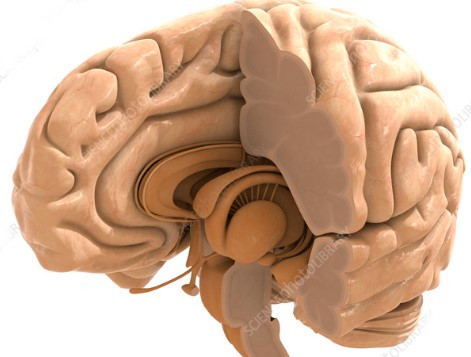
    The Inner Brain Deep within the skull, lie structures that are the gatekeepers between the spinal cord and the cerebral hemispheres. They determine our emotional state, and modify our perceptions and responses depending on that state. They allow us to initiate movements without thinking about them. Like the cerebral lobes, the center-brain structures are twins…

  • Thought-geography

    The Geography of our thoughts The hemispheres divide into 4 sections, called lobes: the twin frontal lobes are associated with reasoning, planning, movement, emotions, and problem solving. the twin parietal lobes are involved with movement, orientation, recognition, perception of stimuli, such as taste, texture, temperature, touch, pressure, pain. Reading and arithmetic are also functions of them. the…

  • 3 skull brains

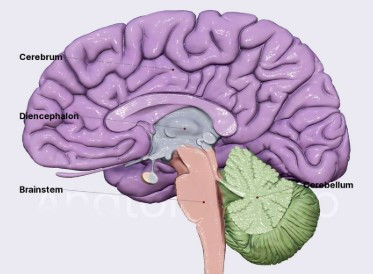
     Three Brains in One           The lower- or reptilian brain includes the upper part of the spinal cord, brain stem, and 2 half balls of wrinkled tissue called cerebellum. The lower-brain controls almost all of the body’s vital functions such as respiration, blood pressure and circulation, heart rate, motor-, and sensory responses. The…

  • Thoughts network

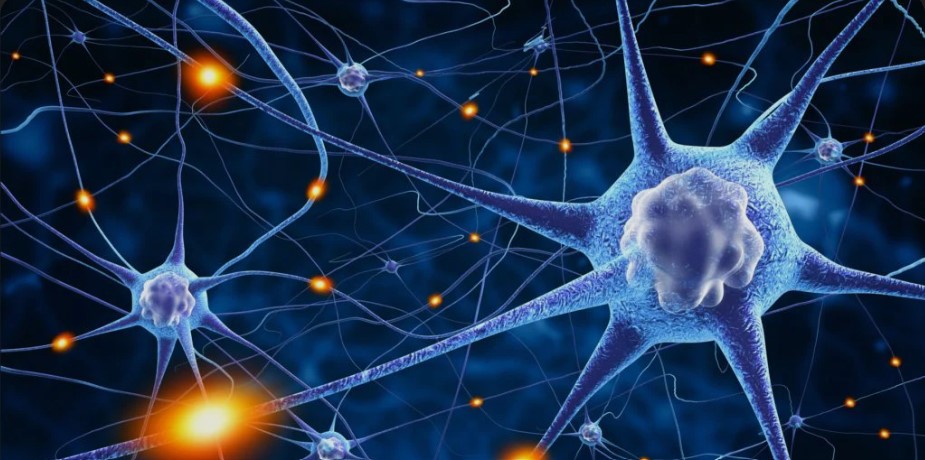
    PART IV THE NETWORK OF OUR THOUGHTS The Brain/Body’s nerve architecture and their functions The nervous system is a body’s decision and communication center. The central nervous system (CNS) comprises the brain and the spinal cord. The peripheral nervous system (PNS) entails nerves. Together they control each part of our daily life, from breathing and…

  • Object perceived

    Upside down Impression ? A cosmic waveform is turned into a biologically generated holographic reality, called human being, a cosmic object. Every part of this hologram is a fractal, a smaller version of the whole. Our act of observation is an act of decoding waveforms into a holographic reality. The rays of light (photons) of…

  • FAQ

    Frequently Asked Questions For Questions & Answers regarding the Life H#rmonizer products, please click here.  Many people with questions, found the answers on this page. If you cannot find your question below, please contact us.   Q: If the Paradigm doesn’t inspire me to practice the C2C each time I find an obstacle on my…

  • ABOUT YOU

    ABOUT YOU Here, you will have your own, password protected, webpage for all the time-monitored communication with us, during your on-line coaching engagement, regarding any aspect of: reaching of a Goal and/or removal of an Obstacle, experiential clarity about our Tools practiced, intellectually understanding of our Course Materials, promotion of our self-cure practices in your…

  • DISSEMINATE

     DISSEMINATION and FREE PROMOTION MATERIALS In order to raise the awareness about the self-healing possibilities of the c2C and the other tools described on this site, we offer various low-cost ways for your region: #1 ‘CARD in the CAR’ awareness raiser When you feel a desire to pass the c2C formula on to others, how…

  • Gut Brain

    The GUT BRAIN Researchers state that our gut possesses a separate brain, called the enteric nervous system. It is a grand network of 100-300 million neurotransmitters, neurons, and proteins found in the esophagus, stomach, small intestine, and colon. It has cells like brain-cells and a complex circuitry that lets it act independently, remember, and produce what we call…

  • Obstacle

    OBSTACLE Internal Obstacle: any unpleasant feelings, images, thoughts. External Obstacle: our eyes + specific neural circuits turn external information into an internal 3D hologram that we perceive as the real image. That’s why we can alter that image using the 2 Keys + tools. After that we will perceive the image differently. This in turn…

  • Body reactions

    PART III BODY RE-ACTIONS Our bodies and brains react to the energy radiated: via the touching hands of someone else, or via sounds or feelings from someone else, or via waves from EM-fields surrounding us, or via an object focused on, out there or in here: 3. Scientific research results from recent decades taught us…

  • Attention Economics

    The Economics of Attention Are you aware of the term ‘Attention Economy’? One of our online course subjects is your attention in relation to the current information economy, corporate management, and the products or services that you offer. Economics is about the allocation of scarce resources. In his book, ‘The Economics of Attention’, Prof Richard Lanham…