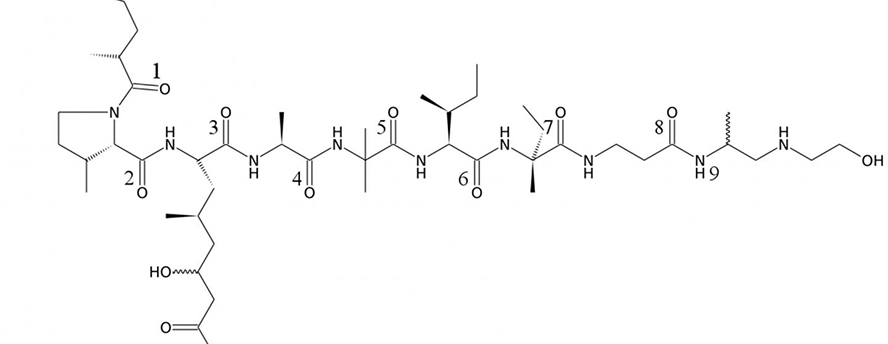
Emericellipsin A
One of the tasks pharmacology is facing today is the search for natural antibiotics capable of fighting multi-drug resistant or extreme-drug resistant microorganisms.
Researchers at the University of Tyumen and First Moscow State Medical University (MSMU) have been the first to demonstrate the unique ability of the peptide emericellipsin A when isolated from the Emericellopsis alkalina mycelial fungi.
These fungi have to adapt to the high salinity of the soil and scarcity of nutrients by creating new biologically active compounds, that belong to the class of peptaibols. It is a small peptide consisting of 9 amino acid residues including unusual ones that are not coded in a DNA sequence.
To study the structure of the compound, the scientists used nuclear magnetic resonance – a method based on changes in the characteristics of atoms depending on connection between them. The peptaibol was named emericellipsin A according the genus name of producing fungi.
The researchers explained that its main therapeutic feature is a universal effect. Not only MDR + XDR bacteria, but almost any pathogenic eukaryotes, like mycelial fungi and Candida Albicans yeast, are vulnerable against emericellipsin A.
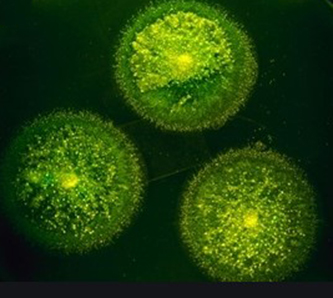
This completely new substance possesses anti-tumor and anti-bacterial properties, and inhibits the bacteria’s ability to form biofilms, which is one of the key factors in their antibiotic resistance.
“Emericellipsin A affects eukaryotes and prokaryotes through various molecular mechanisms. Eukaryotes – fungi and tumor cells – die because the peptide destroys their cell membrane, while prokaryotes’ virulence is destroyed by preventing the biofilm formation.”
The researchers said that it is promising both as an independent therapeutic agent and as an element for use in complex drugs. It will help fight different pathogens, including tumors, as well as all kinds of bacterial and fungal infections.
Therapy can be carried out by injection, by directly treating the affected tissue, or by using its EM signature.