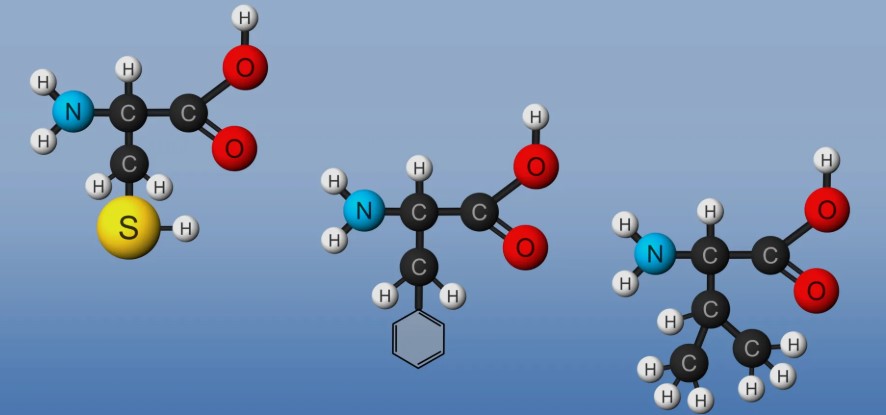
Amino Acid Structure?

Amino acids always contain carbon, oxygen, nitrogen and occasionally phosphorus, sulfur, zinc, copper and iron.

The nitrogen content distinguishes protein from fat and carbohydrate. The nitrogen is responsible for the unique physiological function of a protein.

Amino acids can be joined together in chains of:

  • < 50 amino acids, called peptides,
  • 50-100 amino acids, called polypeptides, and
  • > 100 amino acids, called proteins.

A number of hormones, antibiotics, antitumor agents and neurotransmitters are peptides. A peptide bond can be broken down by hydrolysis (the adding of water).

Amino acids are critically and intimately linked with:

  • muscle recovery,
  • energy production,
  • growth and fat loss,
  • numerous neurological functions.

These 20 amino acids are common in proteins, each differing only in the composition of the R side chain.

read more …

Similar Posts

  • Corona Virus

    DNA derived RNA Corona Virus Spikes on the outer surface look like a corona surrounding the virion. Severe Acute Respiratory Syndrome Corona Virus (SARS-CoV)? Dr. Michael Favorov, a world-renowned CDC epidemiologist stated the following: “We are aware of at least 40 coronaviruses. Thus, a scary virus worrying millions of people around the globe is neither…

  • Competition

    Limited resources lead to two kinds of competition: If resources are scattered and cannot be defended, people compete through speed, trying to take the resources before someone else does, But if resources are close enough to be defended, then people compete through confrontation + aggression. Because these struggles demand so much energy from both the…

  • The Heart

    The Fire energy yin organ In Chinese, the word for ‘heart’ (shin) is also used to denote ‘mind’. An ordinary heart can be strong and steady, but also weak and wavering. In that case, the pain-parts in us can rebel and prey upon the mind of the Upper Heart chakra, which then loses its command…

  • Two Hemispheres ?

    The human brain comprises of many billions of cells, several billion of them are neurons linked to networks that give rise to emotion, intelligence, creativity, consciousness and memory. The skull-brain is kind of symmetric. Its Left and Right hemispheres are connected by the corpus callosum, a thick white band of nerves deep within the brain,…

  • PLASTICITY in NEURAL NETWORKS

    All of our memories (of events, words, images, emotions) correspond to activities of specific circuits of neurons. Learning depends on the plasticity of these circuits. Plasticity refers to the neurons’ stunning powers to make lasting changes in the efficiency of their synaptic wiring patterns, even in adult brains. What we experience as ‘information’ is the…