
Candida & Cancer
Cancerous Candida and
the Baking Soda cure

Cancer rates are rising, despite the dozens of billions of dollars spent on global research over the past decades. Lacking pharmaceutical cures, the 1st step would be to realize that energy creation in the mitochondria of cancerous-cells is basically different from healthy cells.
Whereas cancerous cells can only poorly burn glucose and fructose, healthy cells can fully burn both sugars and fatty acids for energy creation. Large amounts of sugars and carbohydrates are thus needed to feed the cancerous cells.
Could damaged mitochondria, who disturb the energy supply, be the cause of cancerous cell forming?
Thus, which generic healing measures are able to enhance the general defenses of the organism and reduce too high blood sugar levels, which damage the mitochondria?
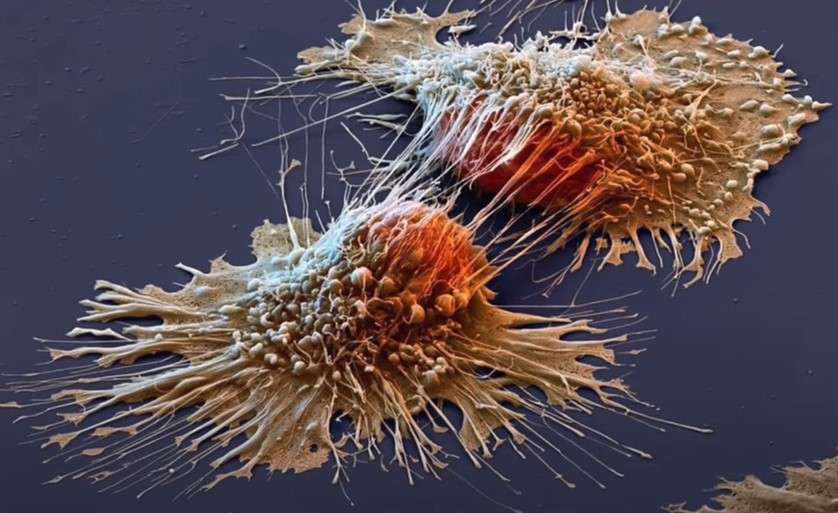
Cancerous cells
Only by attacking the fungi across the spectrum of all its forms, at points where it is most vulnerable from the nutritional point of view, would it be possible to eradicate them from the human organism.
These could be a specific diet, specific nutrition, specific medicines, and regulation of rhythms and vital functions.
The 2nd step is to find an anti-fungal substance that is quite diffusible and therefore effective, because Candida could flourish in an acidic environment.
Italian Doctor Simoncini, an oncologist in Rome, Italy is challenging everyone’s theories with his hypothesis is that cancer is actually caused by a fungus.
Is sodium bicarbonate the answer?
Since 1981, Dr. Simoncini has been treating cancer patients with sodium bicarbonate (baking soda), formula NaHCO3, which alkalizes the body. His hypothesis, based on years of observation and experience, is that the cause of cancer is a fungus, called Candida Albicans. Fungi, he writes in his book ‘Cancer is a fungus’, are “the most adaptable, aggressive and evolved micro-organisms known in nature.”
Although the destructive effects of fungi on our cells, have not been studied thoroughly, his theory is that these very opportunistic fungi invade the body, adapt to their new environment, and reduce the health of an organ or gland, or the whole body, depending upon the body’s reaction.
The mainstream medical community defines cancer as a neoplastic disease and treats it accordingly. If that definition is false, then every theory and treatment based on that definition is questionable.
Neoplastic disease is the abnormal and excessive division of cells, that results in the formation of atypical bodies of tissue, called neoplasms, virtually anywhere in the body and is often referred to as a tumor. They can be benign or malignant:
.jpg)
Neoplasm
There are countless theories about the causes that make cancer cells reproduce, such as diet, toxicity, and stress. In his opinion none of them have enough validity and may be used as “a concealing screen that causes confusion and resignation, and creates even more mystification around a disease which may be simpler than it is depicted to be.”
Dr. Simoncini’s treatment is based on an antifungal solution of baking soda, put in direct contact with the fungi by injecting it into the tumor. The protocol uses strong doses administered in weekly cycles, but varies by cancer type. The only side effects of this treatment are thirst and tiredness.
Baking soda can also be mixed (1/3) with honey and ingested one tsp/day. The fungi will digest the sweet honey together with the baking soda acting as a “Trojan horse”.
Over 8 million people die from cancer annually. The Center for Disease Control & Prevention states that “many of them die during or after being treated with chemotherapy radiation. It is hard to determine if they died from the cancer or the treatment. When a person dies while receiving any type of treatment, there are many factors that play a role”.
Researchers from the Univ-of Arizona studied the effects of baking soda on cancer. Conclusion: “Drinking baking soda shows great promise as a way to reduce or eliminate the spread of breast cancer to the lungs, brain and bone, but too much baking soda can damage any organs.”
Cancer researcher Ty Bollinger doesn’t agree with Dr. Simoncini’s theory that cancer is a fungus, but believes that this type of alternative cancer therapy works, because it alkalizes and provides oxygen to the cancer cells. Contrarily, Dr. Simoncini doesn’t think pH plays a role, He believes the main action of the baking soda is to kill the fungi.
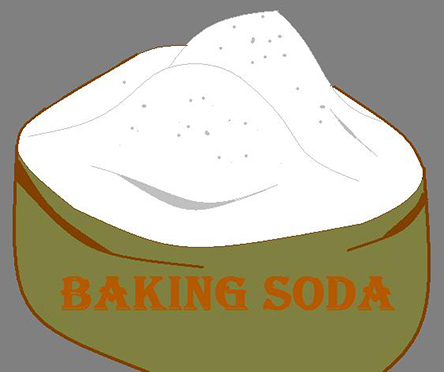
Doctors Kaufman and Sircus advocate using sodium bicarbonate to treat cancer. In his book ‘The Germ that Causes Cancer’, Dr. Kaufman writes that cancer is a fungal infection that should be treated with baking soda. Dr. Sircus writes on his website that baking soda is powerful in treating many illnesses, from cancer to the common cold.
From our decades of Etiological research – the study of causation & origination – regarding human suffering, we concluded that the various neuro-psychical factors involved, such as shock, trauma, threat, injury, stress, or beliefs significantly affect an individual’s mental & emotional state, which affects the state of their immune system. Thus, these should all be considered, as they have a decisive effect on any treatment with any substance.
Dr. Simoncini writes “I hope that the fundamental role of fungi in the development of neoplastic diseases will soon be acknowledged, so that, with the help of all forces of the health establishment, it will be possible to create those anti-fungal drugs and those systems of therapy that can, without damage and suffering, quickly defeat a disease that brings so much devastation to humanity.”
It is possible that not only monstrous tumors, but also most chronic degenerative diseases and aging could be caused by the most dangerous external infectious agents, the fungi.
If so, that would represent a qualitative quantum leap in medical thinking, and could greatly improve life expectancy and the quality of life of billions of people.